Abortion and Reproductive Justice: A Conversation with Marlene Gerber Fried & Loretta J. Ross
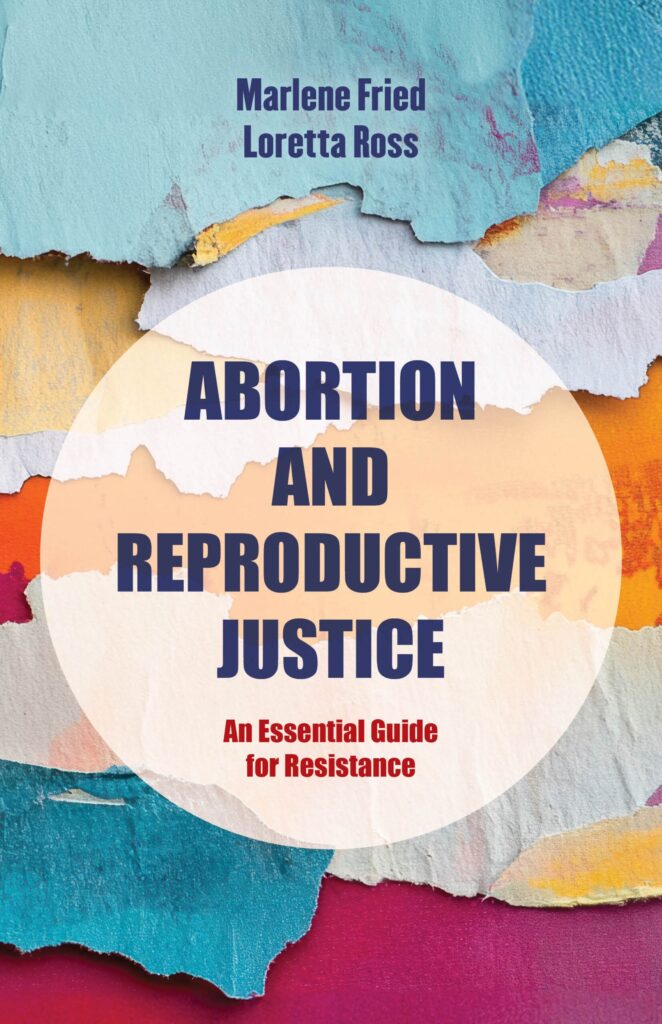
Abortion and Reproductive Justice: An Essential Guide for Resistance (University of California Press) offers an expansive, human rights-informed lens to examine all aspects of reproductive experiences. Authors Loretta J. Ross, co-founder of the SisterSong Women of Color Reproductive Justice Collective and co-originator of the reproductive justice framework, and Marlene Gerber Fried, co-founder of the National Network of Abortion Funds, analyze the past and present landscapes of reproductive access in the United States and globally, inviting readers to think critically about how the intersections of race, gender, politics, and power shape people’s lives and the choices available to them. The result is a thought-provoking call to action that conjures a better world, one where reproductive justice principles inform “bold, radical, creative, intersectional thought and action” and no one is left behind.
I was honored to interview these legendary thought leaders, activists, and scholars about the book, their work, and what it means to think about abortion access through a reproductive justice lens. Below is a transcript of our conversation, edited for length and clarity. – Jen Bryant
*
JEN BRYANT: What originally drew you to this work, and how has your relationship to the movement changed over time?
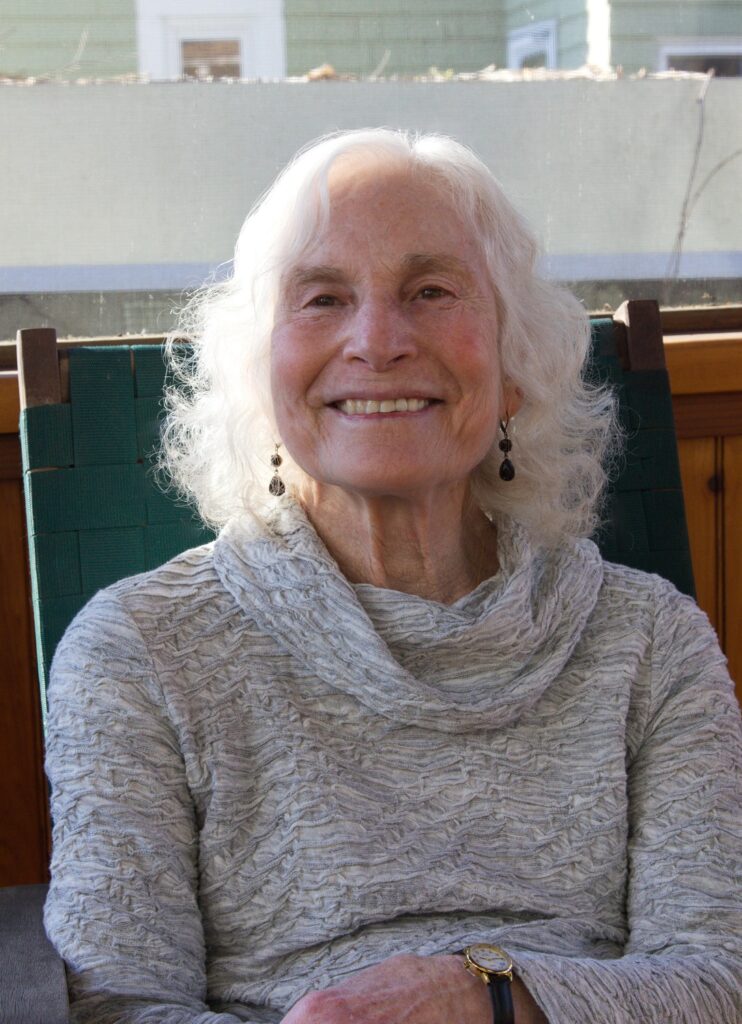
MARLENE GERBER FRIED: We actually started this book during the first Trump administration. The assault on abortion had begun, along with other aspects of human rights and civil liberties. So many white women had voted for Trump, and he was so awful on all racial issues, which has only become more apparent. The book looks at abortion through a lens that calls out racism, white supremacy, and really puts class and race front and center. So that’s what drew us to create the book in the first place.
I’m glad we didn’t finish it before Dobbs. It’s not an entirely different world – as Loretta would say, “My people never thought the Supreme Court was about giving us rights.” But in a way, Dobbs was the wake-up call for white women to say, “Guess what? These rights are really fragile, and now they’re gone.”
What we’re hoping is that the analysis will give people a way of understanding the interconnections of all the attacks. What’s the relationship between abortion and gender affirming care? It’s the concept of bodily autonomy. We thought that if we explain the connections to people, maybe they’ll have an ‘aha’ moment. I also think there’s a lot in the book that will give people inspiration, which is in short supply right now.
Loretta and I have different backgrounds. We’re both longtime activists – I think our identities are more activists than scholars. My own relationship was always on the outskirts of the choice movement. I was trying to connect abortion to bigger issues – issues of access, but also of being able to have a kid. The movement was so disconnected from the right to have children, and so focused on the right not to. And along with that came the connections to population control. Before reproductive justice was invented, we didn’t have that language or analysis. But we had that wider lens. So once reproductive justice came into the world, the people that had those politics were drawn to it.
I did a workshop last night at a bookstore about intergenerational organizing, and there was a woman there who’s part of the Bad Old Days Posse. They all had illegal abortions, and they talk to people, mostly college classes, about their experience. She told me that she’s been pushing the group to also talk about reproductive justice. And I said, “There’s no way not to do it.” Your abortion is not just that moment when you’re taking the pills or you’re on the table. It’s also thinking about all the tentacles surrounding that single act: Why do you need it? How did you get pregnant? Do you have money? Why can’t you have a kid?
JB: And Loretta, in response to a reproductive rights movement that often centered the voices and perspectives of white women, you were part of the group of Black women who originally coined the term and framework for reproductive justice in 1994. Can you share anything about what led you to that moment and how you’ve gone from there?
LORETTA J ROSS: Contrary to myth, we didn’t do it in response to white women. Quite often when people hear about reproductive justice, it’s as an antidote to the prochoice framework, because it’s at the hands of the white women who are using it that way. What I’ve found is that as each group uses and adapts the framework, they center their perspectives. So Indigenous women talk about sovereignty; white women talk mostly about the inadequacies of the prochoice framework. But our origin story was exploring what happened when we centered ourselves in reproductive and abortion politics. What would Black women need if we were to center ourselves in response to a healthcare reform proposal? That was the larger political context in which it took place.
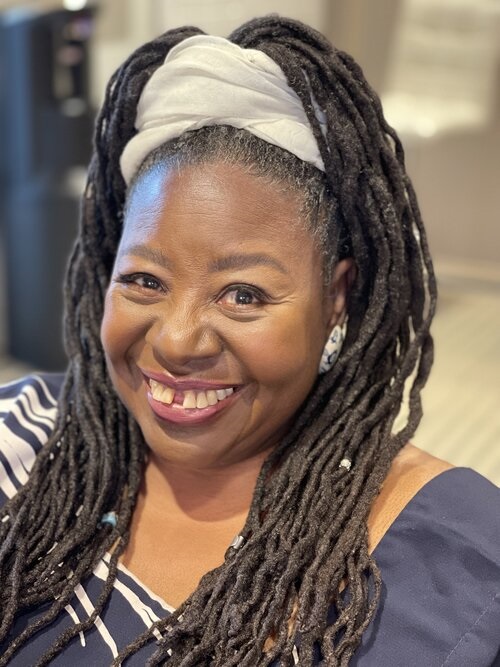
What we recognized as 12 Black women was that while our agenda overlapped with the prochoice movement in fighting for abortion, birth control, and sex ed, we had a different set of challenges, like my own – getting into the movement through sterilization abuse, not abortion rights. We don’t hear white women fighting for the right to have children like we have to unless they’re dealing with a particular fertility problem. But all we have to do is have an ingrown toenail and we get sterilized; it’s rarely fertility issues. And then our critique expanded to challenge both the prolife and the prochoice movement to exhibit as much attention to what happened to the child once they were here. So that’s where the original tenets of reproductive justice came from.
JB: As you just mentioned, reproductive justice is about more than just abortion – the book describes it as a human rights framework that centers “the right to have children, the right not to have children, the right to raise children in safe and healthy communities, and the right to sexual freedom and expression.” Why are each of those equally important?
LJR: The neoconservative movement built a base amongst the Christian nationalist movement using abortion to gain the electoral power that they needed to get Ronald Reagan elected. And that has been their strategy ever since. We all can patently see that Donald Trump is not a Christian, but he relies on the Christian nationalist movement and its attack on abortion. They see consolidating that Christian nationalist base as central to their strategy for power, dominance, and governance. And so what we both criticize is that if you don’t understand the role that attacking abortion played in undergirding this turn towards fascism and you‘re only using a gender access lens, you’ve only got part of the story. Because this is about the oppression of women for a particular political purpose, and that is about the patriarchy, but it’s about what type of political and economic systems we’re going to have as well.
MGF: Everything involving reproduction is about: who’s going to be here? Which bodies are valuable? Who’s going to have children, and who isn’t? If all you focus on politically is how not to have children, that plays right into the hands of the people who are trying to make this a country for white people and not people of color. At the time that the abortion rights movement was fighting for Roe v. Wade, women of color were also fighting against sterilization abuse and population control, but you would not have known that from the people who were focused only on abortion. Even though it seems so obvious that one side of the coin is having children and the other side is not, it isn’t if you have the racist lens.
JB: Some people might think of reprocide, forced sterilization, and other white supremacist tactics used to control communities of color as terrible things that occurred in the past, but they’re very much still happening today, both here and abroad. For example, the book mentions that fourteen countries in the EU still allowed forced sterilization as recently as 2022. Why aren’t these issues getting more press coverage?
LJR: Controlling the behavior of white heteronormative women and forcibly breeding them is what’s going to get the press and attention, because that’s what the people trying to manipulate fertility want to focus on. But I would define the kidnapping of 3,800 children by ICE as a form of reprocide. Because it’s happening to brown and Black children, it’s just not going to get the headlines – except for that poor unfortunate five year old. That’s also a form of reprocide that’s underanalyzed; it’s only seen as an immigration question and not a reproductive justice question. When you forcibly remove children from a designated targeted group – like with the Indian boarding schools, or the separation of Jewish children from their families – that’s a violation of the treaty against genocide.
MGF: And it explains a lot about who gets the megaphone. Who gets to set the agenda? Who gets to tell us what we are supposed to be looking at and outraged about? But now, helped a lot by people in Maine and Minneapolis, it’s not exactly working. People are looking now. It’s hard to unsee a child in handcuffs.
LJR: But that’s been happening to Black and brown children for 500 years.
MGF: Exactly.
LJR: What’s interesting about Minneapolis right now is the killing of those two white people – very visibly, undeniably. There’s something almost cosmic about the town George Floyd was killed in sparking yet another movement. That’s why reproductive justice should be seen as an organizing framework, because it’s our job as reproductive justice advocates to bring other movements into conversation with reproductive politics- to talk about the intersection between immigration abuse and denying people’s right to parent, or prison abuse, or pregnant women being kidnapped, or being denied sanitary products while they’re incarcerated. It’s about accountability, not just equality. I don’t want to be treated equally as bad as white women.
MGF: And in those ways, reproductive justice is a bridge in a way that choice never could be. Choice just doesn’t make sense to people who don’t have choices in life – people whose lives are shaped more by oppression. Justice does.
We’re also seeing other movements adopt the justice framework. It’s not disability rights any more, it’s disability justice – and housing and food and climate justice – because I think people are now seeing, “We’re all part of this.”
JB: Even before Roe v. Wade was overturned, many pregnant people struggled to access safe and legal abortion. As you note in the book, it’s an important distinction within the reproductive justice framework: “Roe had made abortion legal, but Roe had not made abortion accessible or available to everyone.” Even if a version of Roe comes back, I think that access would still be a challenge.
MGF: Given how people’s eyes have been opened, the struggle this time would be to include access. In other countries, healthcare is a right and it’s incumbent upon the state to provide it, but not here. So this time around, I have hope that we will “build back better,” as we like to say.
LJR: We can also look at the example of Canada, where denial of abortion is described as an act of gender discrimination. Their constitution already prohibited gender discrimination, and so they folded abortion into the constitutional protections against gender discrimination. We could have done that, but our Supreme Court rejected it, because they didn’t want to rule wholeheartedly on protecting women from gender discrimination.
JB: Multiple abortion stories are shared in the book, giving voice to diverse pregnancy experiences. How does storytelling help to “widen the lens” for folks who maybe have a narrow idea of who gets an abortion and why?
MGF: Storytelling is one of the core strategies of the reproductive justice movement. What the struggle is over is, whose story are you telling, and who is going to be lifted up? We used three abortion stories in the book to extract how the reproductive justice lens works: somebody who is transgender, somebody who had to go through the courts as a teenager, and somebody in immigrant detention. These are people that are not usually profiled.
The hope is to build empathy and not allow the antiabortion movement to divide people – you know, there’s the good people who have children and the bad people who have abortions. (And of course, we know that most people who have abortions already have children.) So that dividing up, which is just imposing all of the isms – the sexism and the racism and the homophobia – is what we’re trying to cut through. We hope people will see that while everybody’s abortion story is different, as everybody’s childbirth story is different, underneath people are simply trying to live their lives and have children and families. That’s a core underlying value.
LJR: Even in the abortion refusal stories that are being told right now, it’s always the person with a problem pregnancy who actually wanted a baby, because she’s a good woman who just had this unfortunate thing happen to her because of fetal viability. They don’t want to group her with the people who are doing it so they can keep a job or stay in college.
JB: That’s true – certain types of abortions for medical reasons get sympathetic coverage, but when someone makes the choice for other reasons, people don’t talk about it in the same way.
MGF: If you think about the case of Rosie Jimenez in 1977, she died right after the Hyde amendment. She had a check that could have paid for her abortion, but she was using it for her education. And so here you have a Latina woman who was a single mother, and the movement didn’t want to use her as their poster child.
There’s a heartwrenching book written by Frances Kissling and Ellen Frankfort – Rosie: The Investigation of a Wrongful Death – that catalogs how Frances went to the major abortion rights organizations trying to get them to take up the case of Rosie Jimenez and they wouldn’t. And so for years, we would honor the day that Rosie died, but it was an outlier activity. It wasn’t anything like the Roe v. Wade anniversary.
LJR: It’s what we call poster child feminism: one type of narrative. We have the same thing with domestic violence, with rape – we’re trying to create an archetype that middle white America can relate to as a way of getting some of the restrictions on women, or protections for women, done. But we do so at the expense of inclusivity in our own movement.
It’s kind of what the Democrats always do – they try to appeal to the white working class, what they call the “white male voter,” and sacrifice their own base in the process. I’m not sure the prochoice movement does much better.
JB: Right – a lot of people end up left behind. They don’t see themselves or their interests represented.
LJR: I worked at NOW from 1985-1989, when we were in the height of fighting for the Family and Medical Leave Act. And we knew we were fighting for unpaid leave, and I had all kinds of fights within NOW, because unpaid leave only benefits women in marriages where their husbands work. And they said, “Oh, well, we’ll come back and fix it later – let’s just get what we can get now.” And you know who’s mostly taking advantage of it? Men. But the women who most need it can’t even access it.
JB: In addition to this book, are there any resources that you’d recommend to people who’d like to learn more about the reproductive justice framework or get involved in their own communities?
MGF: First of all, learn about the abortion pills: know how they work, know how people can get them. And there are a few books on that. One is by our colleague, Carrie Baker, called Abortion Pills. Another is by Sydney Calkin called Reproductive Freedom Across Borders, and it’s about the networks that are helping people, and a third is by Naomi Braine called Abortion Beyond the Law.
Our other book on the reproductive justice movement is called Undivided Rights, and it has case studies of eight organizations at the national and local level; it gives a lot of insight into how different communities organize around reproductive justice. And the fourth chapter of our new book also details several examples of activism and how people are using the framework to reshape the work that they’re doing – as a lawyer, as a scientist, as a researcher, as an abortion fund.
LJR: I know that young people don’t like reading books, but whenever I want to educate people on reproductive justice, I don’t even go to my own primer; I say to get Pregnancy and Power by Rickie Solinger, because she has really done the work on deconstructing the narrative about racialized reproductive destiny. That’s the book I give everybody to start their reading on reproductive justice – she does the best explanation going back through the history of the relationship between pregnancy, power, and race.
MGF: I would also add Dorothy Roberts’ book, Killing the Black Body. It’s over 25 years old, but it’s just a brilliant book. In some sense she’s the shoulder that we’re all standing on.
LJR: And it came out the same year that reproductive justice was created. Dorothy and I have laughed about that. If we’d only known we were both doing the work, we could’ve tied it together.
*
Loretta J. Ross is an Associate Professor at Smith College teaching “White Supremacy in the Age of Trump” and “Reproductive Justice.” She started her career in social justice movements in the 1970s, working at the National Football League Players’ Association, the D.C. Rape Crisis Center, the National Organization for Women, the National Black Women’s Health Project, the Center for Democratic Renewal (National Anti-Klan Network), the National Center for Human Rights Education, and SisterSong Women of Color Reproductive Justice Collective. Her most popular book is Calling In: How to Start Making Change with Those You’d Rather Cancel. Some of her other publications include Reproductive Justice: An Introduction and Radical Reproductive Justice. Her latest book, Abortion and Reproductive Justice: An Essential Guide for Resistance, was co-written with Marlene Gerber Fried. Her website is www.LorettaJRoss.com.
Marlene Gerber Fried is a longtime reproductive rights activist and scholar. She was the founding president of the National Network for Abortion Funds and the Abortion Rights Fund of Western Massachusetts. Currently she is Professor Emerita at Hampshire College, where she taught for 37 years. She is Senior Faculty Advisor to Collective Power for Reproductive Justice, serves on the board of Women Help Women, and is on the expert panel on Abortion and Contraception for Our Bodies Ourselves. She edited, From Abortion to Reproductive Freedom: Transforming A Movement, and co-authored with Jael Silliman, Elena Gutierrez and Loretta Ross, Undivided Rights: Women of Color Organize for Reproductive Justice. Her most recent book, Abortion and Reproductive Justice: An Essential Guide for Resistance, co-authored with Loretta Ross, was released in September 2025.
About the Author

Jen Bryant is a senior editor at MUTHA Magazine and a creative nonfiction reader for Mud Season Review. Her writing has appeared in The Sun, Ms., BUST, Hip Mama, Cleaver Magazine, JMWW, MER Literary, and elsewhere. Jen’s work has been supported by the Ucross Foundation, KHN Center for the Arts, and the Greater Columbus Arts Council, and her writing has been nominated for the Pushcart Prize, Best American Essays, and Best of the Net. Originally from the South, she currently lives in the Midwest.
Related Posts

“A Place to Feel It All”: Kelly Grace Thomas on Infertility, Adoption, and Urgent Joy →

Poems from Future Tense →

The Wolf, the Knock, and the Visit →