A Dark History of White Saviors: Paige Towers on Her New Book About Familicide and Korean Adoption
There is an image in What They Stole: A Familicide Rooted in Intercountry Adoption that I cannot get out of my head: Because the Holt Adoption Program could not or would not pay for a pressurized plane to transport Korean babies to their adoptive homes in the U.S., the babies traveled by cargo plane. When the plane dipped below 9,000 feet, the ride would get so bumpy that the babies threw up. When it rose to a typical cruising altitude, the babies’ lips would turn blue for lack of oxygen. One or two or three babies died on almost every flight.
Why couldn’t the adoption agency afford a proper plane? Why not have the adoptive parents fly to South Korea to pick up their new children? Why did 200,000 children need to be adopted by Americans and Europeans in the first place? Did they need adopting at all?
Each question peels away to another, bigger question, like an onion whose center is a hard bulb of patriarchy and colonialism. Paige Towers takes on all of it in What They Stole (University of Iowa Press)—and investigates a murder.
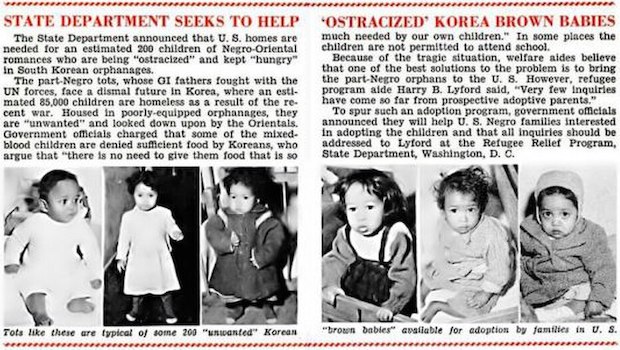
Towers braids two narratives, each driven by a white man claiming to do good. There’s Harry Holt, who made his fortune in the timber industry and was captivated by stories of children impoverished by the Korean war, which he heard through his church. Although he and his family initially “sponsored” the children, the idea of “saving” them—materially and spiritually—via adoption appealed to his evangelical heart. Towers documents his and his wife Bertha’s role in what she calls a “mass forced diaspora.”
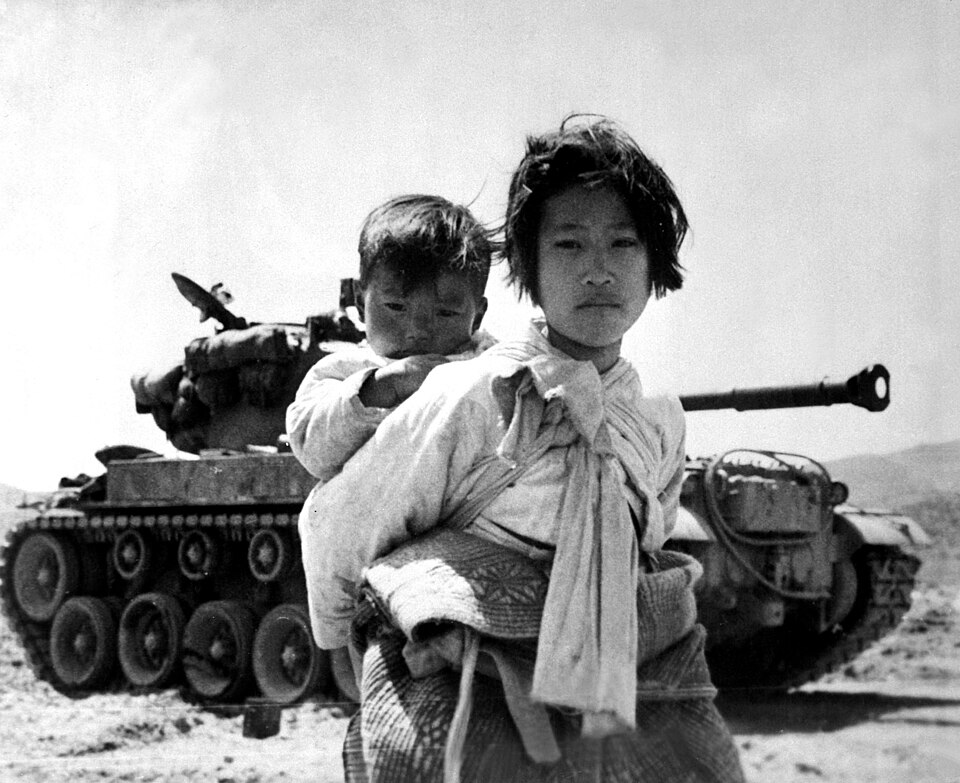
Because of haphazard documentation, no one will ever know how many of those children were taken via coercion or kidnapping. (I had read enough about Korean adoptions to know that the number was probably high. Now I believe it is much, much higher.) Others died in under-funded orphanages run by the Holt agency. And because the agency’s primary requirement for adoptive parents was that they be born-again Christians—rather than the extensive home studies required in most adoptions today—some children died at the hands of the people who adopted them.
One of those adopters was Steve Sueppel, who lived a squeaky clean life with his wife, Sheryl, in Iowa City. In the late 1990s and early 2000s, they adopted four children from South Korea. In 2008, as he was facing federal embezzlement and money laundering charges, he killed them all, along with Sheryl and finally himself.
I admit that when I first read the premise, my mind filled with #NotAllAdoptiveParents feelings, which happens anytime I read about the crimes, big or small, of adoptive parents. Biological parents murder their children too! I thought maybe the Sueppels’ story was a salacious hook to draw readers into the larger issue of systemic abuse.
Then, as Towers described the typical “family annihilator” profile, I saw the parallels. Both Steve Sueppel and Harry Holt were men who perhaps had good intentions. But neither could imagine a better world that did not have them—despite their flaws and struggles—at its center. Both were responsible for the suffering and deaths of the very people they allegedly wanted to help. Their hubris is what makes What They Stole a cautionary tale as opposed to simply a horror story.
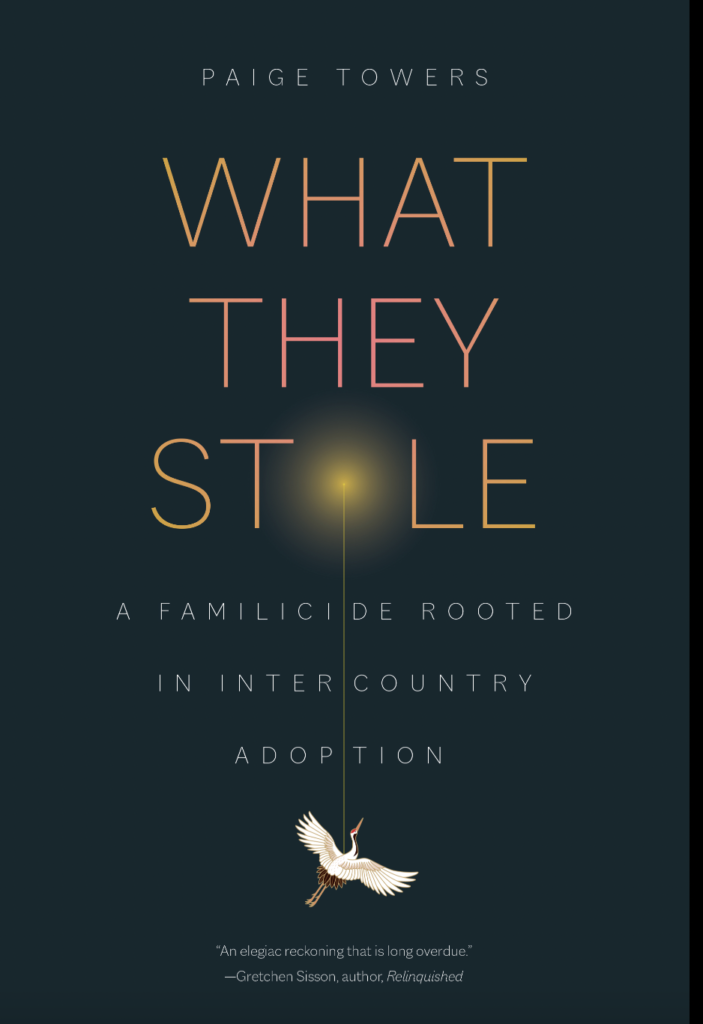
Cheryl Klein: What inspired you to write What They Stole? It seems like a big departure from your previous book.
When I first conceived of writing a book investigating the human costs of Korean intercountry adoption, I was working as a freelancer in Milwaukee. I’d finished—but not yet sold—my first book, The Sound of Undoing: A Memoir in Essays. That project involved research about noise pollution, silence, sound sensitivity, but it was ultimately a lyrical, creative, personal work.
Like you said—a big departure.
But here’s what happened: In 2019, I woke up one morning and realized I had never googled a 2008 case that had stunned my hometown of Iowa City: the Sueppel familicide. A local bank vice president, Steven Sueppel, murdered his wife, Sheryl, and their four adopted children from South Korea before dying by suicide. I didn’t know the Sueppels personally, but Iowa City is a close community. I had countless small social connections to the family.
As I revisited the case, I came across commentary from adoptees on Reddit. This led me to reporting on the traumatic history of intercountry adoption from Korea and the systemic problems within the industry more broadly.
Right away, I couldn’t read enough. I ordered academic books, memoirs, and even poetry on adoption. I read books from pro-adoption folk, as well as self-published memoirs by the Holt family of Holt International—the agency that helped expand Korean intercountry adoption into a global industry.
It was daunting to step into the role of a journalist; I’m essentially self-trained, with an MFA in creative nonfiction. But very quickly I decided that the Sueppel case and its larger history would become my next book.
Paige Towers: You note that in the 1950s, the Holt agency’s only real criteria for adoptive families was that they be born-again Christians. You describe a number of reforms that have taken place since that time. What were the most important strides? What issues remain that make children vulnerable?
As documented in What They Stole, the Holt family’s approach to intercountry adoption was highly unorthodox and reckless. Harry and Bertha Holt adopted eight children from Korea in 1955. By 1956, despite having no background in child welfare, they’d launched a primitive adoption agency that, as you noted, relied on applicants being “saved.”
Over time, Holt professionalized, meaning prospective adoptive parents underwent background checks, home studies, interviews, and training. But I feel uncomfortable with the word “professionalized.” It’s easier to turn a blind eye to something troubling once it has paperwork, trained staff, procedures, polished language…
By the 1980s, intercountry adoption from Korea to the Global West had become a massive competitive industry. Agencies competed for children. Babies were separated from families at alarming rates. And fraud, coercion, bribery, and kidnappings skyrocketed, even as American media continued to publish overwhelmingly sentimental adoption stories.
Many child welfare experts now acknowledge how thin the line was between intercountry adoption and child trafficking.
Beginning in the 1990s, adopted people, activists, feminists, lawyers, scholars, and journalists pushed for major reforms. These changes include things like family preservation, more stringent documentation, expanded background checks and training requirements, stronger consent procedures for biological parents, and restriction of programs in countries where corruption and child laundering were prevalent.
The 1993 Hague Adoption Convention also established international standards to reduce trafficking and coercion. And adoptees increasingly advocated for access to citizenship, records, and legal protections.
As a result, intercountry adoption is now far more restricted than it once was. But one of the questions What They Stole asks is what happens to these regulations when the world further destabilizes. Historically, expedited and illegal adoptions emerged after war, colonialism, displacement, and social collapse. As we confront climate migration, authoritarianism, attacks on women’s rights, attacks on immigration, poverty, and armed conflict, these vulnerabilities do not just…disappear.
We can already see echoes of this in Ukraine. International investigators have concluded that Russia unlawfully deported or forcibly transferred tens of thousands of Ukrainian children across the border. Like many past adoption scandals, the removals were framed through a rescue narrative: these children were supposedly being saved and placed with “good” families.
In reality, an unknown number of kids are undergoing military training in North Korea.
It’s important that we condemn these actions—that we deter people in power from exploiting times of suffering and disorder to take children. A “resolved” or lessened crisis can become its own kind of camouflage; people might mistakenly believe the issue is permanently contained.

CK: I had the honor of reading Roxanna Asgarian’s We Were Once a Family and interviewing her for MUTHA. She also uses a horrific murder as a jumping-off point to talk about problems in the foster care and adoption systems (domestic, in that case). Did, or how did, that book inform your approach to What They Stole?
PT: I admittedly didn’t read Asgarian’s We Were Once a Family until very recently. I’m surprised it stayed off my radar; looking back now, it was widely reviewed and discussed. But my child was two at the time, I was working without childcare, and I was just overwhelmed.
Anyway, I do wish I’d read it earlier as there are many parallels between our books. Rather than treating the case of the 2018 Hart family murders as a singular horror story, Asgarian argues that the Hart family became possible through broader systemic problems: underfunded child welfare agencies, the demand for adoptable children, inadequate post-adoption oversight, and a cultural tendency to idealize adoptive parents, especially white rescue narratives involving children of color.
What They Stole documents a different subject matter: the Holt and Sueppel families, Korean adoption, and the rise of intercountry adoption rather than domestic. But both books ask questions about power. Like, what happens when vulnerable children become symbols of morality, religion, generosity, and multiculturalism? What happens when they’re no longer autonomous individuals with rights and protections of their own?
Both books also examine how adults and their institutions can become deeply invested in preserving the image of adoption success, even when children and their biological families are suffering.
CK: What was the most challenging part of reporting and writing this book? What was most rewarding?
PT: In retrospect, taking on a book of this magnitude was wild. I had no mentors, no childcare, and my writing group had largely dissolved under the pressures of work and parenthood. At the same time, I was conducting interviews about extremely sensitive subject matter and managing an overwhelming amount of historical research.
On a personal level, though, the hardest part was having and raising my own beloved child while writing about violence inflicted on children. There were moments when my grief or anger seeped too heavily into the prose. I had to rewrite those sections later.

There were also practical challenges. Adoption confidentiality laws and agency restrictions prevented me from accessing many records I requested. I developed great sympathy for what adopted people endure when trying to track down details about their early lives and family histories.
More than anything, though, I constantly felt as if I were navigating some huge, murky river. I didn’t want to retraumatize friends and family members affected by the violence, even as I was asking them very difficult questions. I also didn’t want adopted people to feel pressured into narrating painful personal experiences for my understanding, especially because adoptees, activists, and scholars have already produced such a profound body of work about adoption.
Similarly, I also didn’t want to make anyone feel like I was reducing their identities or relationships to their adoption stories. I didn’t want to rely too heavily on someone else’s emotional labor.
That said, when a source provided a memory or detail that I’d never heard before, it felt like a little lightning strike. The same feeling occurred when I found an obscure article or put together fragments of a story. Any decent investigator struggles with obsession, right? You just keep chasing evidence in hopes you’ll eventually assemble it all into something whole—something that can withstand scrutiny.
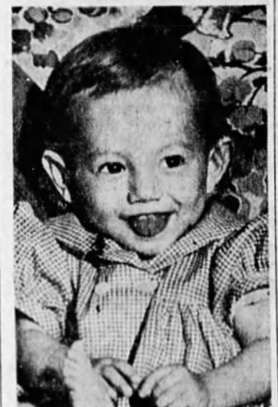
I want to share one quick example: A few months into researching, I came across the name Wendy Kay Ott, a two-year-old Korean girl who died in Roseburg, Oregon in 1957. Wendy’s name was listed on a now defunct website called Pound Pup Legacy, which documented the dark history of intercountry adoption. I was never able to reach the site’s creator; I don’t understand how they uncovered this case. It’s incredible.
Anyway, I took it upon myself to learn as much as I could about Wendy. I won’t go into the details here—her story constitutes an entire chapter in the book—but one of my lasting regrets is that I couldn’t recover more about Wendy’s life. Instead, I could only briefly reconstruct her final weeks, as well as the aftermath of her death.
CK: Toward the end of the book, you draw a line between Steve Sueppel’s probable narcissistic personality disorder and Harry Holt’s hubris. Both believed that children couldn’t possibly thrive under anyone’s “care” but their own. This, for me, was where I finally understood why the Sueppels’ story was relevant to the Holts’ beyond the Korea connection.
PT: Yes. For me, this book is not simply about bad actors or historical connections. It’s about a recurring mindset: white saviorism, American and Christian exceptionalism, and the belief that ordinary rules or outside intervention do not apply to you because you alone know what is best for children.
That mindset also erases biological families. It erases children’s biological mothers. Furthermore, there’s this recurring logic within adoption systems that elevates adoptive parents as uniquely virtuous, which can shield them from scrutiny.
To be clear, I am not arguing that Steven Sueppel and Harry Holt were equivalent figures. What interested me instead was how many people in the U.S., Canada, Europe, and Australia became convinced that they alone could save and properly care for children from Korea…or Guatemala, the Philippines, China, Colombia, Thailand, India, Ethiopia, or a dozen other countries.
That belief did not emerge naturally. It was cultivated over decades through adoption agencies, humanitarian rhetoric, and media portrays that framed intercountry adoption as an uncomplicated moral good.
CK: Were colonialism and patriarchy at the forefront of your mind as you wrote, or do those themes emerge naturally from Steve and Harry’s narratives?
PT: In my experience, it’s impossible to write about intercountry adoption without writing about colonialism and patriarchy, particularly during the Cold War era. The same is true for war, military humanitarianism (a term I encountered in SooJin Pate’s From Orphan to Adoptee), Western intervention, religion, and race.
In many ways, those themes emerged organically from the stories themselves. Who held power? Who was deemed fit to parent? Who was silenced and shamed? Who was expected to sacrifice?
Children, of course, also moved from politically weaker nations into wealthier Western countries—a flow that mirrored colonial patterns of extraction.
Patriarchal ideas about authority, rescue, and the nuclear family also surfaced repeatedly in both narratives. Certain men and institutions—including Harry Holt and his agency—were granted extraordinary trust and moral authority. And all at the expense of women and children.
CK: You cite a statistic that children are more likely to be killed by a non-biological parent, which makes adopted kids an inherently higher risk group. I admit that as an adoptive parent and a member of the queer community, that was a hard truth to stomach, because chosen family means so much to so many of us. Did researching and writing this book change your ideas about family building? How did it impact you as a mother?
PT: Writing this book forced me to think much more deeply about power within families, especially situations in which children are not only reliant on adults, but also on institutions and narratives they cannot control.
But writing What They Stole did not leave me believing that biology is what makes a family safe or loving. I wish this could go without saying, but it should be stated: many adoptive, queer, blended, and chosen families are deeply nurturing and stable.
What concerned me more was the way adoption systems can idealize adults as altruistic or self-sacrificing, even at the expense of scrutiny or accountability.
Since the 1950s, adoption in the U.S. has been framed as inherently virtuous, and adoptive parents are still frequently viewed as unquestionably benevolent. Of course, like biological families, adoptive families are made up of human beings, not moral archetypes.
So while that statistic is painful, I don’t believe chosen family is somehow lesser than biological family. What They Stole just argues against romanticizing any family structure to the point where we stop listening to adopted people and their biological families.
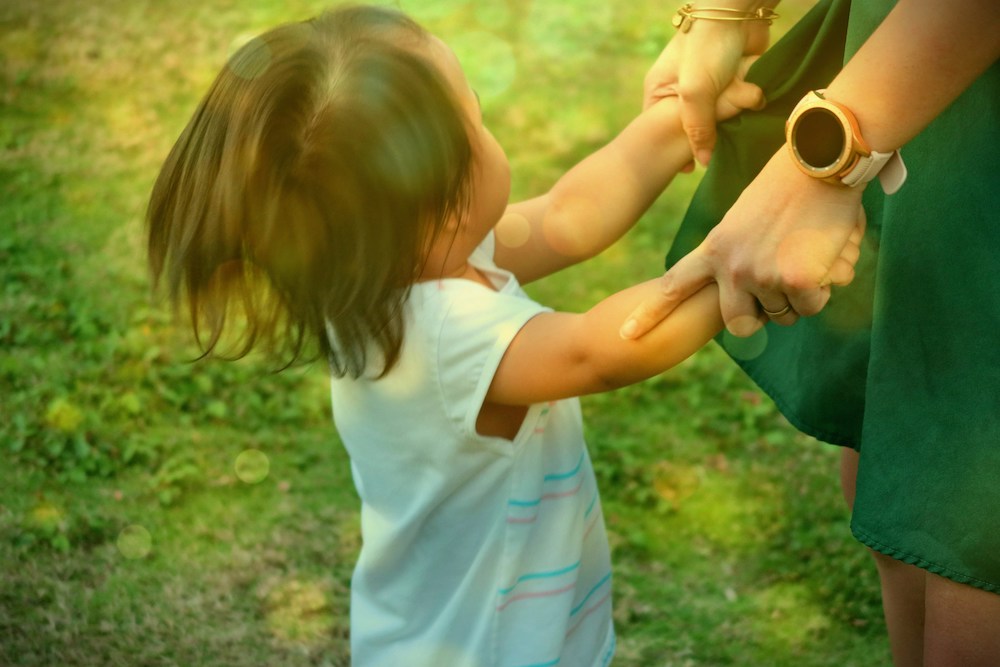
In terms of how writing this book impacted me as a mother, I think I came away from this project much more grateful for the closeness I have with my child. For my ability to raise him.
It also made me painfully aware that love alone doesn’t protect children from systems or religious and political ideology. I’m now working on a novel about a mother in fear of losing her child to foster care. It’s a near-future dystopian story in which—under immense federal pressure—Washington State has semi-privatized its child welfare system with Christian agencies.
I’d never be writing this novel if it weren’t for the research and testimonies I encountered while working on What They Stole.
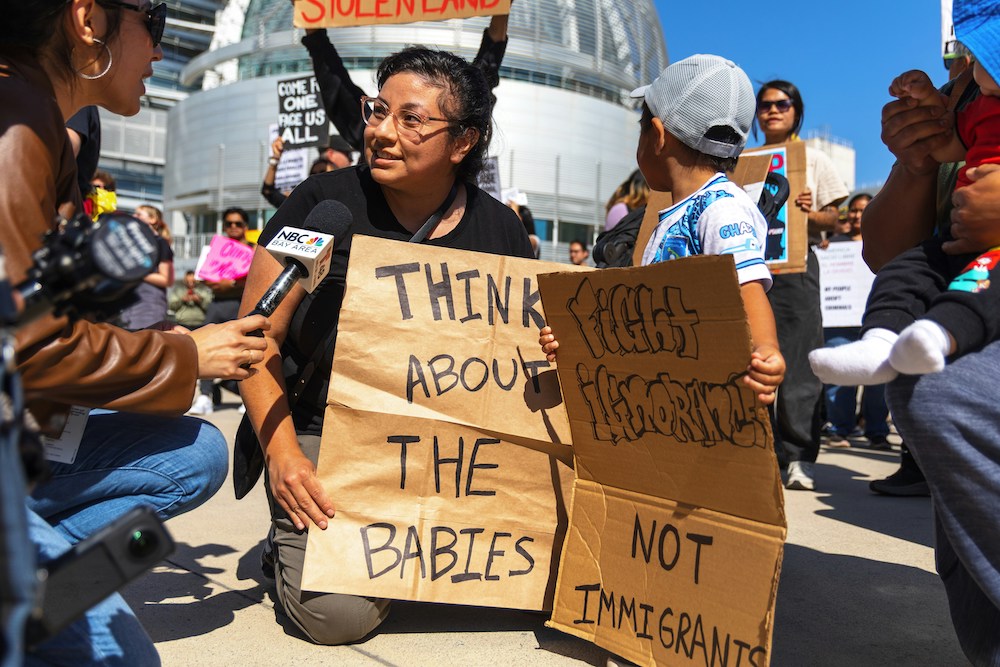
CK: I think many readers (myself included) will be surprised to learn that until 2000, children adopted from Korea did not automatically become U.S. citizens, and that some were deported as adults. (The policy was not retroactive, so there may be adults adopted prior to 2000 who are still undocumented.) Where do you see parallels with the current immigration crackdown administered by the Trump administration?
PT: First, for anyone who wasn’t aware of this citizenship issue, I think it’s important to start by considering just the tangible effects of this immense government neglect. It limits adopted people’s access to work, healthcare, and legal protection, never mind puts people at risk of detention or deportation.
But there’s also a psychological effect: people were brought to the U.S. as infants. Their flights were booked; their adoptive families were chosen. They had no say in being transferred across borders. Can you imagine the violation?
Moreover, adopted people were often rhetorically treated as fully American and folded into narratives about American benevolence, rescue, family, and assimilation. As it turns out, though, their belonging was conditional. Despite all the feel-good stories, many people have remained legally vulnerable for decades.
Regarding the Trump administration and the current actions of ICE, I see parallels any time immigration systems create categories of people who are socially integrated yet legally precarious. Writing this book forced me to examine how governments decide who belongs, who is legal to the state, and whose status can suddenly become unstable.
Like immigration, adoption has always been intertwined with bureaucracy, citizenship laws, borders, nationalism, and race.
And in case people didn’t know, intercountry adoptees are increasingly being detained and deported. The New York Times ran a comprehensive story on the issue in March. I hope readers recognize that adoptees should not be left to fight these battles alone.
CK: One statistic I read said that international adoptions in the U.S. fell 93% between 2004 and 2022. Even though intercountry adoption is becoming much rarer, are there issues or lessons from the Holt story that readers can apply when thinking about contemporary adoption, child welfare, foreign aid, immigration, and other intersections?
PT: The Holt story reveals how easily children can become symbols for adult desires, political agendas, and national narratives, especially during a crisis. Even though intercountry adoption has sharply declined, many of the underlying questions remain unresolved, like, who gets defined as a “good” parent? How does poverty become conflated with neglect? Who profits—materially, politically, or emotionally—from separating children from their communities?
One of the major lessons of the Holt story is that humanitarianism and harm can coexist. We still see similar dynamics in child welfare systems, immigration policy, refugee resettlement, and foreign aid initiatives, where at risk families are often acted upon rather than supported.
Someone recently asked me if I’m “anti-adoption.” I would never describe myself that way. At the same time, researching this history did leave me deeply cautious about family separation. Whether we’re talking about foster care, migrant detention, or global poverty relief, societies often devote more resources to managing family separation than preventing it in the first place.
The history of intercountry adoption also teaches us so much about identity, displacement, and belonging. Adoption does not end at age eighteen. Beyond the issue of citizenship, thousands of adopted people have spent decades (and enormous sums of money) trying to recover records, medical histories, languages, and lost connections.
Those struggles raise important questions that remain urgent today: Who gets to move freely? Who gets to belong? And whose histories are preserved?
About the Author

Cheryl Klein’s column, “Hold it Lightly,” appears monthly(ish) in MUTHA. She is the author of Crybaby (Brown Paper Press), a memoir about wanting a baby and getting cancer. She also wrote a story collection, The Commuters (City Works Press) and a novel, Lilac Mines (Manic D Press). Her stories and essays have appeared in Blunderbuss, The Normal School, Razorcake, Literary Mama, and several anthologies. Her MUTHA column “Onesie, Never Worn” was selected as a Notable Essay in Best American Essays 2022. She blogs about the intersection of art, life, and carbohydrates at breadandbread.blogspot.com. Follow her on Threads: @cherylekleinla.
Related Posts
Childcare and Breathing: An Excerpt from STUDENT PARENT →
Lost and Found: Join us at the Brooklyn Book Festival x MUTHA x Pen Parentis Lit party! →

Wanderlust: A Supposedly Fun Thing I Would Definitely Do Again →