Interrogating Girlhood: A Conversation with Melissa Fraterrigo
I had a girlhood; for the first seventeen years of my life, I lived and identified as a girl. I came out as transmasculine right before the start of my senior year of high school and since then I couldn’t be happier with the man I’ve become. But I still hold that little girl very close to me. I feel protective of her.
I remember the first time she caught a boy staring at her chest. When she wore oversized sweatshirts that hid her tiny shorts and fantasized about men desiring her. I remember when her period started and she thought “I can get pregnant now.” I still have the habit of sucking in my stomach because she was ashamed of being fat.
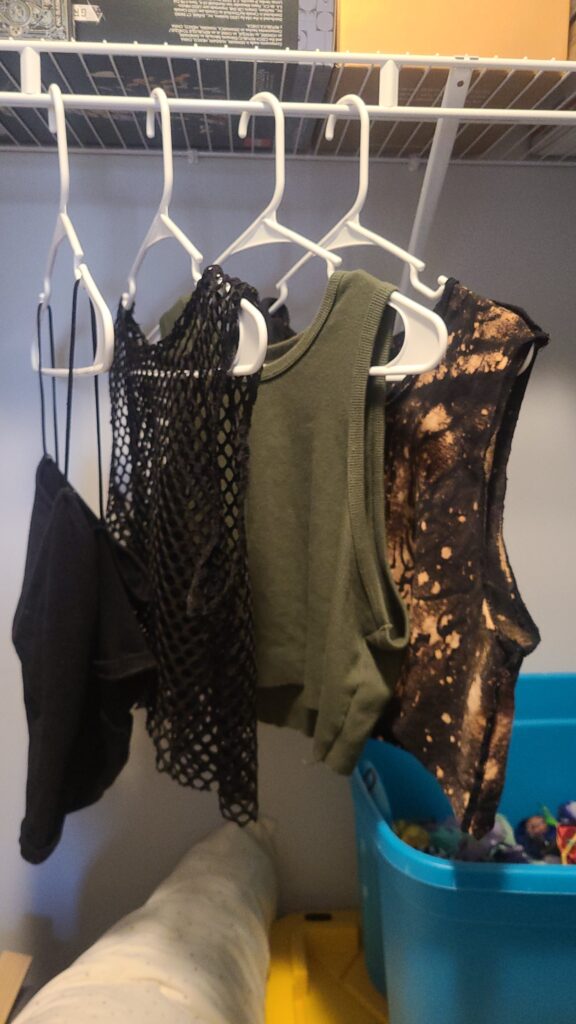
I suppose she is much like a daughter to me. When she’s sad, scared, unsure, I hold her close to me and I tell her that everything will be okay. For every time she looked in the mirror and hated what she saw, there’s a selfie saved on my phone. For every time she pinched her stomach and thought “if only I was skinny,” there’s a crop-top hung up in my closet. I am not devoid entirely of her fears and insecurities; I still avoid standing on scales or smiling too wide. But I live my life to prove to her that, despite those insecurities, I walk with my head held high, eyes looking to the horizon.
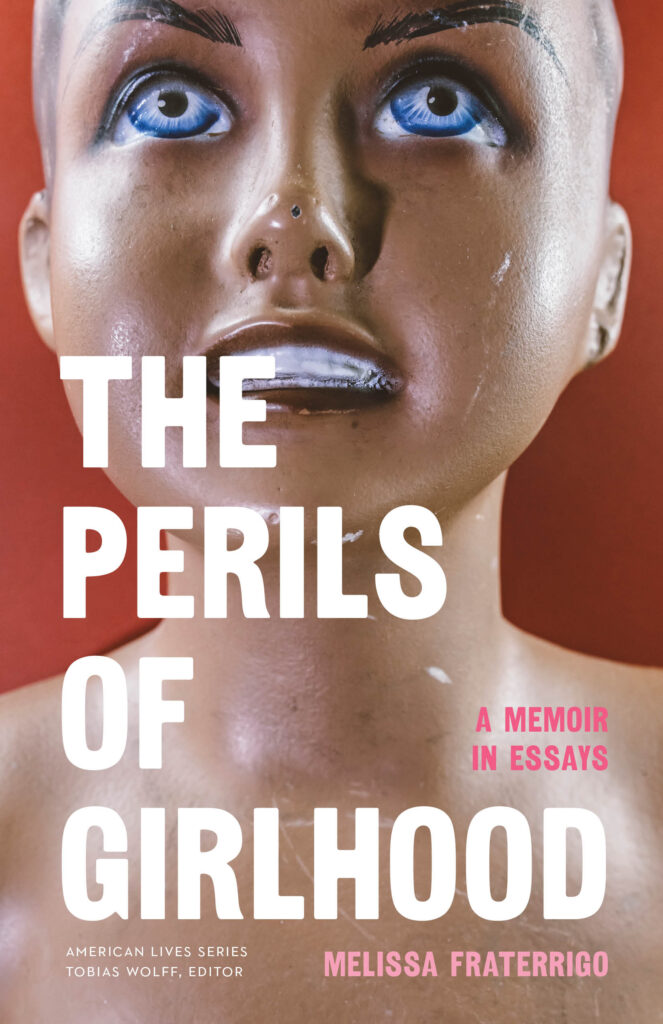
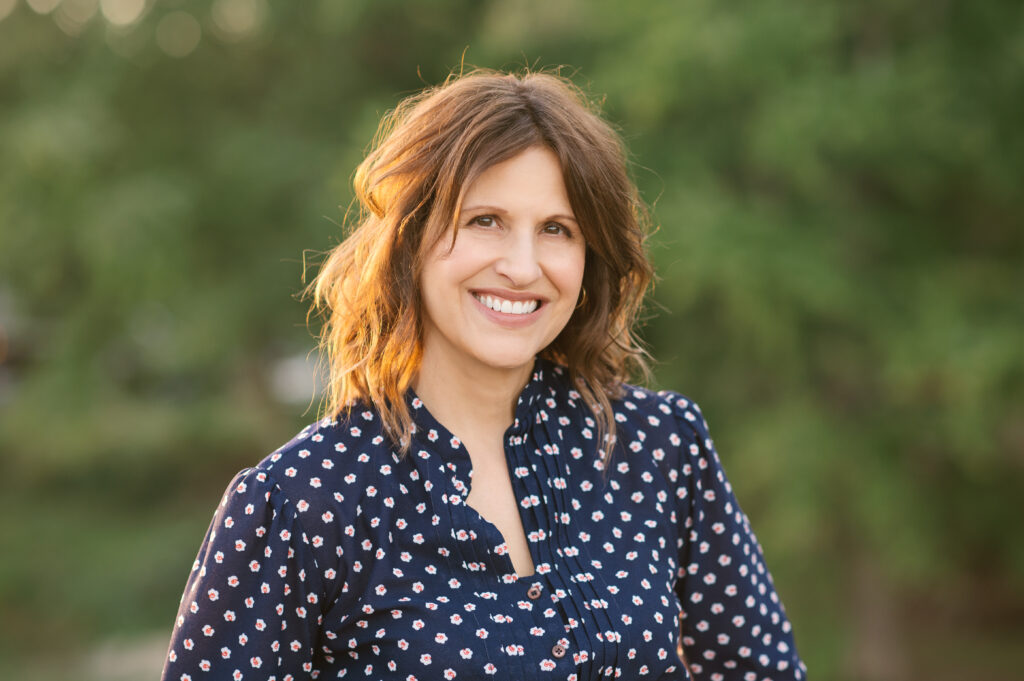
I thought of that girl I once was while reading The Perils of Girlhood: A memoir in Essays by Melissa Fraterrigo (University of Nebraska). The narrative centers on Fraterrigo while she looks back on her childhood as she questions, as she told me in our following conversation for MUTHA, how to help her daughters with their own self-criticisms and body image issues. As a young girl, Fraterrigo navigates dating, eating disorders, sibling rivalry, and the struggles of self-confidence and the desire for external validation. Fraterrigo teaches creative writing at Purdue University and Butler University; she also founded the Lafayette Writer’s Studio, which offers writing workshops to the local community. Her prior titles include the novel Glory Days, as well as a collection of short stories titled The Longest Pregnancy.
I highly recommend The Perils of Girlhood to anyone who has experienced growing up as a girl. There’s a bittersweetness to being able to relate to what’s written inside. On one hand, it’s a tragedy that so many people hold similar stories to Fraterrigo’s; almost as if such experiences are a requisite to girlhood. On the other hand, there’s relief in knowing we are not alone; that through these shared stories we may find ourselves and each other. The perils and joys of girlhood are bonds not just shared between mother and daughter or between sisters, but also friends, neighbors, and beyond.
I got the chance to talk to Fraterrigo about all of this. Here’s our conversation… – Rowan Tetro
Rowan Tetro: What was your motivation for writing this book?
Melissa Fraterrigo: My daughters really compelled me to sit down at my desk and write about The Perils of Girlhood. The book itself came about during a time when they were on the cusp of adolescence and beginning to struggle with some of the same self-criticisms and body issues that had plagued me as an adolescent. So, I began to think about how by returning to my own experiences, I might further interrogate that time in my life as a means to help them.
RT: Throughout your book, you frame much of your life and experiences around men; your swim coach, your father, your husband. You also carry this trend over in your discussions of pregnancy and motherhood; the male doctor, the man who murdered two young girls, the looming threat (both real and perceived) of sexual predators. I’m curious to know if this was intentional, but my question is this: Why do you think girlhood, womanhood, and motherhood are often conceptualized through relationships to men?
MF: This is a great question, and I do believe that the men you noted from The Perils of Girlhood were written about subconsciously. These were the individuals who were helping me better understand my place in the world at particular moments in time, certainly my father when I was a girl, my swim coach when I was an adolescent, my husband as an adult——and I do think that girlhood, womanhood and motherhood are often conceived through relationships to men because it’s much easier to understand who we are when we have a clear contrast between ourselves and others. When you think about girlhood and womanhood and motherhood, these are pivotal times in a woman’s life, times when she is often most aware of the ways in which she is othered or different from men, and these are also times when those differences can twist into internalized misogyny. So, it’s through our relationships to men that women discover their possibilities and maybe sometimes limits—and through that, they gain greater understanding of themselves.
RT: The most you write about your mother and your maternal line is in the chapter, Vinegar; you describe the various applications the women in your family had for vinegar (haircare, cooking, cleaning). You feel the greatest connection to your maternal family when cleaning your floors on your hands and knees; why is that?
MF: I think there’s something really visceral about using a concrete image as a portal to the past, and when I’m doing particular chores, it might be making a certain recipe in my kitchen, or folding my daughter’s socks the way that my mother used to, but the repetition of those tasks connects me to the women who have come before me and the hardships of their own lives—some of which I’ll never understand. I think I’m also playing there with that antiquated notion around domesticity and it being women’s work. Here, I use the washing of my floors to think about so much more—my childhood family, the miscarriages I experienced, and I also foreshadow my husband’s illness. So, while I’m cleaning my floors with vinegar, there is so much more that I’m considering. Like many women, such realities dwell beneath the surface and most individuals would not be privy to such stories. It’s only through this essay that such anecdotes and lineage are considered.
RT: You and your sister appear to have had a strained relationship as children. Could you expand on what it’s been like growing up as sisters? What is your relationship with each other like today?
MF: I was often jealous of my sister when we were kids. She excelled in everything she did from academics to the volleyball court. My parents were not the most confident individuals, and as a child, I was very aware of how my sister’s accolades puffed their own egos. This was something I was unable to offer them. It’s near impossible to hold such grudges against your parents—but you can push such disdain on a sibling, and that’s what I did. It wasn’t until we were both in college and free from the house where we grew up that we began to get to know each other and bond over our shared history. I love my sister. She’s one of my best friends. So, despite us going through some challenges together in the past, if we hadn’t gone through some of what we did, I don’t know that we would be as close today as we are.
RT: How did you feel when you found out you were having girls?
MF: Well, I didn’t know I was having girls. I wasn’t interested in learning their gender. Throughout my pregnancy, there was a pretty large size discrepancy between the fetuses, so I assumed that I was having a boy and a girl. So, in the moment that the OB announced that my first daughter was a girl, obviously, I was elated. And then when my second daughter was born, I was, to be quite frank, a little shocked. I had hoped, in some ways, that if I had a boy, I might be able to help him grow up to be sensitive and knowledgeable about girls and women and he could be a counterpoint to some of the machismo that I had grown up alongside.
Obviously, that was simply an idea for what I thought my life would be like as a parent. All of that changes in an instant. As soon as I held my girls, it didn’t matter what gender they were, I was going to love them and support them and help them be their own people no matter what.
RT: If you had to choose one word to describe the experience of girlhood, what would it be?
MF: Real.
RT: Is there anything you wish you could go back and tell Little You?
MF: I wish I could go back in time and tell younger me that she is just fine the way she is, and she is worthy of love, even if she struggles with fractions and sometimes she trips walking down the sidewalk, she doesn’t need to be perfect to be loved. I would tell her she is worthwhile.
RT: You are very transparent in your perceived failures and regrets as a mother. You admit to having a short temper; repeating the behaviors you suffered from your father. As one of your daughters dealt with seizures, you looked back to the feelings of disgust and perceived moral failings around your aunt’s epilepsy. You suffered several miscarriages and blamed yourself for them. For any mothers and those who want to be mothers who might read this, do you have any advice for them?
MF: Motherhood has long been viewed as something akin to sainthood. We create characters of what we believe women should be when they’re mothers, and we put them on a pedestal. We expect them to look beautiful, but also tend to their children’s needs. We expect them to hold full-time jobs, but also keep clean homes. We expect them to bake homemade treats for PTO gatherings and run 5Ks. The greatest bit of advice I would have for any mother is to simply be yourself. Just because you are a mother doesn’t mean you are not human. You simply have to be your own basic, remarkable self, and that includes the self that you were before you had kids. Maintaining a connection to those earliest tendrils of being remains paramount.
About the Author

Rowan Tetro graduated from the State University of New York at Oswego with a Bachelor of Arts in Gender and Women Studies. When not writing, he spends his free time playing video games, reading, and not finishing various craft projects. He also really likes bugs!
Related Posts

Earthside →
Lucky →
Childcare and Breathing: An Excerpt from STUDENT PARENT →