Goodbye, Forever: A Review of No Contact
When I cut off contact with my mother a few years ago, I was hungry for books and essays written by people who’d made a similar choice. Back then, they were difficult to find. There’s a good reason for that: Stories of family estrangement are some of the hardest to tell. It’s an extremely taboo—but popular—subject, with a recent episode of Oprah’s podcast going viral and reaching 5 million views then necessitating a follow up episode due to major backlash. Many viewers felt the first run had centered the people who had been estranged from—rather than those of us who have made the difficult choice to cut off contact. The people who approve of estrangement call this choice healthy and crucial. Those who don’t, call it toxic, cruel.
Opinions are heated on all sides, but one thing is clear across the board: people want to understand how estrangement happens. We want to connect with people who are living separated from their families. We’re looking for a community and a map, in story.
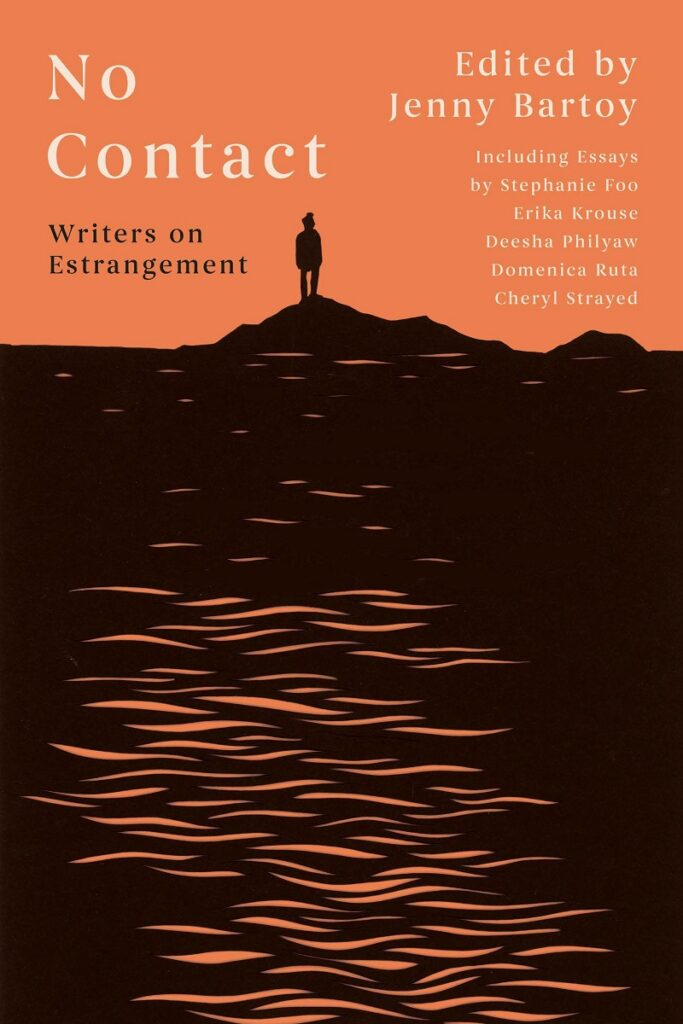
That’s what the anthology No Contact, edited by Jenny Bartoy, provides. “Estrangement presents an essential existential question: Who are we without our family? What kind of person cuts the proverbial umbilical cord and why? And who do we become once separated from our kin?” writes Bartoy, in the introduction.
In the 32 first-person essays and poems that follow, authors like Cheryl Strayed and Stephanie Foo write about the decision to disconnect from people who we are told should be part of our lives forever. They give us the background, the moment the decision became necessary, and the aftermath.
The stories span the most familiar estrangements—between parents and children—as well as interrogating the distance between siblings, extended family members, countries, cultures, and how estrangement works in communities and across institutions.
In “The Many Meanings of Family Estrangement,” Raskha Vasudevan writes, “If immigrants in America are thought to lead lonely lives, misplaced and misunderstood by mainstream society, we are also thought to find refuge in our families. Out there, America can be scary, alienating, confounding. But at home, with the people who share our blood and our language, the people who made the arduous journey from the homeland to here with us or before us, life is bearable again…
…My family’s stories of family are not the same. I don’t know whose version is most true. What I do know is this: I’m tired of trying to find belonging and safety where there’s none to be found.”
In “Mother’s Day,” Cassandra Lewis balances her choice to estrange from her mother with an exploration of the way the lack of mental health services impacted her mother’s behavior. “My feelings about my estrangement from my biological mother change frequently because they are entangled with my frustration over the lack of social resources for people in need. Our mental health system has largely been replaced with a prison system. But the shifting foundation of my feelings rests on my rock-solid belief that all people, no matter what mistakes or bad behavior they may have exhibited, no matter what mental health issues they may be grappling with, have the capacity to change, to do better,” Lewis writes.
Nearly all the included prose illustrates the textures of grappling with the weight of a major, often hidden choice, sometimes documenting years of attempts to redefine relationships, confront abuse, pain, disconnection, or trauma, and effort to keep the now estranged family member in the writer’s life. “This whole time, I had been ready to forgive my mom. I had longed to be the bigger person,” writes Emi Nietfeld in “A Leap of Logic.” “No matter how hard I fought to evaluate the evidence, draw a conclusion, and stick to it—my bond with my mom still held, stronger than logic. It was where my umbilical cord attached to her placenta, my mouth to hernbreast, my first home. It seemed like the only solution was to become mentally tough. I had to create a model of the world where both my mom and I could be right. But as each month passed, my nagging suspicion grew stronger: What if that was literally—logically—impossible?”
In “Together,” Mattilda Bernstein Sycamore writes, “When I was twenty-one, I confronted my father about sexually abusing me. I gave him a fourteen-page document where I told him what I remembered, how the abuse had harmed me, how I was healing. I told him I would never speak to him again unless he could come to terms with it. He started screaming at me, he called me psychotic, and I walked away.”
Many of these writers, like many people who experience estrangement, went through several rounds of no or low contact with family members. Some return, eventually, perhaps later in life, right before or after death. Reading these stories is validating and vulnerable. I, too, started the path to no contact with my mother twenty years before I made it official, with several months or years of distance before we’d come back together, and I’d try again. Through these essays, I witnessed the writers plotting their own maps, dissecting their own thinking and the collision of hopes, love, and hurt at nearly every turn.
Across the anthology, no two essays tell the same story, all of them taking unique shapes. Some begin with the moment of estrangement, some with the writer’s birth or the loss of the estranged family member. Some are arranged lyrically, in stanzas, in Acts as if written into a play, or in a litany of different types of estrangements. Reading the anthology cover to cover, as if it was a novel, felt like traveling through a hidden world, each author presenting their stories and lives like a guide: Here’s what I was thinking, here’s what I was feeling, here’s why I had to do what I did.
No Contact showcases modern literature at its very best: It is welcoming, diverse, specific, and expansive. It invites you into worlds of togetherness in the hearts and minds of separation. “We want to believe healing is more perfect, like a baby on its birthday. Like we’re holding it in our hands. Like we’ll be better people than we’ve been before. Like we have to be,” Cheryl Strayed writes, in “The Empty Bowl.” “It’s on that feeling that I have survived. When you reach the place that you recognize entirely that you will thrive not in spite of your losses and sorrows, but because of them. That you would not have chosen the things that happened in your life, but you are grateful for them. That you have two empty bowls eternally in your hands, but you also have the capacity to fill them.”
Watch or listen to Asha’s interview with editor Jenny Bartoy for Totally Biased Reviews here or at the links below:
Cover photo by Anderson Rian on Unsplash
About the Author

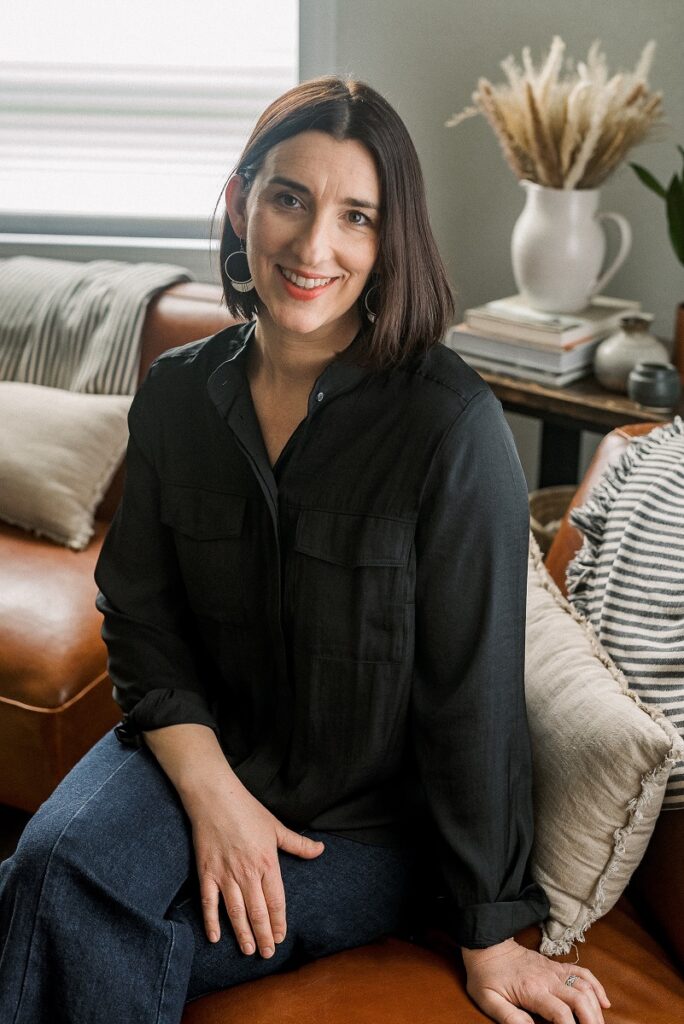
Asha Dore is writer and visual artist living in Seattle. She is the editor in chief of Parley Lit and the associate director of art and marketing for Parley Productions. Her work has won Best of the Net and has appeared in Gulf Coast, River Teeth, The Rumpus, and elsewhere. Her publications and art can be found at AshaDore.net and her CNF craft newsletter can be found at writingtruth.substack.com.
Related Posts
Childcare and Breathing: An Excerpt from STUDENT PARENT →
Lost and Found: Join us at the Brooklyn Book Festival x MUTHA x Pen Parentis Lit party! →

“Everyone Sees Color”: An Excerpt from MOM, UNFILTERED →