
G is for Generation: On Finishing Our Parents’ Projects, Or Not
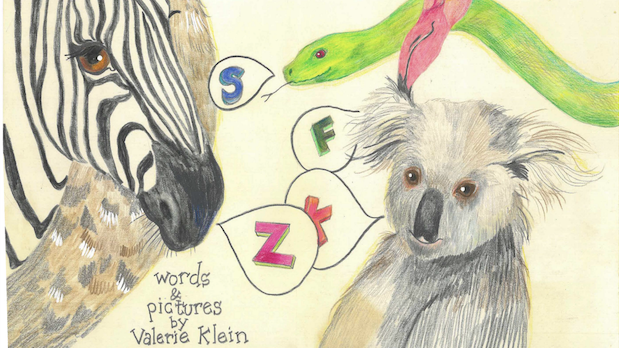
When my mom died in 2003, she left behind dozens of drawings and paintings. She worked as a children’s librarian, and most of her artwork could have lived in a picture book. Not the cutesy kind, but the kind that winks at other worlds. With pen and ink and colored pencil, she summoned wit and whimsy and shadow. Trina Schart Hyman, who captured the beauty and darkness of fairy tales, was one of her favorite illustrators.
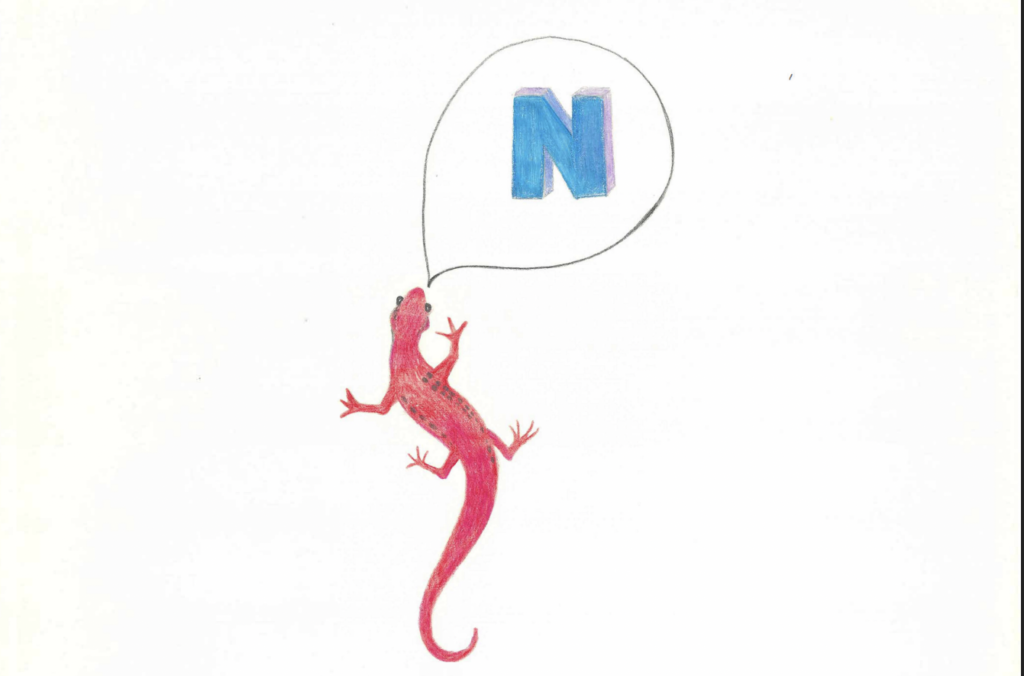
My mom’s drawings found their way to her high school yearbook, my elementary school’s official T-shirt, and countless library walls. If she’d ever dreamed of a bigger audience, she didn’t talk about it. But at some point she started working on an alphabet book with an animal for every letter. She’d always loved to draw animals, and as a young adult, she spent hours with a pencil and paper in front of the enclosures at the Santa Ana Zoo, drawing monkeys and long-tailed birds.
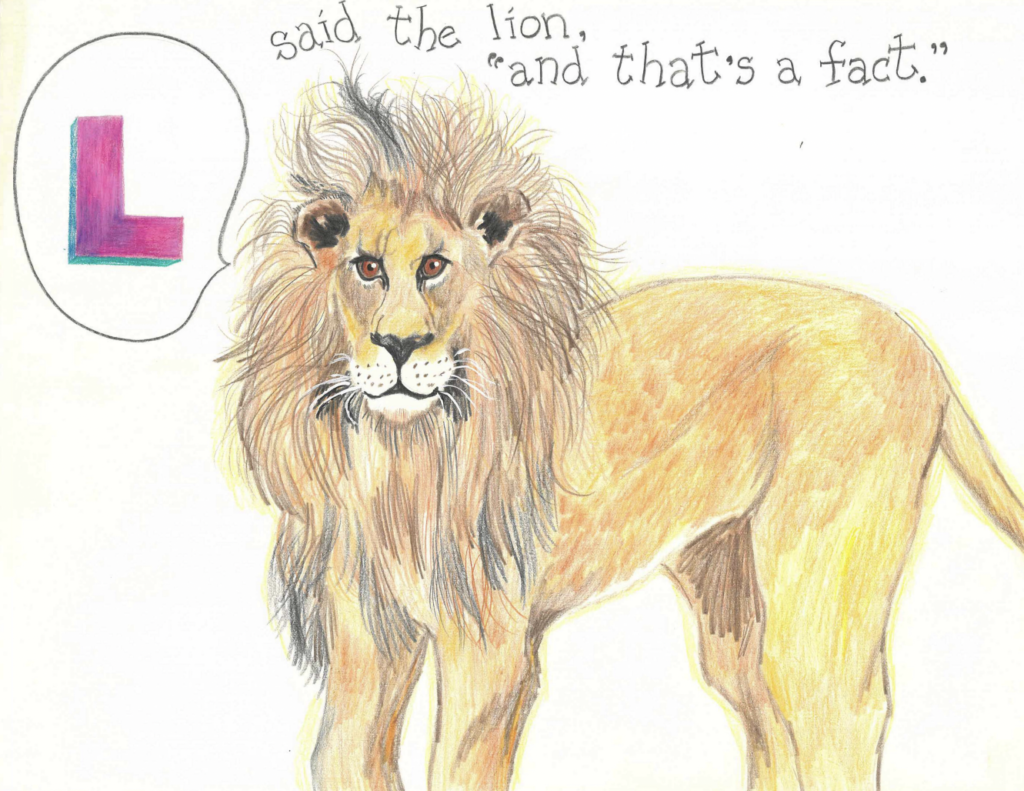
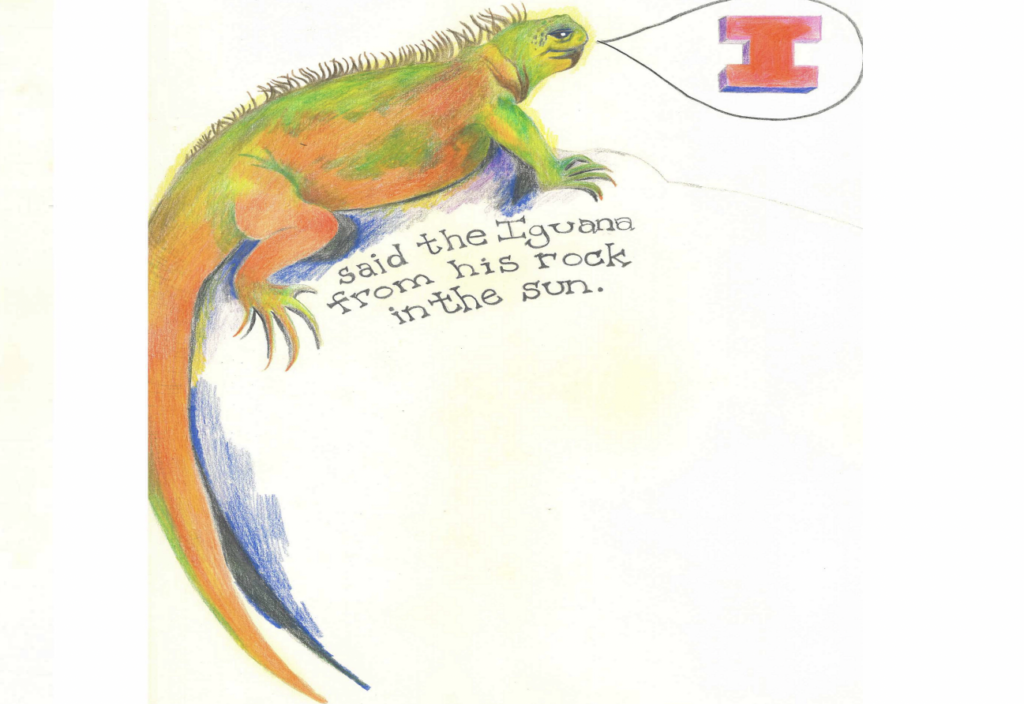
In richly layered colored pencil, the animals each made a rhyming case for why the letter that their name started with was the best. The iguana wore a smug little smile. The dolphin stood up straight and shiny from a nest of seafoam. My mom had drawn many lions for my cat-loving dad in her time, so maybe that was why the lion looked especially confident and friendly, with shiny brown eyes.
“Mom was hoping to publish that book,” my dad said not long after her memorial service. “Maybe that’s something you could look into.”
I had just finished my MFA in creative writing and was working for a nonprofit organization that helped writers find outlets for their work. It was a reasonable question, and he dealt with every other thing that death delivered. A gravesite to purchase, a closet to clear, a name to be removed from bank accounts.
I was just starting to fumble my way through the publishing world, on the smallest scale possible. I got honorable mention in a local poetry contest and got to read my poem to a cluster of listeners (mostly other poets) outside a store in Northeast Los Angeles. My graduate program was not one of those schools that churn out Pulitzer Prize winners, with agents sniffing around for young talent. It was an art school known for having once offered a human sexuality class where everyone was invited to masturbate together.
Still, I dreamed of a book. I sent out the connected short stories that made up my MFA thesis one by one and as a manuscript, and began to collect rejections. I knew just enough to know that the market for children’s alphabet books was perhaps larger than the market for queer literary fiction, but even more saturated.
I don’t remember what I told my dad. But I remember what I did, which was nothing.
*
In recent years, several authors have crafted memoirs that are in dialogue with their parents’ unfinished or unpublished work. This form that intrigues me for obvious reasons, including the hope that through intergenerational collaboration, we can heal intergenerational wounds, or at least connect across them.
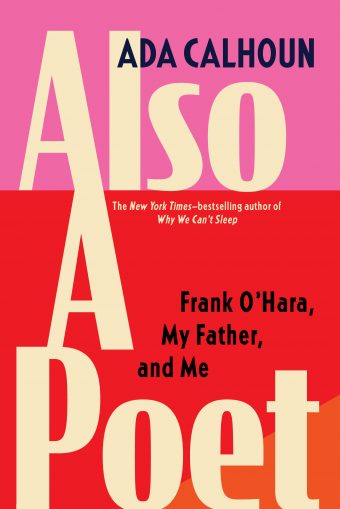
In Also a Poet, author Ada Calhoun picks up a project abandoned by her literary critic father, with whom she has a challenging but loving relationship. She finds a box of tapes her father made of his interviews with Frank O’Hara’s contemporaries in hopes of writing a biography of the poet. Believing her father’s ego might have gotten in the way of his productivity, she sets out to do what he couldn’t, namely win over O’Hara’s sister Maureen and get access to O’Hara’s letters and poems. Maureen tells her to fuck off, more or less, and Ada is humbled and perplexed. Interwoven with this arc is the story of a little girl who is always trying to be more interesting to her intellectual father, and a grown woman trying to care for her aging parents.
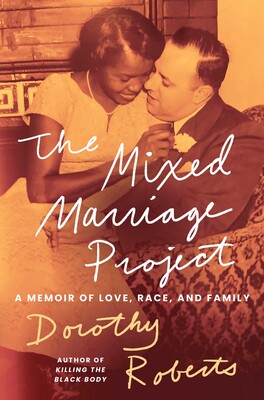
Dorothy Roberts is the product of an interracial marriage; the other product is a box containing more than 500 transcripts of interviews conducted by her white father, sometimes with her Jamaican mother’s help, between the 1930s and the 1970s. Roberts always bristled at her father’s insistence that Black/white couplings were an avenue to racial reconciliation. The interviews, which she excerpts and intersperses with her own memories and analysis in The Mixed Marriage Project, make her case: Proximity to Black people doesn’t inoculate white spouses against racism, and proximity to whiteness does not protect Black people from the world’s judging eye. However, Roberts—writing in her sixties—observes her parents through a generous, but not uncritical, lens. She sees how much they loved each other, not only across racial lines but also across gender roles (her mother gave up a PhD to build a family) and through financial struggles. She does not share her father’s utopian beliefs, but she shows how she and her sisters are living embodiments of both parents’ values.
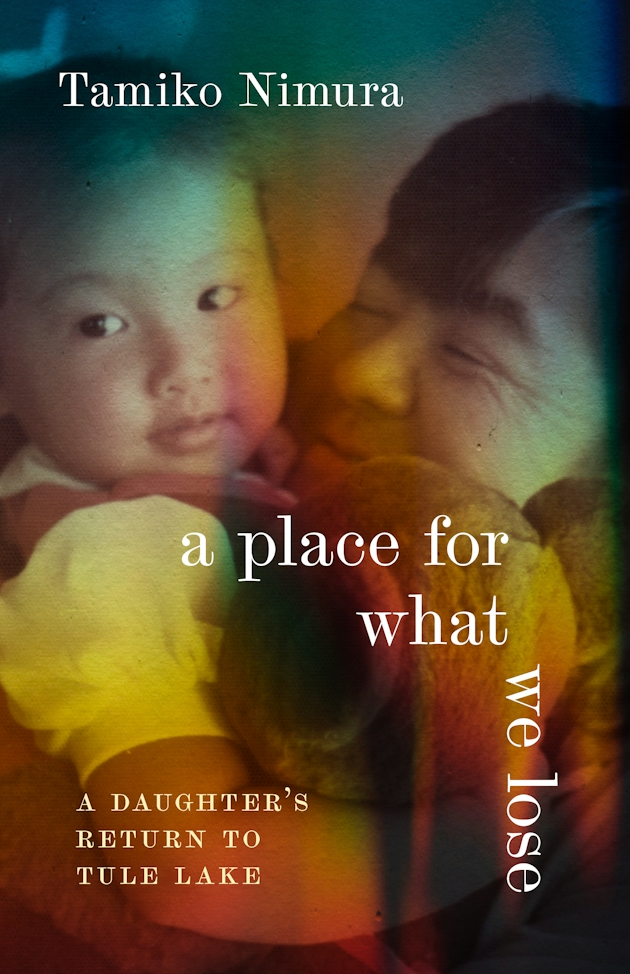
In A Place for What We Lose: A Daughter’s Return to Tule Lake, Tamiko Nimura contextualizes and heavily excerpts her father’s unpublished memoir about his teenage years in the Tule Lake concentration camp, where as many as 19,000 Japanese Americans were imprisoned at a time during World War II. She knew her father as a kind and encouraging man, a meticulous librarian, and a flashy dresser in the seventies and eighties. His memoir, by contrast, is sparse and largely unemotional. He dies before she reaches adolescence, at roughly the age when her father’s own father was arrested for insubordinance and disappeared from the family for a harrowing and uncertain period. The echoes of lost parents are painful, and the determination to find and honor them is heroic.
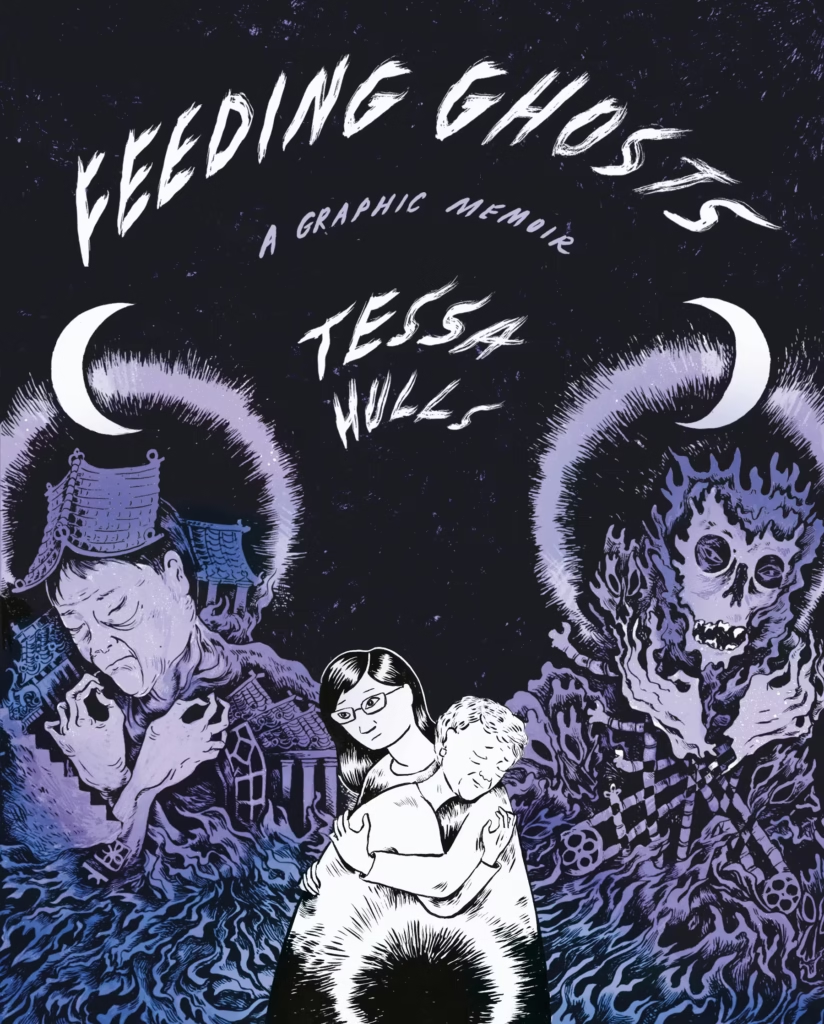
Tessa Hulls did not need to finish or even publish her grandmother’s book when writing her own graphic memoir, Feeding Ghosts; her journalist grandmother’s account of escaping Communist China was already a bestseller in Hong Kong. Hulls, who has only known the traumatized, mentally ill version of her grandmother—who rewrites her story every day, just as the Maoists who arrested her once forced her to do—has the difficult task of reconciling multiple stories that exist within and about a woman who was, in a way, forced to become multiple people in order to survive. Sometimes I think post-traumatic, intergenerational stress is the only real story there is.
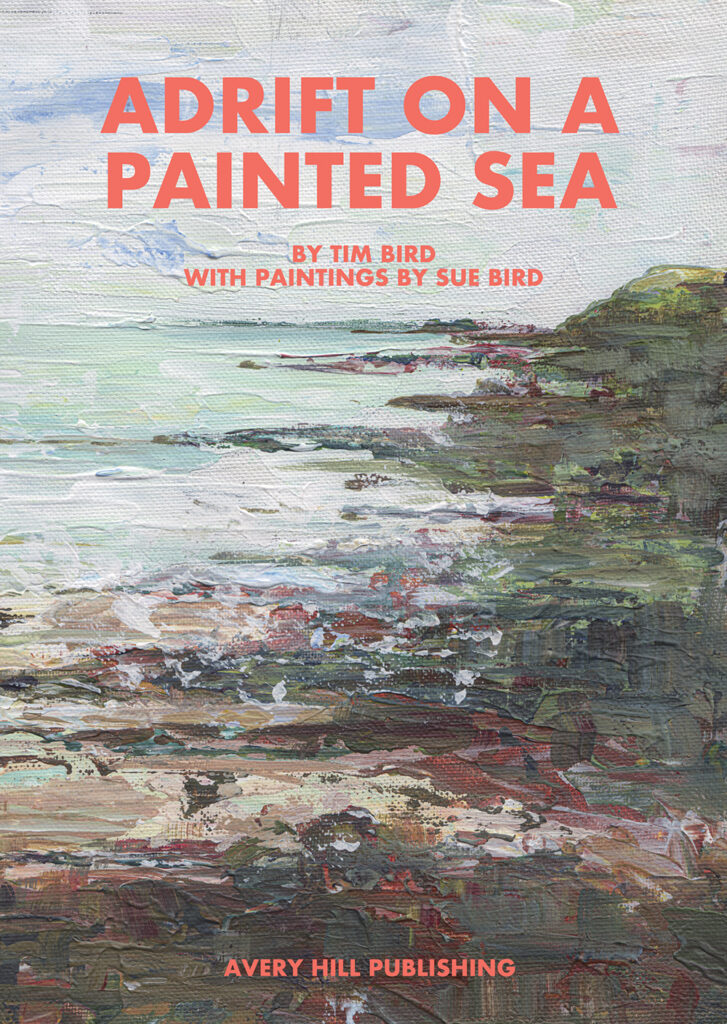
Tim Bird’s Adrift on a Painted Sea is a parent-child duet that strikes close to home. Like my mother, Tim’s mom Sue was a librarian who also painted but never made an effort to sell her work. Like my mom, she died after a years-long bout with cancer. In Adrift, he juxtaposes his flat, stylized comics with her layered oil landscapes. I think I like the combination more than I would like each artist’s work on its own.
*
My mom was the first person to see me as a writer, long before I saw myself that way. She encouraged me by reading aloud to me and my sister. She rarely bought us toys on a whim, but she was a soft touch when it came to books. I loved the Little House books, The All-of-a-Kind Family, and A Little Princess. Books that romanticized old-timey poverty were my jam, apparently. I also liked trash: the Sweet Valley Twins books—a spinoff of Sweet Valley High—and VC Andrews’ softcore incest sagas. My mom never expressed judgement.
She died three years before my first book was published, but she’d read bits of it, and I dedicated it to her, hoping the message would somehow reach her. Every book is a collaboration between writer and reader, but it’s also a collaboration between the writer and the people who planted the seeds of language in them.
I’m nearing fifty, and the fact of time only grows more shocking to me. I have three books to my name, this MUTHA gig that I love, and a healthy number of stories, essays, and book reviews that have found their way into the world. I write grants and miscellaneous communications as part of my day job for a nonprofit education advocacy organization. I have become a writer, and I think my mom would be proud. Is proud, if the afterlife works the way I hope it does.
But, well, I have a day job. My last royalty check for my memoir was $8. And while writers get a longer runway to fame than, say, gymnasts (another childhood dream), it’s starting to look like I’m not going to be a famous novelist.
Will I create something that I leave for my kids to finish? Will they avoid doing so—because they’re busy with their own lives, because the market has only gotten messier? I’m okay with that, and I hope my mom would be okay with my own self-centeredness.
Embedded in every parent’s life are the questions: What am I doing for myself? What am I doing for my kid(s)? When is it time to give up on my own achievements and pass the torch? Each day becomes a dozen tiny beans, doled out in increments defined by scarcity. Not enough for you, not enough for me.
The idea of shared narratives appeals to me because it suggests we are greater than the sum of our beans. I am not an archetypal (or any type of) immigrant, sacrificing all my dreams so my children can have safety, comfort, and a college education. I don’t want any parent to have to sacrifice all their dreams. But we all sacrifice some of our dreams. And, also, our stories and our craft are stronger—I think? I hope?—for having lived a life enriched by others.
When I started this essay, I didn’t know where my mom’s manuscript was. After a birthday dinner at the house I’d grown up in, I searched my dad’s extremely organized attic. I found the drawings in minutes, in a labeled bin amid stuffed animals from my mom’s childhood, my My Little Pony collection, and my college newspaper clippings. The boxes were dusty but clearly labeled, and their contents had, so far, held up against the non-archival-quality air.
Among the illustrations were a couple of sheets of notebook paper that appeared to be a few years or even a decade older than the artwork. My mom had written out a line for each letter, and at some point I’d added suggestions in loopy handwriting I associated with middle school. We’d already been collaborating, and I’d forgotten.
My dad, who is now 82, recently announced that he had almost completed his to-do list. Not a bucket list, which implies travel and adventure, but a list that included things like estate planning and a handmade drip sprinkler system. The rest of us may not be able to accomplish everything in just one lifetime. His perfectionism has never been great for my self-esteem, but his thoroughness and organization are a gift. Legacies come in all shapes and sizes. A trunk full of artwork on brittle paper. A hummed lullaby. A spreadsheet. I told him as much as I snapped photos of each page.
“Well, I’m glad it’s been helpful,” he said, ever the pragmatist.
Then he added, “We could think about publishing this.”
I will not go much beyond the thinking stage. But I hope to print and bind at least one copy. My youngest is just the right age to learn the alphabet, and learn about his grandmother.
About the Author

Cheryl Klein’s column, “Hold it Lightly,” appears monthly(ish) in MUTHA. She is the author of Crybaby (Brown Paper Press), a memoir about wanting a baby and getting cancer. She also wrote a story collection, The Commuters (City Works Press) and a novel, Lilac Mines (Manic D Press). Her stories and essays have appeared in Blunderbuss, The Normal School, Razorcake, Literary Mama, and several anthologies. Her MUTHA column “Onesie, Never Worn” was selected as a Notable Essay in Best American Essays 2022. She blogs about the intersection of art, life, and carbohydrates at breadandbread.blogspot.com. Follow her on Threads: @cherylekleinla.
Related Posts
“A Place to Feel It All”: Kelly Grace Thomas on Infertility, Adoption, and Urgent Joy →
Poems from Future Tense →
Childcare and Breathing: An Excerpt from STUDENT PARENT →
2 Responses to G is for Generation: On Finishing Our Parents’ Projects, Or Not