

Maternal Dread
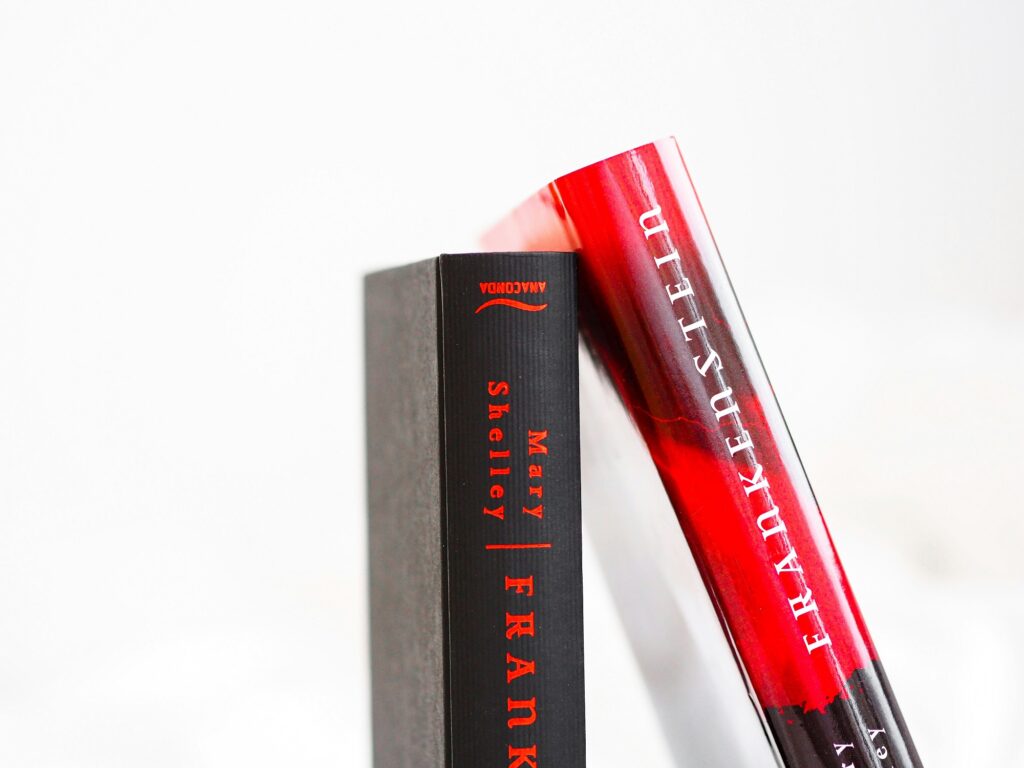
The night before my water broke, I began reading Louisa Hall’s Reproduction (2023). This was my third pregnancy. In the novel, the narrator weaves her fertility journey—one of miscarriages, nausea, molar pregnancy, and disability—with a reading of Mary Shelley’s Frankenstein.
As I laid on the couch, fire crackling, legs aching, throwing up bits of my spaghetti dinner in my mouth, I had one repetitive thought:
I want her (my daughter) out.
I had reached the ninth month and was in a liminal space, my world a haze of brain fog, each cramp or ache a possible vehicle to the light of the other side.
Naturally, the only content I could comprehend at this point was about pregnancy. I was consumed. Social media algorithms fed me videos of women dancing bare bellied to club music, of women caressing their bumps to saccharine, trending audio. I watched this content on repeat for hours as I lifted my legs above heart level to reduce the swelling.
And then, I would hate myself, this woman I had become, the myopia of my singular focus.
So of course, I was rapt while reading Hall’s novel of all that could go wrong—and right—in reproduction.
In Reproduction, the contemporary Frankenstein—the scientist who modifies her eggs to reduce future risk—shares my name: Anna. And though I had not used technology to conceive a pregnancy, I resonated with her hypervigilance, her desire to control outcomes and lives.
The character Anna is a scientist who genetically modifies her eggs. Just as Frankenstein left the world of women to create life, Anna rejected the involvement of a man. She was interested not just in creating a perfect specimen, but in using technology to mitigate risk.
Why, she asks, wouldn’t we use science to help prevent preeclampsia or postpartum hemorrhage, if we were able to?
She expresses these sentiments to the narrator of the book, a woman who has gone through unmooring reproductive trauma, and she speaks without compassion or awareness. She places trust in the certainty of science over the forces of nature.
I was drawn to this reflection upon maternal dread in Hall’s novel, but I had another personal stake in the narrative. My own reproductive journey had been interlaced with readings of Frankenstein. During my first pregnancy, I taught Frankenstein to undergraduate students. As I assigned the epistolary novel (written from the point of view of a man), I was 20 weeks pregnant with my first child.
During this time, I was up for a teaching award. For weeks, faculty members across campus observed me and my classroom, and my primary concern was not the content of my course, but how my pregnancy was perceived. I was aware that my physical state was a particular vulnerability—something that could be punished or praised, often in the same breath.
Perhaps maternal dread is not limited to the gestating mother. There is something unsettling about the creation process. Mary Shelley knew this better than anyone.
In class, I lectured about the context of Shelley’s book—Shelley’s mother, the feminist philosopher Mary Wollstonecraft, died during childbirth. Shelley herself lost multiple pregnancies and infants. She was partnered to a man who cheated on her with her sister and with others.
So quite naturally, when Shelley composed a scary story, she wrote about birth. But in this narrative the women are not doing the creating. It is the men—and it is horror.
Upon the publication of Frankenstein, some critics speculated that Shelley could not have written the text. Something so dark should not have emerged from such a young girl, one said. This form of terror, so one critic believed, was quite unnatural.
During my first pregnancy, I was consumed with hypervigilance and fear. I wanted order. I hoped that if I obeyed a set of rules, I could produce a perfect child. I believed in a sort of health and wealth gospel applied to fertility, reproduction as transaction, a healthy baby the reward for fastidiousness and morality.
During that first pregnancy, though I’d longed (and planned) for a natural first birth, I was induced due to medical complications. All my contractions were triggered by Pitocin.
For years, I believed that accepting that chemical assistance made me a bad mother. A conscientious woman would have put up more fight against her doctors. She would have found a better, more natural way. She would not have succumbed to pharmaceutical intervention. She would have fixed the problem through supplements or exercise, bone broth or breathing.
And I also believed that it was these interventions that led to my own maternal dread as my son crowned and landed on earth.
As my baby was wrapped and placed on my chest, I experienced a feeling so foul, so distasteful, I became scared of the thing my body had grown. It looked alien and other. I shuddered at the fact that I was about to perform love to the audience of medical personnel surrounding me.
I didn’t feel love. Instead, I thought, Oh no. What have I done?
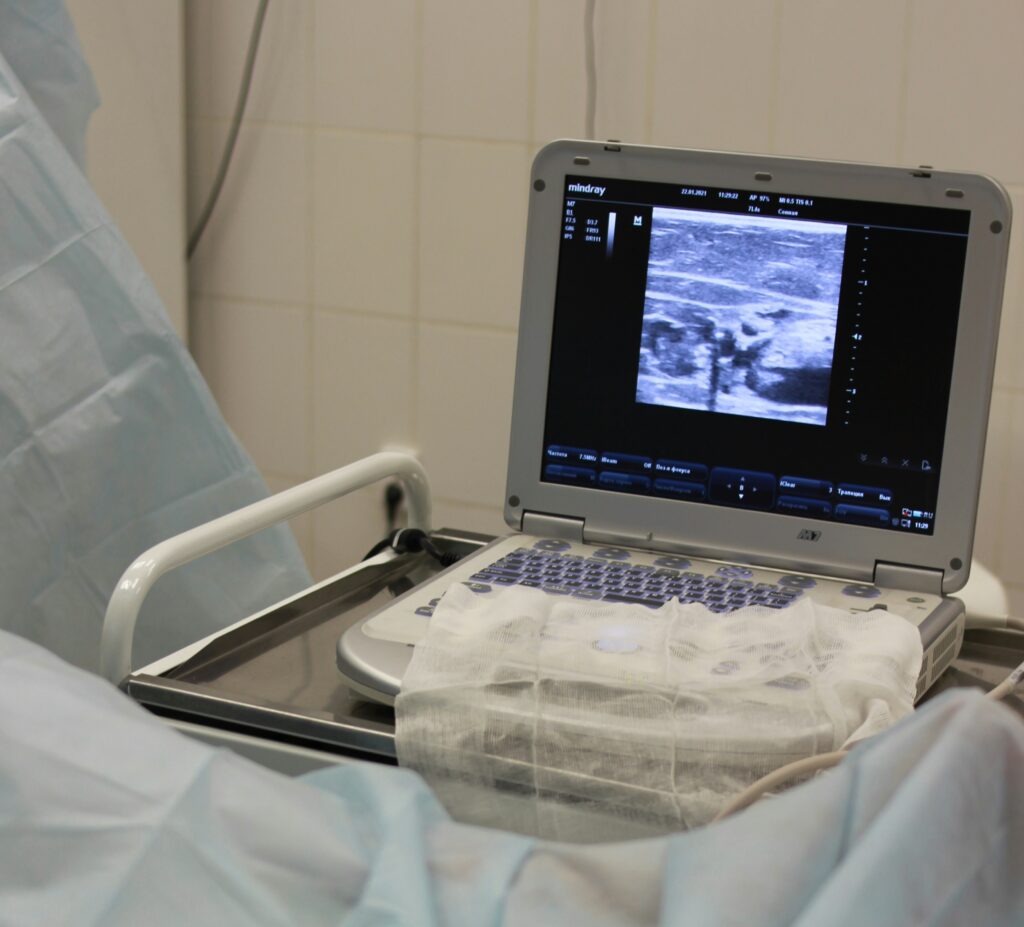
In Reproduction, Anna becomes afraid when she realizes she may have made a mistake in her laboratory. She performs an ultrasound on her growing fetus, half-expecting to find an additional limb or some other disfigurement. Though her ultrasound shows nothing of the sort—just a healthy, growing child—she is forced to face the brutal reality that no amount of progress can fully protect us from loss.
Though the narrator of Reproduction and Anna had drastically different reproductive narratives, there was one significant overlap: both experienced maternal dread. And so too, with my varying pregnancies.
By baby number three, I’d learned that hypervigilance can be as toxic as neglect. There was no formula, and the rules did not always apply. Hard work could not necessarily get me what I longed for.
Though my third pregnancy appeared the healthiest and most normal, my body hurt more than it ever did in the others. My legs throbbed with swollen veins, and new bruises appeared each day on my knees, shins, and feet. My vulva swelled, hot to the touch, and this made standing uncomfortable, sex unthinkable. I threw up bits of food in my mouth after most meals, and no dinner or drink could mask the persistent metallic taste on my tongue, the sensation that I’d just sucked a flagpole. My head hurt. I was constantly dizzy. Sitting in a chair left me breathless.
And still, all was well. We were both perfectly healthy.
During that third birth, I went naturally. Doctors detected no problems in my health or the baby’s—and this shocked me. All went smoothly without intervention.
Surely they were missing something, I thought to myself at night.
The day my water broke, I’d begged my doctor for an induction. I, the woman who shunned intervention the first time, who cared about the appearance of good, hard-fought, natural motherhood, was gone. I sold the cloth diapers after baby number two. I’d stocked up on nonorganic mac and cheese to feed my other children during postpartum.
That third pregnancy, I knew some things about myself as a mother. The beauty of the third baby is that you have context. You are meeting a new person, but you are not inhabiting new land.
Experienced motherhood is like renovating a house that has already been built; new motherhood is a fresh building project, beginning with the dirt still visible along the foundation.
By now, I’m familiar with the feeling of maternal dread. I experience it at each birth when the baby’s head crowns, the body slips out, and I see it in the doctor’s hands.
The first time, with the first baby, the dread horrified me. I thought it revealed something hideous about my character and worthiness. The second time, too, I was taken by surprise.
But the third time? I rather expected it. And there it was: that feeling of disgust. It arrived right as I remembered it. But I knew it was temporary—not a fixture. A little bit of dirt in the foundation, gone with a gust of wind or a bit of rain. I’d learned that to reach the light of the other side, I first had to journey through darkness.
About the Author

Anna Rollins’s forthcoming memoir Famished (Eerdmans) discusses the importance of women listening to their own bodies. Her writing has appeared in The New York Times, Slate, Salon, Electric Literature, and other outlets. She directs the writing center at Marshall University. Follow her writing on Substack and Instagram @annajrollins.
Related Posts

Dream a New Dream: An Interview with Nefertiti Austin →

A Tiny Crackling Ember →

Songs for Billy →
