Vultures and Bees: On TK, Tragedy, and Community
The helicopters had been thwup-thwup-thwupping overhead for a while, but it only registered as background for an urban afternoon until my 11-year-old found a news video online.
Information and rumors filtered through in fragments. At the high school down the street from us, a student fell from a fourth-floor—no, third-floor, no, fourth—walkway.
No, he had not survived.
His name had not been released, but someone said “boy.” They said a lot of things, and nothing.
Comments on an Instagram news video: There was a fight, and then the student jumped, they said. Why did so many kids have their phones out, they wanted to know. Why not worry less about phones and more about SAFETY and MENTAL HEALTH? Someone volunteered to visit the campus as a motivational speaker. Someone blamed parents.
Dash’s group chat, which lived on my phone because he didn’t have one, bubbled like quick-flowing lava. It was my brother’s best friend. My mom teaches there. Her best friend saw it.
Dash asked a question about their middle-school volleyball team. Not the time, Dash.
*
Before this, I had been freaking out about something else, which is no more unusual than helicopters in Los Angeles.
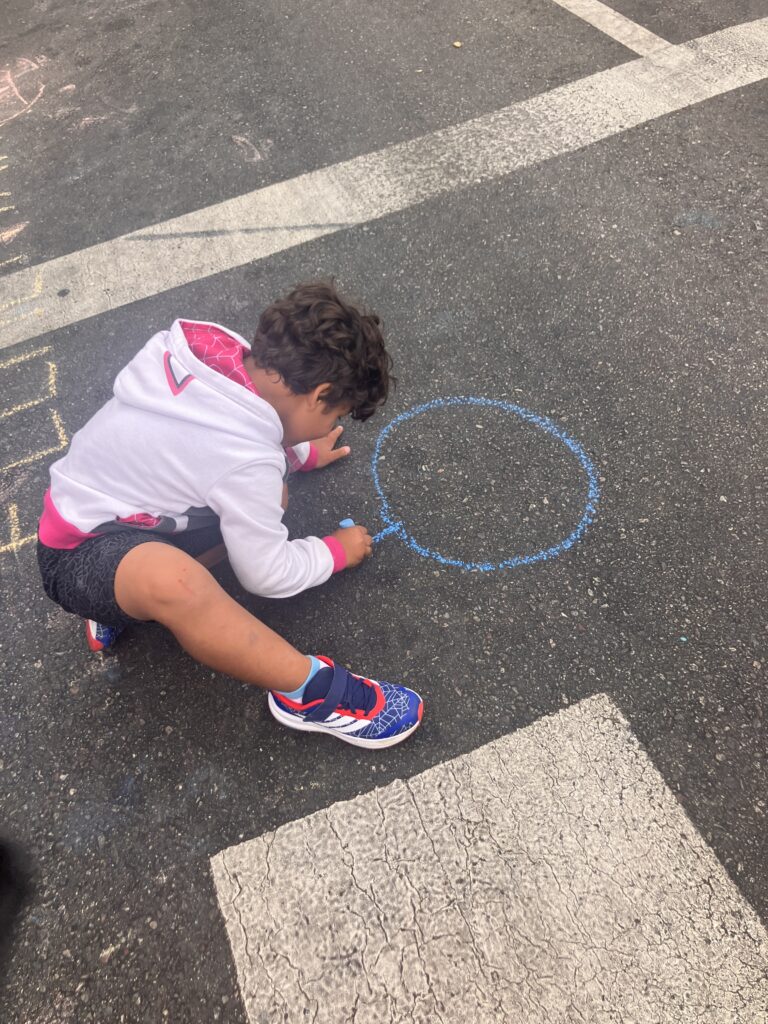
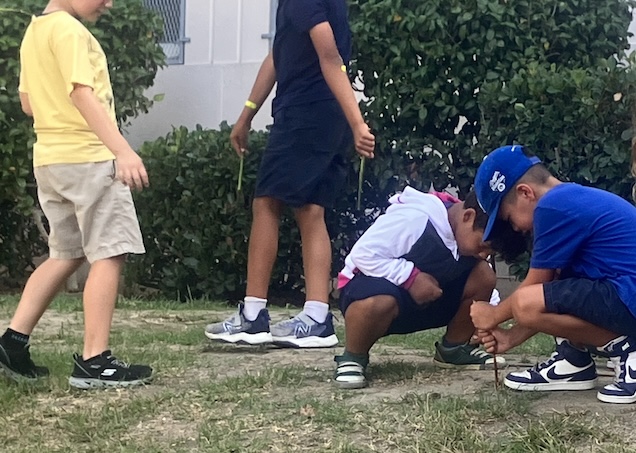
Joey, our four-year-old, had started TK six weeks ago at an elementary school a half mile from the high school. He had already learned to write his name, draw things that looked like things, and recite facts about astronaut Ellen Ochoa. But several conversations with his teacher and the staff at the after-school program had made it clear that he was having trouble sitting still, listening to instructors, and returning from recess when the bell rang.
My spouse, C.C., and I had always been “good” kids, “pleasure to have in class” types. I still remember the two times in all of elementary school that I received a warning for “talking to my neighbor” during class. I had cried each time.
I had cried many times in the past week to many friends, Joey’s former preschool teacher, and my therapist. People said he sounded like a typical four-year-old. They said ADHD, or maybe AuDHD. They said an evaluation can’t hurt. They said there’s no rush; neuropsych evaluations aren’t very useful until kids are at least six. Joey needed firmer boundaries. Better scaffolding. A sticker chart. Anything but a sticker chart. He needed room to wiggle and run. He needed a play-based school. He was in great hands because he had great parents. He needed more and better parenting.
The advice and possibilities felt like bees in my stomach. Encouraging—because my friends and therapist are kind, level-headed, and not the comments section of an Instagram post—but not exactly comforting. I wanted to run away and not return from recess.
*
I sent an SOS text to my friend Katelyn* and soon I was at her house, crying at her about the possible neurodivergences Joey might be showing, and what it might mean for his future. Katelyn, a late-diagnosed AuDHDer, was raising two neurodivergent kids.
She gave me a big hug and invited me to pull up a wooden chair on her porch. When it got too hot, we went inside and she made pancakes on a hot plate in her living room while we talked. Her husband came in and she told him he was standing too close to her.
“He thinks I pathologize our kids too much,” she said. “He thinks that’s just their personalities.”
I, a former English major, offered that we have had different names for things over time.
I have never been too worried about the type of neurodivergence that can convincingly be interpreted as personality or temperament or eccentricity. I have worried a lot about the kind that lands people in institutions—therapeutic boarding schools, group homes, psych wards, prisons. Places that were safe and helpful at best, the stuff of horror movies at worst.
No one was shoving Joey into the school-to-prison pipeline. No one said he was unintelligent. No one said he couldn’t learn to sit crisscross applesauce. Everyone said he was sweet and social. A good problem solver. A good builder. A fast learner.
But I have OCD (or, because OCD demands precision, I should say that I have PTSD that presents as OCD). OCD likes to extrapolate and ask “what if” and “are you sure?” Right now, I did not feel sure of anything; the bees were swarming inside my body.
“Have you ever done ABA therapy for your kids? I know it’s controversial, but I don’t know much about it,” I said to Katelyn.
Katelyn did some stretches. “No. No. Never.” I assumed she shared the opinion that a lot of autistic adults on the internet have, which is that ABA is torturous and all about conformity. “I wouldn’t recommend it, but Tiffany Hammond, this writer and autistic mom I follow has pointed out that it can save lives. Knowing how to conform can keep a kid from getting shot by a cop.”
Katelyn knew what it was like to have an extrapolating brain.
I cried some more.
But knowing her kids gave me hope. Her oldest made small clay cryptids and kept a notebook about their traits. I’d seen her youngest struggle in certain situations, but he could read and go places and make friends. That was what I wanted for Joey too.
*
The day after the boy jumped from the building, I walked Joey to the gate and released him into the schoolyard. He was big for a four-year-old and linebacker-solid, but he looked small with his octopus backpack and mess of curly hair. I watched him make his way to the picnic table where the TK kids gathered, hating how I analyzed every movement for danger or reassurance.
The teacher arrived and took Joey’s hand. “It’s going to be a good day,” she told Joey as the kids lined up. Through the chainlink, I watched the squirmy line of children grow smaller, a caterpillar inching away.
Trudging to my car, I passed a group of moms I recognized. I’d emailed with some of them about the upcoming trunk-or-treat event. I knew their thoughts about skeleton mermaids and trying not to use too much plastic, but I didn’t really know them or their kids.
Go get some community, I told myself. It was like reminding myself to drink water; sometimes I forgot I was thirsty. I re-parked my car and marched back to the cluster of moms.
“Can I crash your chisme? I was wondering if you guys were talking about trunk-or-treat.” I wasn’t, really. I was just lonely.
Claire*, the PTA president, said, “We were, but now we’re talking about—”
I had heard snippets as I walked up, knowing before I knew. “The horrors of yesterday?” I filled in.
And then we were all talking about it, and I felt strangely excited to contribute what I didn’t really know. One of the moms, a counselor at another school, knew LAUSD’s protocol for reaching out to siblings of students at the high school. There was a video of the boy jumping—of course there was—and although it had been quickly scrubbed from the internet, it was still jumping from phone to phone throughout our neighborhood.
I imagined us as vultures circling a fresh carcass. It felt strange but also sustaining to talk like this. People use the word “vulture” to describe paparazzi and other predatory creatures, but vultures are as important to the food chain as we all are, doing a dirty but necessary job. After a tragedy, there is restoration—I hope—a delicate picking of the bones.

“Joey’s been struggling with listening and sitting still, and I’ve been stressing about it,” I said, “and then this happened and it puts things in perspective.”
Lucy*, the TK room mom and twenty years my junior, said, “Tomás* has been having problems too. I keep hearing how he runs away and interrupts in class and sings for no reason.”
“I can’t even tell you how glad I am that Joey’s not the only one,” I said.
I saw that Lucy’s* eyelids were pink and puffy. “Me too,” she said. “I know it’s not right to compare him to his brother, and his brother had a lot of energy, but not at this level.”
“Same!” I said. “Is it a youngest sibling thing?”
We talked about assessments and whether it was too early or never-too-early. We talked about how having wiggly children was a nice problem to have in the grand scheme of things. And then I admitted to the places my mind went. If kids didn’t learn to follow directions—if they didn’t follow norms like walk down the hallway, don’t throw yourself over the railing—what might happen?
Our collective gaze floated upward to the second-floor walkway and its waist-high-on-an-adult railing. I had never thought of it as a danger before. Joey was an excellent climber. In another week, I would hear that he’d wandered upstairs during lunch and had to be retrieved by a staff member.
We said it again to each other: We weren’t alone.
*
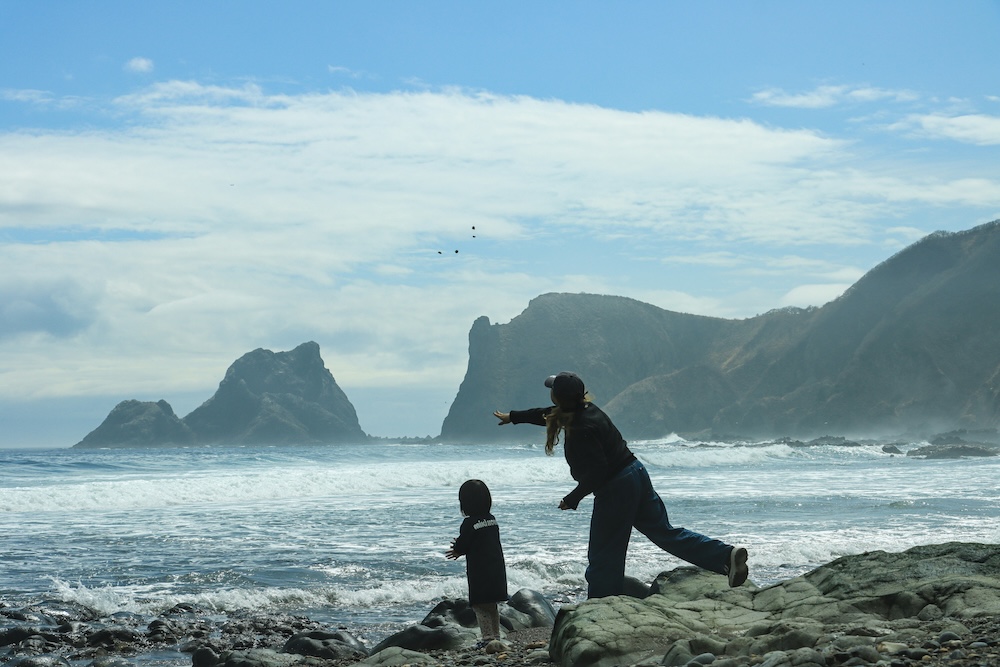
My friend Jane* lives on the East Coast and worries a lot about her AuDHD third grader, who tells gloriously creative stories, dresses like a baby goth, and finds school too overwhelming to attend regularly. Jane has walked Meira* through assessments and IEPs and therapies.
Over the summer, they visited British Columbia. Jane sent pictures of Meira on rocky beaches, her blonde hair a windblown tangle.
I had a revelation that Meira is a wild ocean child who’s not meant for regular school, Jane texted our group chat. I have a fantasy of quitting my job to homeschool her.
It sounded wonderful. How many times had this same group chat talked about running away to our own compound somewhere in the semi-wilderness? Our children would play together while our spouses watched them, and we would write and talk and take long naps. We would make our own rules. We would have community without society. We would flip from introversion to extroversion on our own schedules. We would be off the grid, but there would be a hot tub. We would all be wild ocean children, but somehow, we would never get swept away.
*Names have been changed
About the Author

Cheryl Klein’s column, “Hold it Lightly,” appears monthly(ish) in MUTHA. She is the author of Crybaby (Brown Paper Press), a memoir about wanting a baby and getting cancer. She also wrote a story collection, The Commuters (City Works Press) and a novel, Lilac Mines (Manic D Press). Her stories and essays have appeared in Blunderbuss, The Normal School, Razorcake, Literary Mama, and several anthologies. Her MUTHA column “Onesie, Never Worn” was selected as a Notable Essay in Best American Essays 2022. She blogs about the intersection of art, life, and carbohydrates at breadandbread.blogspot.com. Follow her on Threads: @cherylekleinla.
Related Posts

“A Place to Feel It All”: Kelly Grace Thomas on Infertility, Adoption, and Urgent Joy →

Wanderlust: A Supposedly Fun Thing I Would Definitely Do Again →
Graduation Season →