Graduation Season
At his class picnic, five days before the end of elementary school, a soccer ball hit my son Dash in the head. Hunched on a park bench, he let me put my arm around his shoulders, and his body felt big and slightly foreign. The emotions that tumbled out seemed to belong to something bigger than a sudden thump on the head.
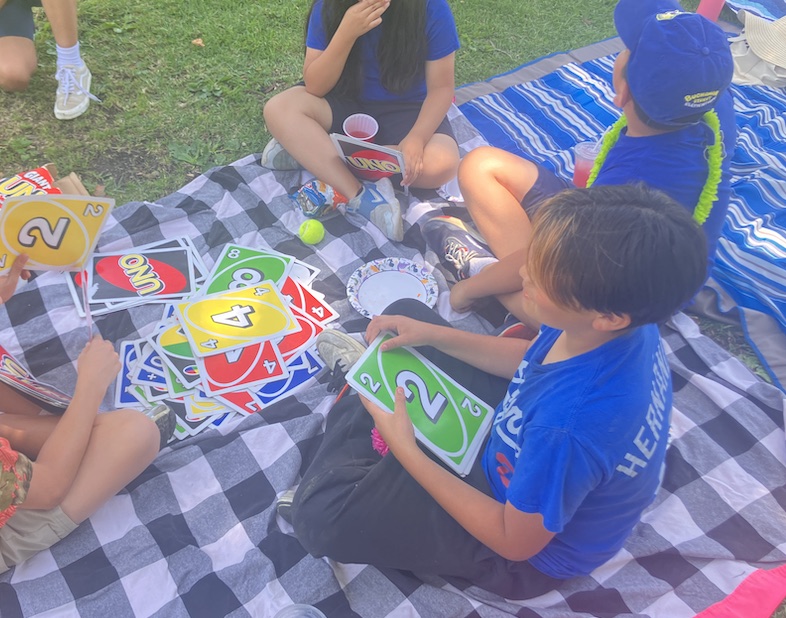
Work had been a mess that morning, and my spouse and I rushed over, not-quite-fighting about whether we were running late. We added our pizza to a stack of pizzas. The fifth graders played soccer and football. They tried to lure a gopher out of its hole with a slice of green apple. They declared it a groundhog.
They did not run toward the playground the way our four-year-old would have, but eventually they wandered over. They were not quite immune to the gravitational pull of a swingset. Not yet.
When had the girls started to look like teenagers? Some wore their bodies like they were as surprised as I was, and others looked comfortable in a way that made me uneasy. It was too easy to picture them holding a beer bottle, flirting with some guy.
Recently, one of Dash’s mentors told my spouse, C.C., and me that Dash had a vocabulary for his emotions and an ability to form strong bonds. We glowed, because finally we’d gotten something right. We were at the halfway mark on this particular parenting road, and we could see the shape of his adult self emerging.
He was tall and athletic, though not the tallest or most athletic. Girls got crushes on him because he was handsome and thoughtful, although he still yelled “All aboard!” and made a motion like he was pulling a train whistle before he farted. The louder the better.
*
It shouldn’t have been a surprise that in the days leading up to graduation, Dash’s nerves and temper flared. He was about to be separated from kids he’d known half his life. We had agreed as a family on a small middle school that we thought would nurture his soul, but his classmates were scattering to a handful of other schools. They talked about staying in touch, but we all knew better.
It felt like a time of forks in the road, even as I told myself there were many chances to redraw the map, circle back, course-correct. All the trail metaphors.
*
For fifth-grade culmination, Dash wore the guayabera and straw-colored dress pants that C.C. had bought him the week before. He’d outgrown his other pair of nice pants. More than anything, I was feeling overwhelmed by the logistics of the day—steering our dads and C.C.’s sister through the auditorium, getting home in time to call my boss and then take my younger son to speech therapy. Then a baseball game. Then then then.
As soon as “Pomp and Circumstance” began to play, I started crying. I get to see this, I thought. I’m here. When I was going through cancer treatment thirteen years ago, I sometimes mentally bargained with the universe. If I got to hold a baby that I could call my own, just for a minute, it would be enough, I thought.
Even then, I knew that motherhood wasn’t a finish line, it was a starting line, and I knew that I would want far more. Now here it was: more. And eventually, there would be finish line after finish line.
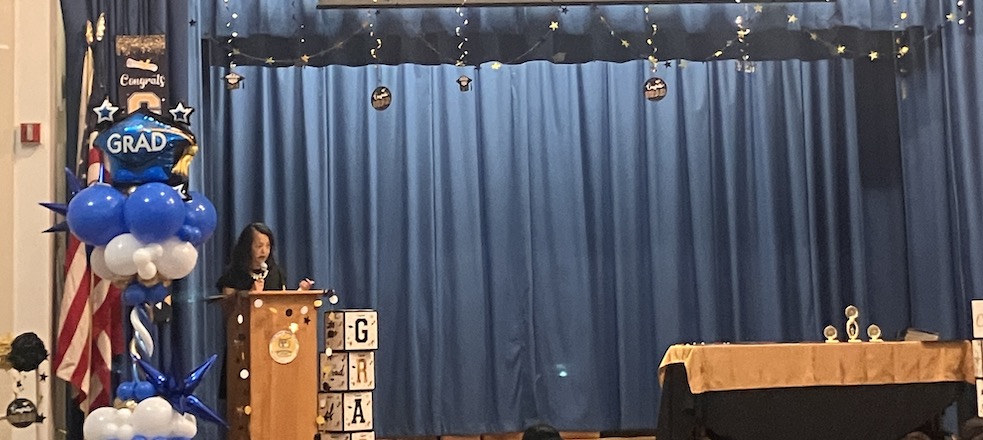
From the stage, Dash’s teachers made speeches about endings and beginnings. They handed out awards for academics, improvement, citizenship, and attendance. Dash didn’t get one.
A shorter kid with deep brown skin and a big smile took the stage. I had only met him in passing, but he exuded the confident charm of a young politician. Toggling between English and Spanish, he spoke about his first day of kindergarten, back in Zoom times, and the challenges of switching into the magnet program. There, he said, he met his three best friends. He named them, and we got to hear Dash’s name spoken from the podium after all.
*
Our parents are in their late seventies and early eighties. They are aging in ways that are no longer about wrinkles and retirement. Their bodies and brains are nodding toward closing up shop. They might have a year or five or ten, but they probably don’t have fifteen or twenty.
Thinking about it makes me feel breathless. How many minutes did I waste on Instagram last night? How many on wiping our four-year-old’s butt? On looking for parking? What is waste?
Childhood—my pre-internet childhood—was long. I made up stories in my head as my parents went about the business of adulthood. Writing checks, weeding yards. My sixth grade teacher taped a hand-lettered sign above the clock in the classroom: Time passes. Will you?
It did and I did and eventually yes, we’ll all pass in that other sense too.
“So, like, time passes and then we die. Is that all there is?” I said to my therapist. He reminded me that a foreshortening of the future is a trauma response. I wonder if this feeling also comes with having a four-year-old child and an 82-year-old dad, seeing it all stretched out so close at hand.
My therapist, a warm German man I’ve known for more than twenty years (he used to be so much older than me), has never talked much about his spiritual beliefs or lack thereof, but I have gotten the impression he is not religious.
He said, “I get some comfort in imagining myself as part of a cycle.”
That squares with my own beliefs. The great oneness, a friend called it in a Facebook post published shortly after she died.
*
School ended and summer began. Day camp and a pool party. The regular baseball season ended and the All-Stars team took the field.
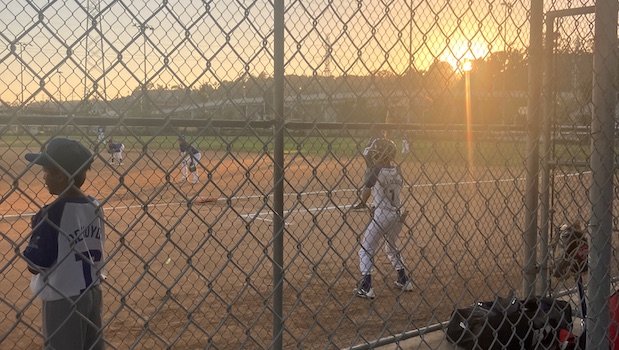
During game two, I watched him on the pitcher’s mound—through the chain link, through my zoomed-in camera, through the haze of the nearby warehouse fire that had been choking the city for days.
He half covered his face with his mitt before each windup. He breathed the way kids now are taught to, deep and rooted. Beneath the brim of his blue hat, I could see him assess the invisible strike zone, the runners on bases. In our backyard games of catch, he described his pitches to me, and they all sounded as made-up as strains of marijuana. Invisiball! Two-Seam Spitball! The Dash Special! Each gesture he made seemed equally intimate and foreign. How could he make all of these calculations, when he never even put his socks away?
He could do it because he wasn’t me, a person who cared where socks went. He could do it because he had me, a person who cared for his socks.
His next turn at bat, he thwacked the ball far into the outfield and ran to first, then second, then third…where he was tagged out, inning over.
“Dash, you nut,” C.C. murmured. We chuckled together at his go-for-it impulse. The same kid who didn’t like me to take walks after dark because he thought it was risky.
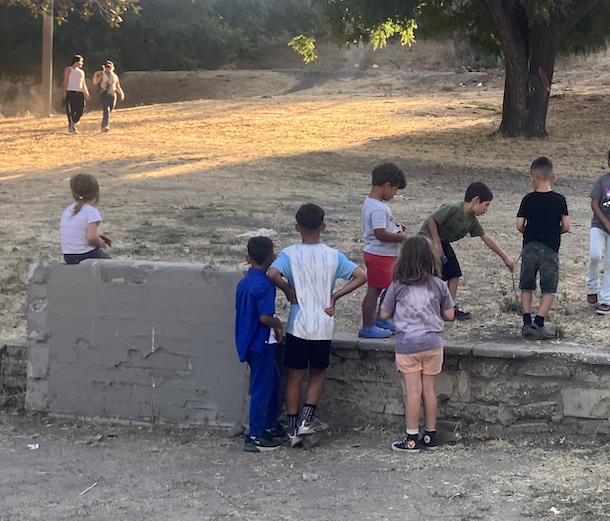
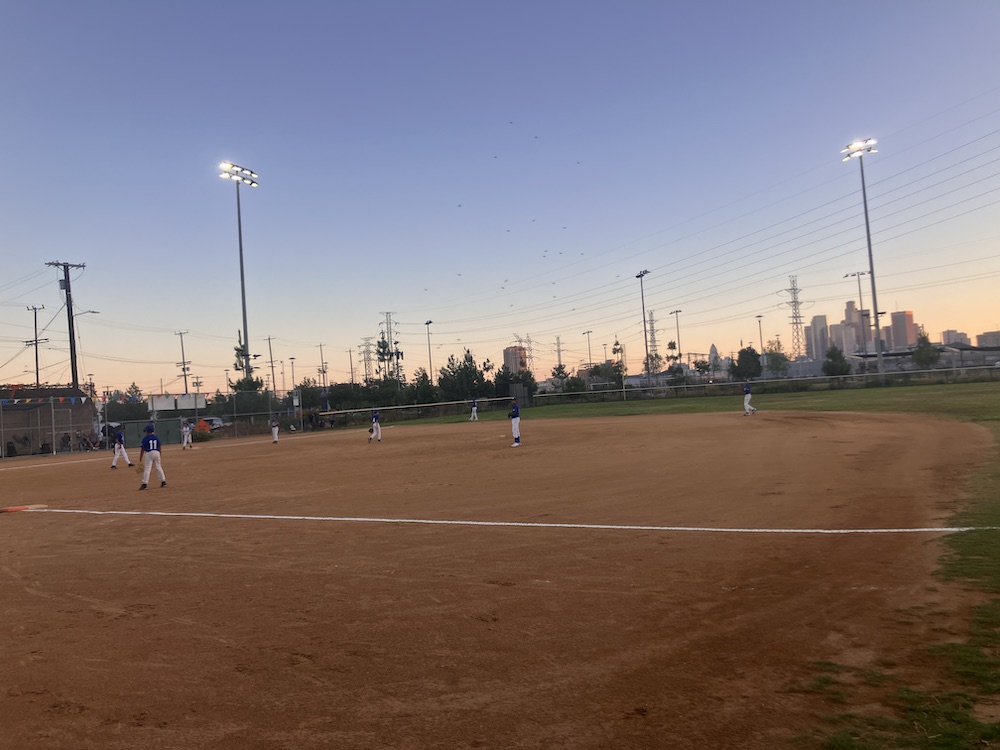
They won that game and lost the next, but even the losing game was close, and magical. It took place at sunset, at a park near the railroad tracks. A freight train rumbled and whistled. The sun sank behind the Downtown skyline, turning everything red and gold. The siblings of the players clomped in the tall grass, building their own summer memories, game by invented game. Were there alligators lurking in the weeds? The children considered the possibility and screamed in delight.
A row of houses had backyards that opened onto the park, and two of them had German shepherds behind chain link. One boy spotted a dog in one yard, then a dog in the other. He was convinced that the same dog had leapt the 15-foot fence dividing the two yards. No one tried very hard to convince him otherwise. Why not let this be a time of flying dogs?
About the Author

Cheryl Klein’s column, “Hold it Lightly,” appears monthly(ish) in MUTHA. She is the author of Crybaby (Brown Paper Press), a memoir about wanting a baby and getting cancer. She also wrote a story collection, The Commuters (City Works Press) and a novel, Lilac Mines (Manic D Press). Her stories and essays have appeared in Blunderbuss, The Normal School, Razorcake, Literary Mama, and several anthologies. Her MUTHA column “Onesie, Never Worn” was selected as a Notable Essay in Best American Essays 2022. She blogs about the intersection of art, life, and carbohydrates at breadandbread.blogspot.com. Follow her on Threads: @cherylekleinla.
Related Posts
“A Place to Feel It All”: Kelly Grace Thomas on Infertility, Adoption, and Urgent Joy →
Wanderlust: A Supposedly Fun Thing I Would Definitely Do Again →

Parenting Books Didn’t Tell Me →