Childcare and Breathing: An Excerpt from STUDENT PARENT
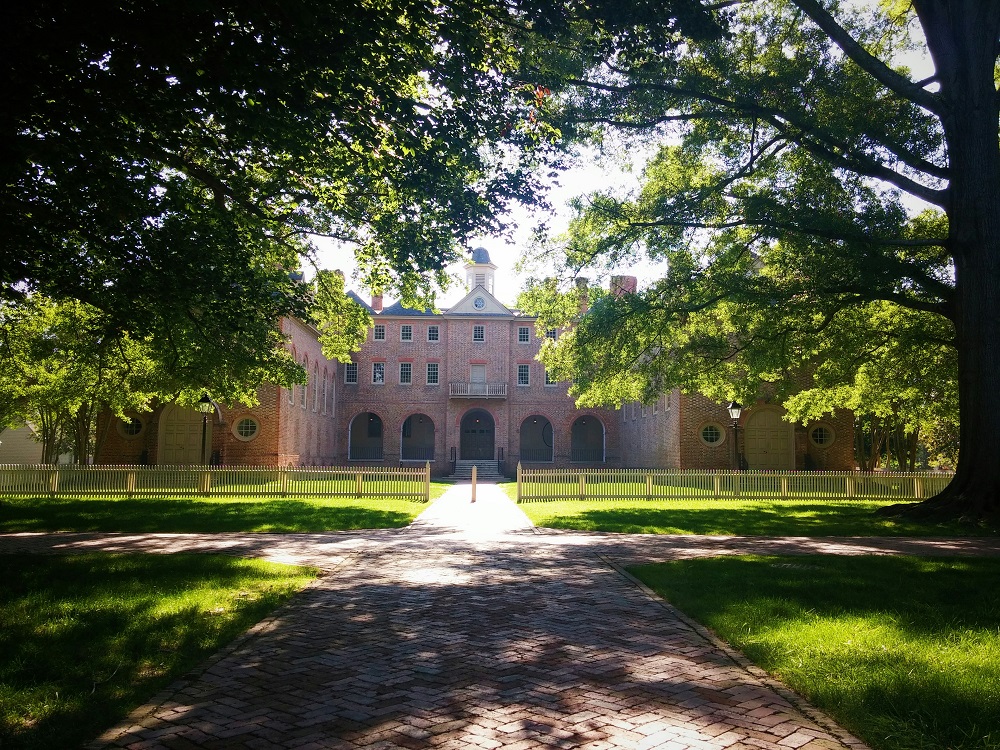
Summers in Williamsburg are hot and muggy. The humidity clings to your body like another layer of clothing. As a toddler, during these months, Nerissa would beg me for the cool relief of running through the sprinkler or jumping in a pool. Water Country USA, Virginia’s largest water park, was just minutes from our campus apartment, full of 1950s and 1960s surf-themed rides that gushed refreshing water over giggling kids. But as a single teen mother, I couldn’t afford a day at the water park or even a pool pass. Living in a dorm meant I didn’t have a yard for cartwheels through a sprinkler. Instead, we waited for the bursts of rain that would suddenly take hold of summer afternoons. At the first hint of a darkened sky, we’d sprint to the window, then hurry down the stairs and out the door of our building with our arms open wide, welcoming the raindrops on our faces and eventually all over. We danced. We held hands. We investigated the worms on the ground. But mostly, we laughed, the sound of our joy mingling with the quiet afternoon shower.
We forget how good a single drop of rain can feel on our skin. If we surrender to it—tipping our heads back, closing our eyes, inviting the taste of the clouds and the stars on our tongue—we can come alive.
I don’t think Nerissa remembers the pool membership I couldn’t afford or the nearby waterpark never within reach, mostly because every day I tried to create experiences that shielded her from how precarious things were. She had no idea how insufficient I felt or how much I worried that my inability to provide her with the things that other children had might create a lasting imprint on her life for which I was wholly responsible. What anchored me was her smile—her smile in the midst of a rain shower was brighter than even the sun. I liked to believe that those bursts of light would be enough for both of us.
The most suffocating experiences of my life were unrelated to the asthma I was diagnosed with at three years old and rarely took place in medical settings. These solitary moments could take place anywhere, at any time, without warning. I can’t count all of the times as a young mother I felt like I couldn’t breathe, when life caught hold of me and dragged me down into its undertow. They were too frequent. An eviction notice taped to my apartment door. A phone call from my daughter’s father from the county jail in the early hours of the morning. My white station wagon stranded on the side of the highway, cars rushing past me and my little girl. The crises crashed in, submerging me in urgency and shock. While in each of those instances, I went through the motions—answering questions or nodding my head or doing what needed to be done—all the while, I wasn’t really breathing.
The day we were forced to leave Nerissa’s childcare center I couldn’t breathe. The director’s face was soft, as it usually was when she greeted us in the hallway during morning drop-off or watched over giggling little ones on the playground until parents arrived in the afternoons, but that day, after she explained that Nerissa couldn’t stay enrolled, her lips came together in an immovable, matter-of-fact expression. We stood there, the weight of her words landing differently on both of us. I tried to inhale, but there wasn’t enough air for me to take in. My legs felt numb, as if detached from the rest of my body. In my breathlessness, I searched for the right words, but there really weren’t any right words.
I was late again on the monthly tuition payments at the campus childcare center, and while the director knew that unlike the rest of the parents, mostly professors and college administrators, I was an under-graduate student parent, she had motioned me over to where she stood outside of her office one sunny afternoon to tell me I’d have to withdraw Nerissa from the center. There would be no more extensions, no more special payment plans. Our time there had come to an end. She allowed us a few more days, long enough for Nerissa’s teachers to put together an album of laminated construction paper bound together with bows of blue yarn to document some of her special moments at the school—proudly holding a frenzied finger painting, a wagon full of dressed-up toddlers heading across campus in the Halloween parade, her and her friends bundled up in winter coats and hats posing in front of the swings with wide smiles. We packed the album along with her nap blanket, sippy cup, and changes of clothes in a bag, and we left. As we drove down the wooded driveway, the center getting smaller and smaller in the distance, Nerissa asked why she had to say good-bye to her friends and teachers. I didn’t have the right words or enough air to breathe.
Back in 2002, I was a junior in college, taking out loans to pay $800 a month for Nerissa to attend the Williamsburg Campus Child Care (WCCC) center while shouldering a full course load at William & Mary and working part-time where I could. A couple years earlier, I enrolled Nerissa at WCCC with the help of a scholarship that partly covered her monthly tuition, but after one year, the scholarship funds ran out, and I was forced to pay the full rate. I tried to cover what I could and asked for more time to take care of the rest while racking up late charges. Childcare was just one of my many bills among rent, medical co-pays, prescriptions, groceries, gas and car maintenance, car insurance, my college books and tuition, and more. I was a master at intricate daily calculations for allocating a small amount of funds across competing expenses with the ultimate goal of keeping Nerissa clothed, fed, and housed. The calculations rarely resulted in an easy answer. There was always a sacrifice—or many sacrifices. That day, it was WCCC.

Losing childcare had major implications for my ability to continue in college, but my biggest concern that day wasn’t about my own education, it was about Nerissa’s. WCCC was the one experience I could give her that wasn’t lacking. In our two-bedroom apartment, our heat didn’t always work, the cabinets and fridge were sometimes nearly bare, and our furniture was sparse and falling apart. My Subaru station wagon was leaking oil, and the mechanic kept reminding me that one day, no matter how much oil we poured in, it wouldn’t make it home. I couldn’t afford to sign Nerissa up for enriching activities like dance or swim classes. WCCC, a beautiful, white 6,500-square-foot building with seven classrooms, a large multipurpose room, kitchen, offices, and outdoor playgrounds—all specifically designed for young children—was the one thing in Nerissa’s life that was abundant. Large windows poured sun-shine into brightly colored learning areas full of stimulating toys and books while kind, caring teachers provided individualized attention to each child. I worried about whether I’d have enough money to buy her new sneakers or birthday cupcakes for class, but I never worried about whether Nerissa was receiving a high-quality early education. And now, because I had failed, it was gone.
To say something is broken is to say that it was once whole. But many things come into existence fractured or missing something, inadequate, disjointed. We’re taught that systems begin on the right footing, crafted with good intentions and proper supports, and time and neglect erode the strong inner workings and cause cracks to form. But what if the cracks were always there? “Make the world a better place” may sound like a call to get things back on track, but many times, it is a call to create a new track with a new destination—to right wrongs, to fix things never meant to be just or fair, and to remedy holes and gaps.
Childcare in America is not currently a broken system; it’s a system that began broken. It’s functioning as it was designed; to fix it, we need to reimagine it. Without childcare, parents can’t go to work or school, children lose out on early learning experiences during their most formative years, and our economy suffers. Childcare is the lifeblood of society, but it is severely flawed, devalued, and deprioritized. While nearly all families struggle to afford and access quality childcare, these challenges hit families with low income more acutely. Almost 40 percent of families earning less than $50,000 per year spend more than $18,000 on childcare annually. That’s a staggering 36 percent of household income.2 The crisis is a tangled mix of factors: childcare is an expensive service due to its labor-intensive nature and need for low teacher-to-child ratio, there is insufficient public funding, the workforce is poorly paid, and there are many misconceptions—that early childhood providers lack professional skills and that childcare is a personal albatross rather than a collective responsibility. But to understand childcare’s broken origins, we have to go back to the beginning of the early care and education industry in America.
The boom of English colonization in North America in the early 1600s began with a colony called Jamestown in Chesapeake Bay in 1607. In time, the Plymouth Company reorganized as the Council for New England (1620), the Dutch West India Company (1621), the Company of New France (1627), and the Massachusetts Bay Company (1629) brought thousands of colonists, many with families and indentured servants, to North America. Colonists were drawn by the promise of massive land grants. Lord Baltimore offered one hundred acres to every free married man who paid his own way to Maryland, plus another one thousand to two thousand acres for bringing five or more people. This land belonged to the original inhabitants of North America, who numbered more than five million before Europeans invaded its shores. In order for white colonists to gain control and reap the economic gains, they exploited, raped, and murdered the Indigenous people. They also needed free labor to build colonies and exploit the natural resources, which came in the form of indentured servants—mostly poor Europeans, manipulated and abused Native Americans, and kidnapped and enslaved Africans.
The year 1619 marks the beginning of African slavery in the continental British colonies. That’s when a privateer, The White Lion, brought approximately twenty Africans to Jamestown, Virginia, trading them as slaves for food. By 1675, slavery was a well-established system in the colonies. By 1700, enslaved people had essentially replaced indentured servants, and by 1860, “the nearly 4 million American slaves were worth some $3.5 billion, making them the largest single financial asset in the entire US economy, worth more than all manufacturing and railroads combined.”4 This forced and unpaid labor primarily took place on the tobacco, rice, and indigo plantations along the southern coast, from when the sun rose in the morning until it set in the evening, toiling for as much as fourteen hours each day. Men and women worked in the fields clearing land, planting seeds, and harvesting crops, and in the plantation house cooking meals, tending to the fires, and washing clothes and linens. In the house, they also served as caregivers. Enslaved African women were often the nanny or “nurse” of their oppressor’s children, even breastfeeding them, with no agency to care for their own, unable to protect them from violence, feed them properly, or prevent them from being sold away.
The inherent brokenness of childcare in America comes from being born out of chattel slavery—a system legally supported by the United States and Europe that considered people, mostly Africans and Black Americans, and their children as property that could be bought, sold, and owned, forever. As the original primary childcare providers for colonist families, enslaved African women were treated as property, never valued or fairly compensated for their labor, never respected for their skills and abilities. These sentiments would become the underpinnings of the early care and education industry in America. Even after the Thirteenth Amendment to the US Constitution abolished slavery in 1865, Black women were confined to domestic jobs, many working as childcare providers for white families. The pay was insufficient, the days were excruciatingly long, and they rarely saw their own children. In 1912, the Independent published a Black mother’s account of working fourteen to sixteen hours a day as a “nurse” for just ten dollars a week, allowed to go home only twice a month: “Whether in the cook kitchen, at the washtub, over the sewing machine, behind the baby carriage, or at the ironing board, we are but little more than pack horses, beasts of burden, slaves!”
Today, 94 percent of childcare workers are female, and 40 percent are people of color. One in five childcare workers are Black women, though they’re only 7 percent of the overall workforce. Regardless of their education level, Black childcare providers earn an average of seventy-eight cents less per hour than white providers. Even before COVID-19 resulted in the closing of nearly sixteen thousand childcare centers, childcare workers were among the lowest-paid workers in the nation. According to a report by the Education Trust and the US Chamber of Commerce Foundation, “53 percent of childcare workers’ families were enrolled in at least one public assistance program (such as the Supple mental Nutrition Assistance Program and the Temporary Assistance for Needy Families), compared to 21 percent of the families of the nation’s workforce as a whole.”
In 2018, women working full-time, year-round in the childcare industry earned a median of $29,900, with Black women earning $27,000 and Latina women only $22,074. In addition to earning low wages, childcare providers, as hourly workers, rarely receive employer-sponsored benefits. Only 15 percent of childcare workers have health insurance through their job, compared with 49.9 percent of workers in other industries. These numbers aren’t accidental or simply the effects of neglect over time. They represent the lasting impacts of an industry that grew out of America’s brutal legacy of slavery.
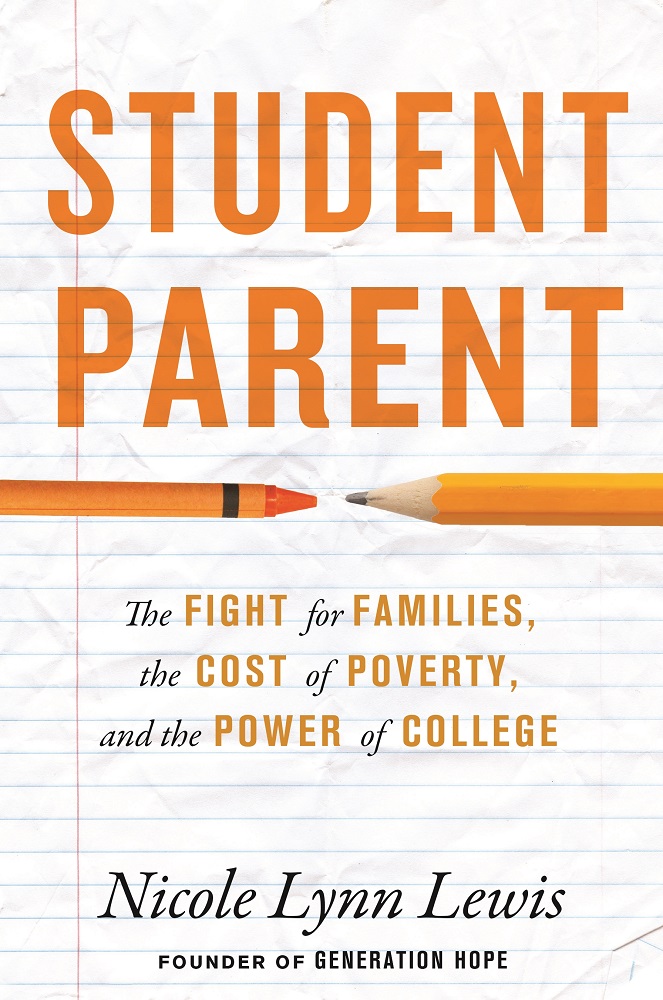
Excerpted from Student Parent: The Fight for Families, the Cost of Poverty, and the Power of College by Nicole Lynn Lewis. Copyright 2026. Excerpted with permission by Beacon Press.
About the Author

Nicole Lynn Lewis is the Founder & Chief Executive Officer of Generation Hope, a nonprofit providing direct support and national advocacy and research for student parents in college. The Generation Hope Scholar program surrounds motivated teen parents and their children with the mentors, emotional support, and financial resources that they need to thrive in college and kindergarten, thereby driving a two-generation solution to poverty.
A former teen mother who put herself through the College of William & Mary with her three-month-old daughter in tow, Nicole now works every day to change the statistic that fewer than 2% of teen mothers will earn their degrees before age 30. Generation Hope rallies around teen parents to help them earn college degrees and forge a path to economic opportunity and is now expanding its work nationally to help colleges and universities and policymakers across the country better meet the needs of the nearly 4 million parenting students who are working toward their degrees. Under Nicole’s leadership, Generation Hope’s FamilyU Seal received a Fast Company World Changing Ideas Award.
Nicole is a member of the Board of Trustees of Trinity Washington University and the National Advisory Board of The Hope Center for College, Community, and Justice. She has been recognized as a 1954 Project Luminary, a CNN Hero, a recipient of the Black Voices for Black Justice Award, the PARENTS Next Gen Award, and the national grand prize winner of the Roslyn S. Jaffe Award. She has been featured on major news outlets including Good Morning America, CNN, NBC Nightly News, and The Washington Post. She is also a nationally known author and speaker. Her latest book, Student Parent: The Fight for Families, the Cost of Poverty, and the Power of College, follows the success of her first book, Pregnant Girl, released by Beacon Press in 2021 and named one of NPR’s Best Books of the Year.
Nicole holds a Master’s degree in Social Policy and Communication from George Mason University and a Bachelor’s degree in English from the College of William & Mary. She lives in Maryland with her five children, who keep her inspired every day.
Related Posts

“A Place to Feel It All”: Kelly Grace Thomas on Infertility, Adoption, and Urgent Joy →

Poems from Future Tense →

Lost and Found: Join us at the Brooklyn Book Festival x MUTHA x Pen Parentis Lit party! →