“Everyone Sees Color”: An Excerpt from MOM, UNFILTERED
“Hey, come here, I have to tell you something,” I say to my husband, motioning for him to lean in. He lowers his head toward me. Laughing, I whisper into his ear, “I’m the only yellow person here!”
We are having a big family dinner at his parents’ home in England. My husband’s mother is English and his father was Irish. He has two siblings who have married fellow British people. His brother’s wife is part English and part Pakistani and I have always felt an innate camaraderie in her presence, but, I am the only non-white person in the family. Even my kids, of course, are part white.
My husband looks back at me uncomfortably, unsure of how to respond. Was I joking? Should he joke back? Was I upset? Was there anything he could do to fix the situation? He later tells me that nobody else was thinking about me being the only Asian person at the table, let alone thinking of me as “yellow.”
*
My pointing out my “yellow-ness” at a table of white people was perhaps an immature way of expressing discomfort and the desire to belong; an unsophisticated attempt to reclaim a word that has historically been used to tokenize and stereotype my people.
It was a protective reflex: Let me offend myself before I can be offended by anyone else.
The actual hue of my skin is not really yellow at all. At the height of a New York City summer, my skin is tanned brown. In the wintertime, my skin is paler, closer to the color of my husband’s and my children’s, closer to white than yellow.
But nobody would ever describe or see me as white.
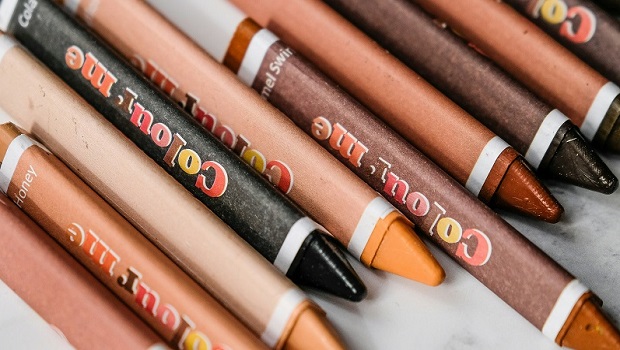
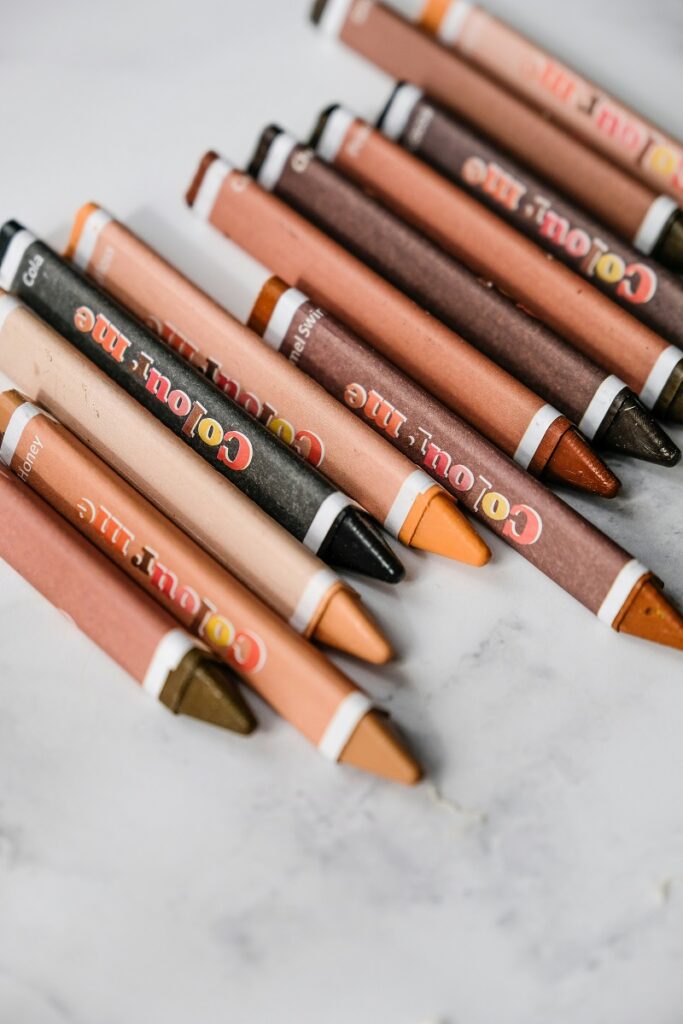
And everyone—everyone—sees color.
As parents, whatever our racial identities, it is our responsibility to raise race-conscious kids, especially those of us living in white societies. It is not good enough and in fact it is untrue and harmful to claim to simply not see skin color. Feeding a false veneer of equality actually perpetuates the power of systemic racism. We continue to see race-driven hate crimes. There is so much work to be done in seeking racial equality and equity—in seeking liberation for all identities. It needs to be understood that discriminatory treatment is not only found in the extreme actions of hate groups and that microaggressions are still just acts of racism. We need to have the uncomfortable conversations in the big and the small ways, in our families and in our communities.
Raising my biracial son and daughter in a society hostile to their very existence—in 2022, Senator Mike Braun of Indiana said that the Supreme Court was wrong to repeal bans on interracial marriage—presents thorny issues for me and my marriage. My white, British husband and I both come from insular cultures that prize purity, and in a way, it was an act of rebellion to choose each other. Our partnership is built on a deep love and a desire for our personal choices to dismantle dominant systems. But, still, we clash sometimes. Thirteen years in, he still sometimes forgets to take his shoes off in the house. We struggle to communicate the nuances of our backgrounds to each other—and even when we can get the point across, there can be friction.
It’s critical to us that we honor our children’s dual identities: Korean American and British. But it can create an uncomfortable distance: I’m in charge of the Korean piece, he’s in charge of the British component. It leaves us focusing on separate things—things we cannot easily grasp about each other.
Conversations around identity, race, and racism continue to challenge our marriage. I can end up feeling frustrated and resentful when my husband does not immediately understand why I might be triggered by something, such as the night we happened to be watching a cooking show about a white chef who had become famous for his ramen.
“Why do we have to watch these white dudes making ramen?” I quipped.
My husband had been unwinding to the hum of the television after a particularly stressful day at work and he was caught offguard by my sudden sarcasm. He had put that show on because we both enjoy cooking shows.
“God, can’t we just watch anything in peace? He’s a chef who lived in Japan! Why can’t he talk about ramen?”
“Don’t you know food appropriation when you see it?”
“Spare me your lectures, yes, I know what food appropriation is. Not everything is appropriation. It isn’t appropriation every time a white person makes ramen. You just cooked Italian pasta!”
“Me cooking at home is not the same as someone who gets to rise through the system and end up on Netflix! I’m tired of seeing white people getting all the opportunities! It’s systemic racism! I want to hear about ramen from a Japanese person, who can talk about the culture, the history! I can’t believe you’re defending someone you don’t even know!”
“You have such a chip on your shoulder! It’s just a cooking show!”
“It’s not just a cooking show! It’s indicative of how white supremacist this world is! Don’t you care? You have Asian children!”
It took several days before we could revisit the conversation. I was stuck on the fact that if I had made that first comment to any one of my friends who is not white, it would not have gone that way. They would have responded in kind, perhaps offered their own sarcastic appraisal, we would maybe have rolled our eyes and moved on. My husband was stuck on the fact that it was 11:00 p.m. on a work day and he was just trying to watch something relaxing, could I maybe not go into one of my righteous diatribes, just this once?
To me, it felt like he was taking my comment personally. I wasn’t talking about HIM, why was he getting so mad? Why was it seeming like he was defending and upholding white supremacy?
To him, it felt like I was unaware that he was overwhelmed and tired, why couldn’t I just let him have some space?
It’s hard to come from such different lived realities, to be seen and treated so differently by the world. I think sometimes there can be resentment. For me, it’s only over the last few years that I have really come to understand my internalized racism and have finally shed the impossible but lifelong wish to be white. There is such heartbreak and anger in realizing the time I lost to not accepting myself. These emotions can rise unexpectedly and whoever is around might get caught in the crossfire. I of course don’t blame my husband for being white or for my not being white. But my anger at injustice and my worry about how our kids will be impacted by a world that will never see them as white—that’s all very real and very valid.
Perhaps the messiness and miscommunication are part of the process. Coming from different cultural identities necessitates an openness to learning and an acceptance that the other person isn’t always going to get it…and how could they? But we can keep inviting each other in. We can keep asking questions. We can keep listening.
We can—and must—keep breaking down systems of racial hierarchy, and it matters that we endeavor to do this within our own homes.
I constantly contend with all of this as a mother to our mixed kids. How do I protect them from the internalized racism I carried with me for too long? How do I teach them about the way of the world without making them angry, resentful, or fearful? How different is their concept of their identity from that of mine, considering they are neither fully Asian nor fully white?
What does it mean for my mixed kids to understand and contend with their whiteness? Do they feel like they belong in all spaces or in none? Am I mothering them in a way that honors all parts of their identity without emphasizing one over the other? How do I help them understand that while they are people of the global majority, they also carry the privilege of whiteness in their identity? These are the questions that my husband and I must address together for our children. We understand the complexity of being in an interracial marriage and the challenges our differences bring to our family dynamic. If we can commit to approaching each other with curiosity, not only can we set a powerful example for our son and daughter, I think we can also find inner healing—our own as individuals as well as together in our marriage.
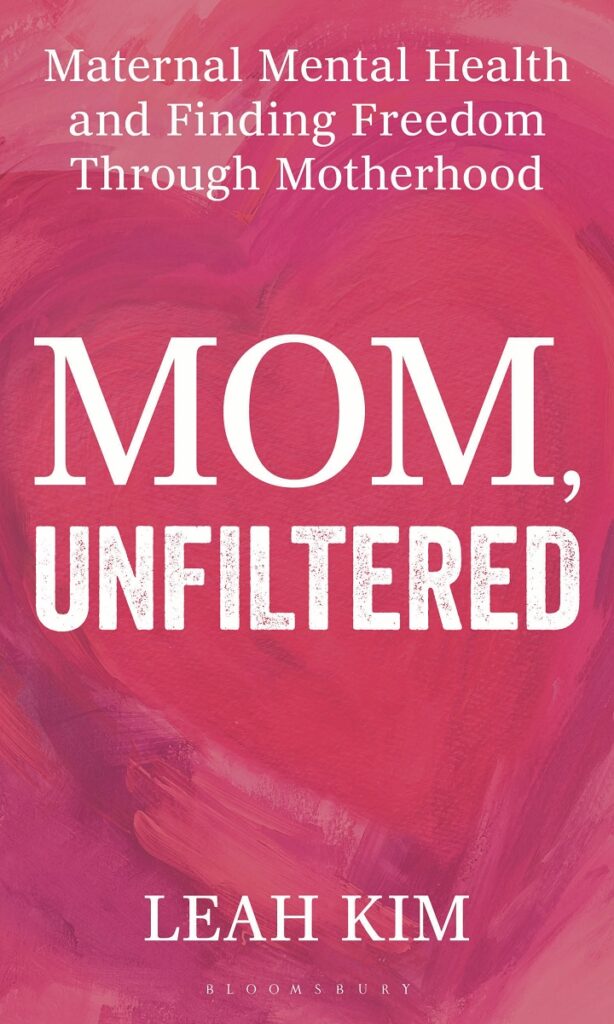
Adapted from Mom, Unfiltered: Maternal Mental Health and Finding Freedom Through Motherhood by Leah Kim and excerpted with permission. Copyright © Leah Kim, 2026. Published by Bloomsbury Academic.
About the Author

Leah Kim is a mental health advocate and writes about motherhood and mental health. She is the host of Voices on the Side podcast and author of Mom, Unfiltered: Maternal Mental Health and Finding Freedom Through Motherhood (Bloomsbury, 2026). Leah is a storyteller with a uniquely nuanced understanding of mental health and the intersection of motherhood, trauma, and racial oppression. She writes because she feels compelled to support others in order to collectively break cycles and move toward freedom.
Related Posts

Earthside →
Lucky →

Childcare and Breathing: An Excerpt from STUDENT PARENT →