
Proud and Sometimes Loud
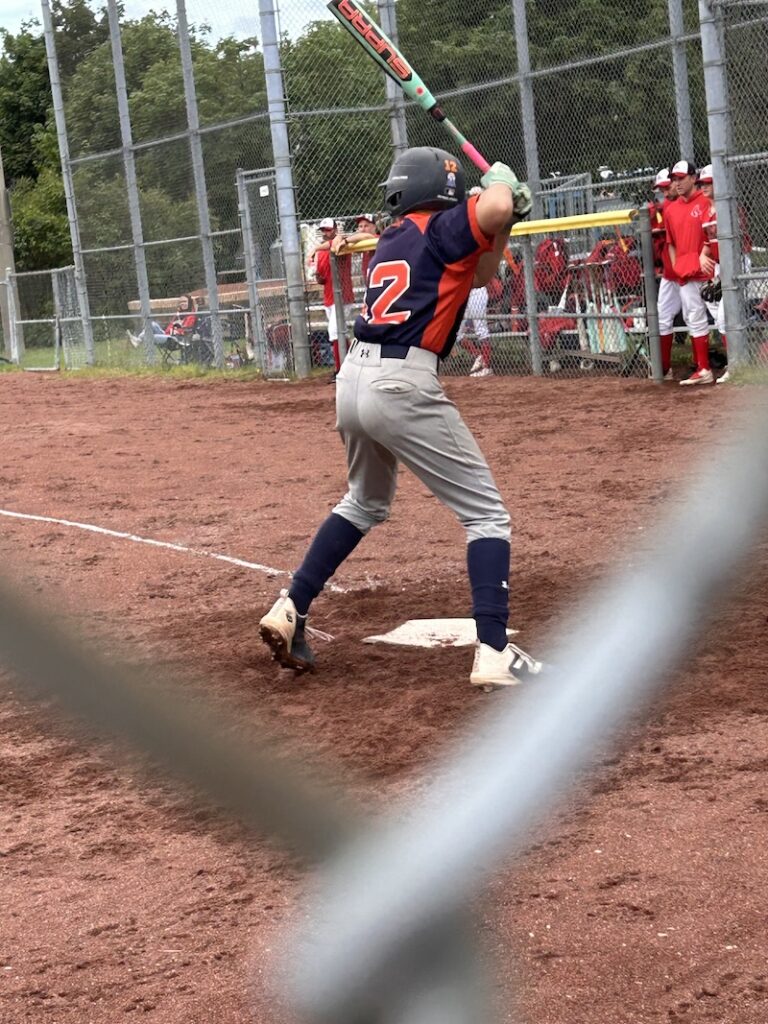
My kid gets in the car after baseball practice with a story to tell us. He’s a great athlete and a sweet kid, and this makes other people want to connect with him. He’s shy, though, very shy, a shy that does not read as aloof but truly as something between sweetness and terror; at 12, so far, other kids and young adults have mostly respected his shyness and intensity, rather than bully him or exclude him for it.
The older teen coaching them that day was asking get-to-know-you questions. The first: you’re a twin right? Are you identical? Yup. Then: how big are your feet? My kid says he answered that he is 12, and so is his shoe size. The coach replied that he’ll be massive when he’s 18 and my kid agreed. Next, the coach asks where he’s from, and my kid clocks what he’s really being asked, he’s being asked “what” he is, racially and ethnically. He replies that he’s Canadian, so the coach switches gears and asks where his parents and grandparents are from—where is he ”really” from. Kenya and India, he says—he doesn’t need to account for my Ashkenazi Jewish whiteness. “So, your mom is from Kenya and your dad is from India?” And my kid says nothing. But saying nothing implies an agreement, a “something like that.” And then it’s time to pack up and go.
“Wait, so you didn’t tell him you had two moms?” my partner inquires. “No mama, I just wanted to stop talking.” Yeah, that tracks for this kid.
My partner gets testy, starts talking about internalized homophobia and insisting on being honest about who you are. She is relentless about joyfully and seamlessly introducing other complications to the stories we are asked to tell about ourselves. She’s right, of course—especially about it being a privilege to choose what can be revealed, to embody an identity that isn’t immediately placeable because it veers far away from a white and cisgendered normativity.
But I get where my son’s coming from, too. He’s already thrown down outside of his comfort zone, answering questions about his body, his origins, especially ones that invoke unseen parts of his identity. What does he owe the world in terms of an explanation? And also, how does his own story of an identity evolve to become truly about him, and not about the people he’s from, not about mine?
I remember being a teen. I was so aware of how one could veer a conversation off track by accidental reveals. I remember being at a family dinner at my boyfriend’s house when I was 18, maybe the first time I was meeting most of them, and his dad was making a joke…“Rachel, did your mom drop you off here,” he asked. And rather than just giggling and prompting the punchline, the “tell her to take this kid along with her when she comes to pick you up,” I instinctively answered “no, my mom doesn’t drive.” Too much information. First, I fucked up the joke, but also I introduced oddly specific and surprising information (which mom in our upper/middle class cadre of semi-suburban people didn’t drive?) that brought up questions about class (could we not afford a car?) and mobility (did we not have much to do in our family? Everyone else is driving everywhere all the time). I was queer then (so was my boyfriend) but not out, not close to it, and this whole business of offering too much info was counter to my covert, suppressed instinct not to conceal.
Then, there was a time when coming out became exhilarating. Earliest on, it was imagined. Then uttered with trepidation, spoken to all the people who’d known me forever but had not quite known this thing about me; most had sensed it, and were fine with it, and were glad that it was confirmed. Then it was an experiment—how do I orient my life to queerness only? I was lucky to have a couple of new starts in new places with brand new people, ones with whom I would only ever be queer and nothing less. And then, once the novelty wore off, as partnership and daily queerness presided over the novelty, and the homophobic micro-aggressions (often so tied up with sexism) and not-so-micro aggressions revealed their patterns, it was just another task. The first coming out is exhilarating, but you have to come out every day; when agentive and not imposed (the spectre of terror looms in these fascist times), it’s mostly just mundane.
In time, once I was living a queer life, other shorthands would become available to me to signal queerness, and those are the ones I trade in now, especially with new people who wouldn’t clock me as queer (despite shortly cropped hair and a few tattoos, I embody the sportsmom I have become). Early mentions of my partner, even easier in French to use the gendered ma conjointe, usually do it, with no beat left at all for said person to react to the term, a seamless prompt that this fact about me is to be absorbed along with whatever else I am offering about myself in an initial conversation.
But also, at 47, I don’t sweat it. I’ve embraced thememe: “I’m not coming out anymore. If you can’t tell I’m gay then that’s on you.” I saw it a few years on a friend’s Instagram, one of two non-binary folks living and parenting together, and I get that the meme is meant for them, for folks who present as straight but very much are not, who need a way out of both the hassle and trauma of being misread all the damn day long by everyone and need liberation. We conceptualize pride as the opposite of shame, and that’s something I’ve struggled with but have found a way to vibe with. I am not proud to be queer, I just am queer. But I am proud to be attached to movements that insist that our liberation is bound up with everyone else’s.
But there is liberation too in affirming to myself that I am enough, that I am a validly queer person just because I am, even if the eye turned my way tries to figure out “is she queer/is she just in perimenopause.” Even if it’s weeks since I’ve been near intentionally queer community rather than intentionally with baseball parents, or mom friends, or whatever other assemblage feels like the farthest from being subversive, being radical, being queer.
And even if I have a kid who escapes a convo without “coming out.”
I won’t avoid that this feels like a failure of our parenting as queer people, that we did not cultivate this response in our kids, that they don’t claim this easily as their own.
The kids in my son’s class had to make a sign to hang above their lockers that depicted their face, their name, and symbols of the things that they like. One very rad girl in his class, no sexual orientation yet declared but with rumours of a boyfriend, drew the inclusive pride flag (BLM, Transpride) on hers. I don’t really know what that’s about, but I was glad to see it, glad to think that pride tracks with kids as something to embrace and relay as a thing they love.
I hope what queerness can mean for my son is what it has come to mean for me: an absolute insistence that I am more than enough just being myself, that I’m fine just how I am. That we all are.
My kid drew the things that he loves to hang above his locker: a calculator, a baseball, a water polo ball, a recorder, a book, a Kenyan flag to represent my partner’s parents, a Lithuanian flag to symbolize my heritage. Belonging to queerness is not something that he drew on the sign. He doesn’t wear it like his race, his masculinity; not now, anyway. And then there will be the orienting of his own sexual identity as it emerges, and the stories he’ll evolve into a shorthand about who he is as he figures it all out.
About the Author

Related Posts

Earthside →
Lucky →

Lost and Found: Join us at the Brooklyn Book Festival x MUTHA x Pen Parentis Lit party! →

One Response to Proud and Sometimes Loud