Can a Good Mother Feed Anyone Other Than Her Child?
E and I went out to dinner with another couple, friends who were also expecting their first child. We were both still in our first trimesters, that stage of precarity and invisibility. It felt so good to share future dreams with friends, to imagine a companion from birth for our seed-sized child.
Still, I felt a pang of fear as we talked about our lives to come—fear that we were all becoming too comfortable in this happiness, that our hopes had become oversized when we may soon experience loss.
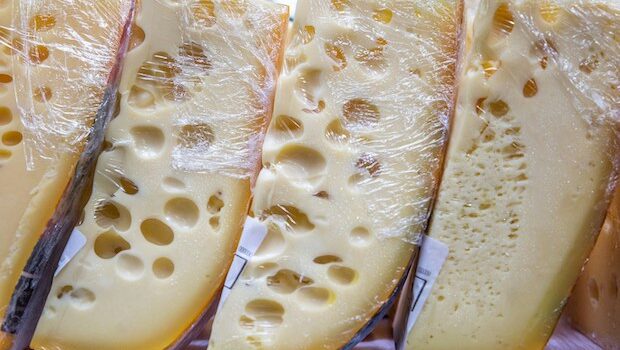
I ordered my dinner: salmon, a baked potato, a side salad. The waiter brought the salad first, bleu cheese dressing on the side. I began to drizzle the dressing over the salad, until my friend very politely cleared her throat: “That’s unpasteurized, right? Soft cheese?”
I realized my mistake. “Oh, yeah,” I said. “I can’t believe I wasn’t thinking about that.”
“I mean, it’s probably fine,” she said.
“Probably,” I said, but still I picked the dressing-smeared leaves off the bed of lettuce. I ate the rest of the salad plain. It was tasteless. It reminded me of the years when I’d order no dressing at all, ever.
I don’t like any dressings. I like how it tastes on its own. I hadn’t told this lie in years. I continued eating my disappointing dinner. Well, it’s not like you need it anyway, I heard in a voice familiar, but not my own.
The rest of our food arrived. I picked at the baked potato. I refrained from adding butter or sour cream on top, even though I knew these items were pregnancy approved.
I remembered a dinner years ago: I was a child, and my uncle’s new wife was pregnant and large. My mom and grandmother, still consumed in grief over the loss of my aunt and the dreams of her own future children, looked my uncle’s wife up and down with sneers.
“Did you see her eat two baked potatoes?” my grandmother said on the car ride home. “Did you see all that butter and sour cream and cheese she packed on top? No wonder she looks the way she does.”
“I wonder how big that baby will be,” my mom quietly replied. “I wonder if she’ll have to have a C-section.”
That night, I lay awake in bed. I reflexively rubbed my hip bones, a decades-old habit. When I was sleepless or lonely or scared, my hands migrated to those sharp edges, and I felt comfort.
I wondered how long I would still be able to find them.

I met with a doula during the first trimester of my pregnancy. This doula was recommended by one of my coworkers at the university where I taught encouraged me to consult with her. Our conversation centered on my upcoming birth. She’d had a home birth the year before. I thought that sounded messy.
“The most important thing is that you go to a provider who cares about your priorities,” she said. “Who are you going to?”
I told her a name.
“Have you asked about their C-section rate?” she responded.
“I did,” I replied. “But he told me he didn’t have a number. He said the best thing I could do to avoid a C-section was to stay in shape.”
“Well, the fact that he doesn’t have an answer to your question shows where it fits into his priorities.”
I nodded my head. She then began to talk about the importance of supportive providers, the benefits of natural birth. “Of course, an epidural in the late stages of labor can be a beautiful thing,” she added.
I was intrigued by the idea of natural birth, mostly because I was interested in it as a challenge. But I never actually considered going medication-free during labor. Married for half a decade, I could still hardly get a penis inside of me without pain. If I could barely have intercourse, how could I possibly have an unmedicated birth?
The doula began to talk about painful sex after birth. She initiated this conversation. Episiotomies without consent. Significant tearing. I tried to keep my face blank. I didn’t want to explain to her that, really, even though it was better than at the beginning, I was basically already there, had always been there, experiencing painful sex.
It had taken some time to get pregnant, and I assumed that this the painful sex was likely the reason why. It felt as if there was some obstruction. Each time we came together, I couldn’t breathe through the pain long enough for him to stay in there long enough to make a baby.
Eventually, I began to grow. It was what I had been waiting for—I could tolerate it. Temporary, I reminded myself. Rather than obsessing about my expanding body, I began to think constantly about what I would do with my baby when I was back at work teaching English at our local university.
At a birthday party with family, I made small talk with my father-in-law in the kitchen. He was dismayed that I planned to go back to work after the baby (a boy!) was born.
“But y’all can afford for you to stay home,” he said. “What will you do with the baby while you’re away?”
I paused. This question had been gnawing at me since the beginning of the pregnancy—how to do anything aside from staying home with the baby. I’d really only ever seen moms full-time at home. I’d really only ever heard moms away at work talked about by those moms at home.
“I think we’ll use daycare,” I said. I was unsure but knew that I wanted an identity outside of dutiful motherhood.
“Daycare,” he snorted. Then he paused. “Well, of course, you still have time to make that decision.”
My mother-in-law, Kate, began distributing dinner, slices of pizza on paper plates.
“What kind of cravings are you having?” my father-in-law asked me.
“I don’t have any cravings,” I said.
“None? Nothing at all? Kate,—” he called, “weren’t you always craving sweet tea when you were pregnant with E?”
“Oh, yes,” she replied.
“Well, I don’t have any,” I said again. But of course I did. Fried chicken dipped in ranch dressing. A chicken salad croissant. Peanut butter chocolate ice cream. Pregnancy meant all my senses were heightened. The right meal left me doubly satisfied. I could enjoy my meals most when I was away from others, when I was not in fear of potential judgment. I found myself eating, often, in my car, in parking lots. I looked out the window to my left, then to my right, and when I confirmed that I was not being observed, only then could I fully indulge.
But in that moment, I convinced myself that I did not have cravings. No way would I tell him, regardless, whispered that little voice in my head.
I looked down to my slice of pizza. I’d eaten half. Suddenly, I felt sick. The tomato sauce, I decided, was too acidic. I tossed my plate and the remaining remainder of the slice in the trash. Then I walked outside to my nieces and nephews. They were playing tag in the backyard.
“Can I join?” I asked, and suddenly, I was it. I chased them all over the grass. We were giggling and breathing heavily. We were not discussing all the expectations that had grown along with my pregnancy.
Excerpted from Famished: On Food, Sex, and Growing Up as a Good Girl by Anna Rollins ©2025 (Wm. B. Eerdmans Publishing Co.). Reprinted with permission from the publisher.
About the Author

Anna Rollins is the author of Famished: On Food, Sex, and Growing Up as a Good Girl. Her groundbreaking debut memoir examines the rhyming scripts of diet culture and evangelical purity culture, both of which direct women to fear their own bodies and appetites. Her writing has appeared in outlets like The New York Times, Slate, Electric Literature, Literary Hub, Joyland, and more. She’s an award-winning instructor who taught English in higher education for nearly 15 years and a 2025 West Virginia Creative Network Literary Arts Fellow. A lifelong Appalachian, she lives with her husband in West Virginia where they’re raising their three small children. Follow her on Substack and Instagram @
Related Posts
Lucky →
Childcare and Breathing: An Excerpt from STUDENT PARENT →
Lost and Found: Join us at the Brooklyn Book Festival x MUTHA x Pen Parentis Lit party! →