
The Wave
The owl arrived four days before my son did.
It sat on the fence just outside our kitchen window, unusually close, wrapped in the stillness of potential. We lived among owls and often heard them calling through the trees at night, but I had never seen one remain so close for so long. Back home on Maui, the Pueo was spoken of as a protector, a spirit appearing at thresholds and transitions. This one stayed. Watching. Silent.
The night before my son was born, a thunderstorm rolled through just after dinner. I had ordered pizza because I was exhausted and didn’t feel like cooking. I had been having light, inconsistent contractions throughout the evening, but with a third baby, that wasn’t unusual. Between cracks of thunder, I watched the owl sitting in the rain, lightning briefly revealing something ancient as droplets rolled off its feathers. Even in the storm, it stayed.
The next morning, at 6:00 a.m., I woke to the unmistakable sensation of released pressure and warm liquid.
My water had broken. This was my third baby. I knew the drill.
Or at least I thought I did.
There was no panic in the house. No dramatic rush. I stuffed a towel into my pants to catch the leaking fluid and told my husband to call the midwife and start filling the birth pool. We had planned another home birth. Prepared. Attended. Calm.
I cleaned the kitchen. It’s what you do when company is expected. I put away the dishes that had dried overnight, folded towels, wiped away the fingerprints little hands left on refrigerator doors while my husband made coffee. The familiar smell drifted quietly through the house.
My other two boys, seven and five, wandered into the kitchen for breakfast. Dry Cheerios. No milk. Somewhere in the background, SpongeBob SquarePants played from the television in the back bedroom.
“I’m not even having contractions,” I said, reassuring everyone.
In the other room, the birth pool slowly filled from a long hose retrofitted to the bathroom sink, warm water murmuring through the house.
I was excited about the pool. With each of my previous births, I had imagined having a water birth, but birth has a way of making its own decisions. This time, I was sure it would happen.
At 6:45 a.m. the first contraction arrived, and it was not subtle. It was the kind that makes you stop, bend, breathe, and bellow, low and primal and positively bovine. The kind that bypasses thought entirely.
I checked on the boys. They barely looked up from the screen. It’s Saturday and Mom’s having a baby. No big deal.
People often describe labor as losing control, but that never felt accurate to me. It felt more like crossing a threshold where control no longer mattered.
I grew up in a world where birth was spoken about differently. My mother taught childbirth classes on Maui, and some of my earliest memories are of sitting quietly in living rooms, eating sticky Fig Newtons, watching women practice breathing through contractions while partners pressed against their backs, round bellies rising and falling in relaxed rhythm. Birth was never presented to me as easy, or even without fear. It was sacred because it was real. Worthy of respect because it included both the miracle and the danger.
I was raised around the ocean the same way.
Before entering the ocean we were taught to sit and watch the water first. Watch the sets. Feel the pull beneath the surface. Smell the ehu kai, the sea spray, moving through the air. Pay attention before entering. Respect was part of the practice because nature was never sentimental. The ocean could hold you gently one moment and humble you the next.
And if you were ever caught in a freak set or dragged into the whitewash, the teaching was not to fight the water. Breathe. Find calm. Swim out beyond the shorebreak, then float and wait for the set to pass. Trust that the same force pulling you under could also bring you back to the surface.
There is no stopping a wave once it has begun to break. Only the choice to yield to the current and trust it will eventually bring you back to the surface.
Birth carried that same unpredictability. It is sacred precisely because it is not safe in the simplistic sense of the word. My body was doing something older and wiser than my mind. There was nothing left but surrendered participation, letting the waves carry me where I needed to be.
By 7:05 a.m. I could no longer walk normally. I leaned over a chair in the living room while my husband continued filling the untouched birth pool nearby. Somewhere during this, he started recognizing the primal sounds. Those sounds that change from surface level to depth. The ones that signal arrival.
This was happening fast.
My husband pressed steady hands into my lower back, that sweet counterpressure that somehow takes the edge off. He had been with me through birth twice before, and he was the kind of person who became sturdier inside a crisis, not louder. I think it helped that neither of us was afraid.
He called the midwife again.
“Do not let her get in the pool,” she told him. “If she gets in, that baby is coming.”
Apparently, she had heard the sounds too because at that very moment she was throwing cash at a gas station cashier before sprinting back to her car and racing down the interstate.
Meanwhile, at 7:15 a.m., I realized I still had my pants on. That clearly wasn’t going to work.
Time became strange after that.
People sometimes talk about “labor land,” that altered place women go during birth, but even that phrase feels too soft for what it was. My body moved beyond my mind.
The room receded. Voices became distant, muffled, almost pleasant, like elevator music somewhere far away. I vaguely heard the midwife coaching my husband over the phone through what had become very obvious to everyone except perhaps me: this baby was going to be born. Now. Unassisted.
Then I heard something about towels. I glanced down through clenched eyes. Not the good towels! I made my husband exchange them for the lower-tier, more worn towels while another part of me briefly panicked about staining the carpet.
Then another contraction came and swept all thought away. I came up briefly into the air of reality before being pulled under again, somewhere beyond language.
Just breathe.
There are moments in life where thinking ceases to be useful. Birth is one of them. Death, perhaps, another. We spend so much of our lives trying to prepare, predict, optimize, and control. But some thresholds cannot be intellectually mastered. Eventually, life asks for something else.
In that living room, with the muffled chaos of morning cartoons drifting from the back bedroom and cereal bowls balanced on little knees, something ancient moved through me. Something sacred. Not separate from the body, but alive within it. For a moment, I felt tethered backward through women who birthed in safety and women who did not. Women who held joy. Women who held grief.
Birth no longer felt personal. It felt inherited.
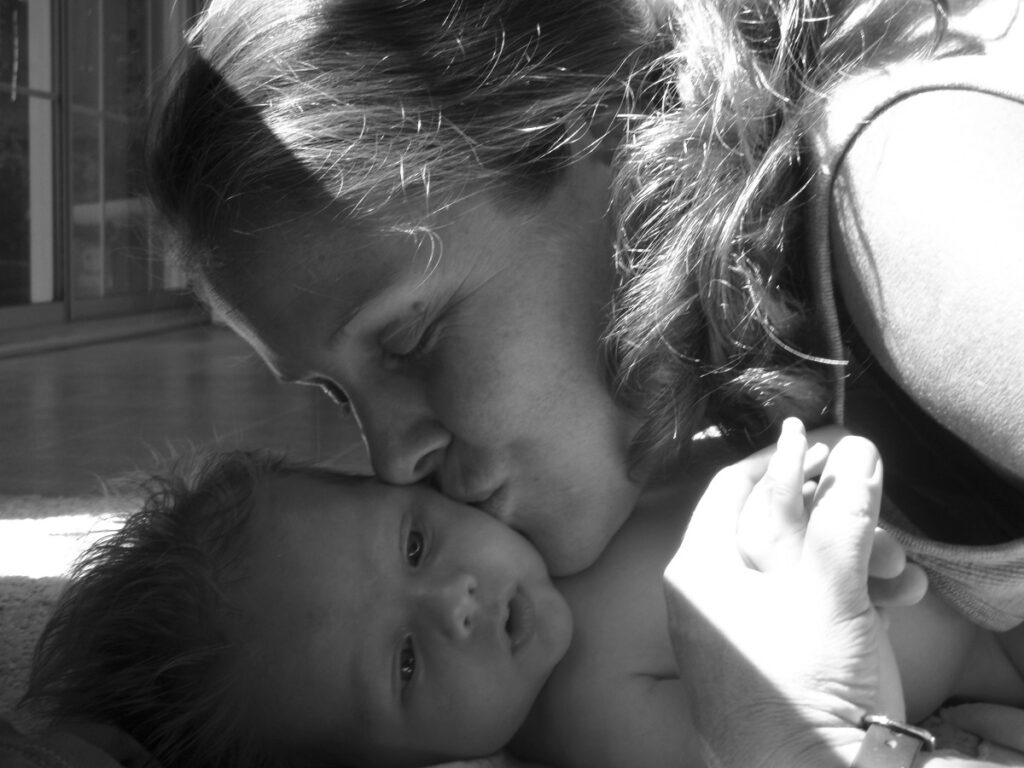
At 7:24 a.m., my husband caught our son on the living room floor. Wet and blinking, I scooped him onto my bare chest and leaned back against the wall as the room slowly came back into focus.
In the days afterward, people praised my husband for catching our son.
“Are you kidding?” he said. “I had the easy job.”
Small footsteps padded down the hallway.
“He’s here,” I told the boys.
The boys peeked at their baby brother.
“Cool,” one of them said before wandering back to Patrick, Squidward, and the pineapple under the sea.
The birth pool sat mostly filled, stoic and unused in the corner of the room.
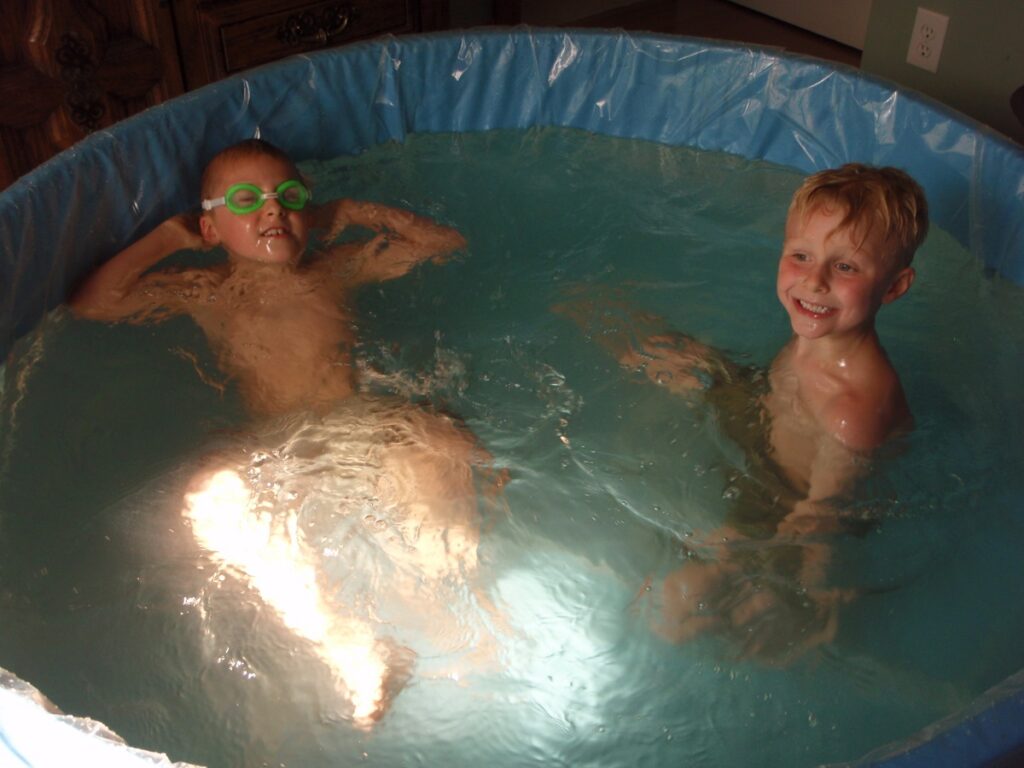
Later, after the birth team finally arrived and the adrenaline settled, the boys put on swim trunks and climbed into the warm birth tub, turning it into an indoor swimming pool for the rest of the day. They splashed and laughed while my newborn slept nearby, completely unaware that anything extraordinary had happened at all.
The cereal bowls still sat on the table, forgotten now. Somewhere along the way, the familiar soundtrack of Saturday morning cartoons had dissolved into soft reggae.
That night, I looked out the kitchen window and saw the owl sitting on the fence again. Silent. Watching. As though waiting to make sure we had all arrived safely.
I stood there for a long moment, feeling the distance between the ordinary and the sacred somehow narrowed inside me.
By morning, the owl was gone.
About the Author

Aleka Thorvalson is a mother of three, writer, educator, and ICF Professional Certified Coach (PCC). She is currently completing graduate studies in applied psychology, where her research explores uncertainty, belief, and human resilience. Through her Substack, The Real Change, she writes about psychology, spirituality, motherhood, and the complexities of being human. Whether writing about birth, belief, or transformation, she is drawn to the ways people create meaning when certainty is unavailable. Motherhood, her most important work, remains the deepest influence on both her life and her writing.
Related Posts
I Had a Book Come Out, Then I Had the Baby: On Embracing Privacy in My Most Public Year →
The Undertow →
Goodbye, Forever: A Review of No Contact →

One Response to The Wave