
The Undertow
Over ten years ago, when our kids were thirteen and ten, our family vacationed in Hawaii. The kids had never been strong swimmers. I did my level best. My own parents resolutely dragged me to the pool until I reached Polar-Bear level, mastering ten-minute water treading and the front crawl with side breathing, so they knew I wouldn’t drown right away if I fell in the deep end. But when our kids were young, weighed against the hordes of splashing peers in various roped-off sections, the piercing lifeguards’ safety whistles, the screams of a hundred or more children echoing off concrete, the itchy-eye-inducing chlorinated water, neither of my kids cared to put in the hours. I couldn’t blame them. I recoiled from the loud, over-stimulating pool, too; and maybe being a competent swimmer myself (see: Polar-Bear), I failed to anticipate a time when my unwillingness to push them—the way my parents had pushed me—might prove catastrophic.
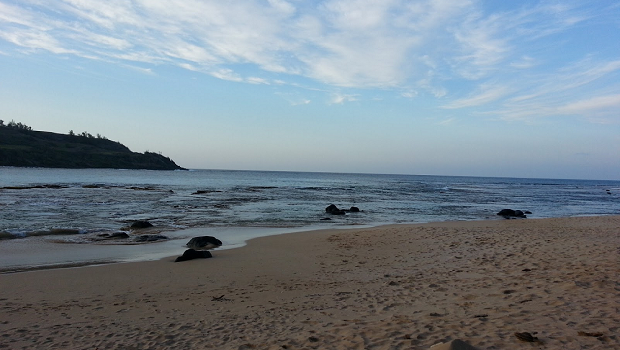
Moloa’a Beach was a lazy quarter-mile walk from our vacation cottage along a dirt road lined with plants whose leaves stretched longer than my youngest’s body and where flowers the size of a hippo’s yawn opened softly. The beach was not considered one of the better ones on Kauai’i; some days, our guidebook said, the tides could be treacherous. The first day, however, we loaded our arms with towels and beach chairs, snacks and snorkels, and meandered to check it out. Sure, I waded into the ocean above my knees and a wave tore the sunglasses from my face in record time. But the sun shone, and the water temperature was perfect.
I forgot to factor in that while I’d been the sort of kid who heeded adults’ warnings, my daughter was made of more independent stuff. Growing up near the Oregon coast, she ventured into the frigid water as soon as we allowed. That first day in Hawaii, as our daughter swam further out, we shouted, “Be careful,” but what was there to fear from this glittery blue ocean? It suggested no need to take care; she was held in the warm, loving palm of the sea. Her younger sibling, meanwhile, was a bundle of nerves and played in the shallows, insisting that I not stray too far away.
Our daughter’s head got mighty tiny in the distance—more than halfway to the other side of the bay—before my husband and I finally agreed to be concerned. He plunged into the water while we both yelled, “Stay where you are! Don’t go any further.” Nausea roiled in my belly as I saw how much time it took him to finally reach her. I felt even sicker as they started back. My husband’s steady one-armed stroke, my daughter’s kicking feet, yielded little discernible progress. I’d turn away to talk with my youngest, purposely drawing the moment out, but when I looked back, they’d hardly moved.

As if matching my mood, the weather began to turn. Scudding clouds swept in front of the sun, stealing our comfort. How could we ever have found it warm? Not far offshore, darker clouds gathered like a mob.
My husband finally remembered to swim crossways to free the two of them from the undertow. Our daughter wouldn’t have had the endurance to make it back on her own without the kickboard she and her dad clung to. All these lucky breaks. Somehow, I’d behaved as if lucky breaks were our due.
That sensation of undertow—complacency exerts a similar pull. When I reflect on countless parenting moments, I’m stricken by decisions I made about my children’s lives, thinking, “It’ll be fine.” I am not reassured that usually it was.
When my daughter was born—at home, after a long labor—she emerged a “floppy” baby, one that doesn’t flail robustly into the world. The midwives had to resuscitate her. A diminutive oxygen face mask jump-started her breathing, but my daughter might well have not taken that first breath. I was so certain a home birth was the way to go; had I been committed to the point of blindness, assuming nothing could go wrong?
Even though the panicky terror of a child not breathing seared into me during my daughter’s first seconds of life, I’m building a case about how appealing complacency can be and the aforementioned inadequate swim lessons are Exhibit A. Shouldn’t I have done anything in my power to spare her the possibility of another instance of not breathing—from, say, drowning? Why didn’t I shrilly insist, “What’s a little overstimulation if these lessons keep you two safe?”
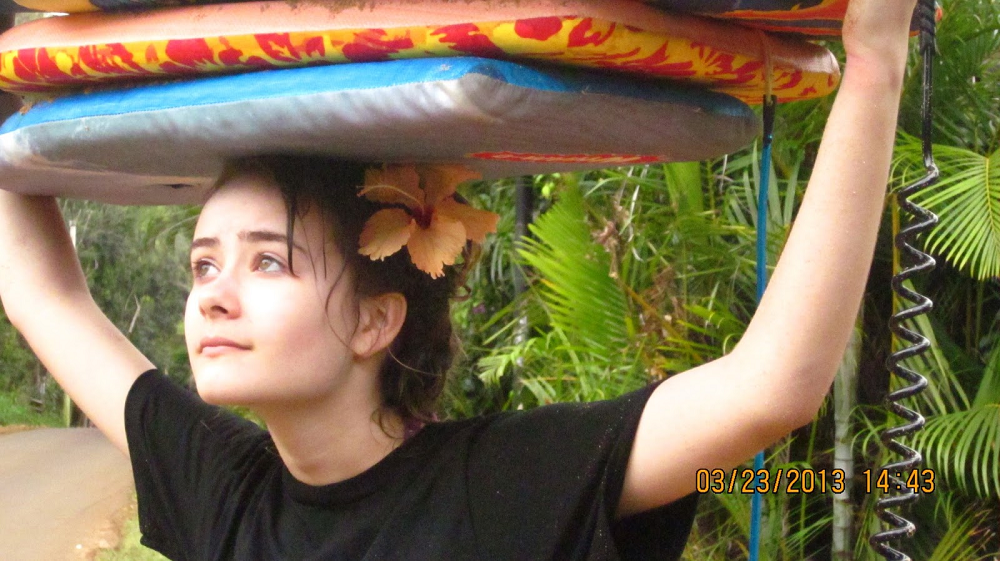
Or the time when—both kids still a little wobbly on their two-wheelers—we pedaled into the left lane of a busy street because I told them it was okay to make a left turn. Surely, I thought, the bus barreling down the road would mark their shaky passage and decelerate. Instead, as it tore past, the riptide of its draft visibly sucked at my kids. Visions of them tumbling under the enormous tires filled my brain.
My parents’ early lives were packed with death and maiming. In his South Dakota childhood, my dad remembers a man mangled beneath his rolling tractor just yards from where my father stood with his parents. Once they moved to small-town Oregon, the rescue alarm wailed on the regular for men seized by insistent sawmill machines or loggers crushed by trees. He grew up without the assumption that things worked out. So often, they didn’t. As for my mom, she grew up in the last frontier of 1940s Anchorage, Alaska, where murders, bar fights, alcoholism, and rampant prostitution were the stuff of the everyday.
I feel myself trying to build another case, one that goes something like this: “Because my childhood wasn’t as bad as my parents’, I never learned to anticipate disasters that might befall my own children; my life hadn’t been as harsh as theirs, and so I assumed it couldn’t be.” But I’m not sure it serves anyone for me to try and convince the reader that I’m a bad parent. Is it actually the case that if I stopped taking my kids’ safety for granted this minute that I’d be able to keep them safe? Such magical thinking! Guilt can benefit us if we use it to pay more attention in the future, but it can also simply feed a misguided notion that by prostrating myself to the past, I might change the future.
That’s the real undertow, the compelling notion that if I feel badly enough about long-ago carelessness, my atonement has the power to keep my kids safe. This notion persists because the alternative is too horrifying: that they are as subject to life’s turns as anyone and there’s little I can do about it. Strong swimmers drown; babies succumb to life-threatening circumstances; seasoned bicyclists are struck by vehicles. Sometimes, I don’t know how we stand the randomness of this world. Maybe to even allow my children out of the house at all, I had to believe it would be fine—not because I’m a bad mom, but because I wanted to give them this world I love with its changeable waters and its lush colors, despite its sometimes-salty taste.
About the Author

Katrina Irene Gould has spent thirty fulfilling years as a counselor in Portland, Oregon. Gould’s writing has appeared in Usawa Literary Review, Flash the Court, Dorothy Parker’s Ashes, The Gilded Weathervane, HerStry, Glacial Hills Review, Mukoli, Literally Stories and others. She was nominated twice for the 2025 Pushcart Prize. Steve Almond says, “Writing is a forgiveness racket.” Gould writes in hopes of demonstrating that, by examining our complicated human experiences, we can create more compassion for our struggles—since often the person we most need to forgive is ourselves. You can find her work at https://katrinairenegould.com/.

2 Responses to The Undertow