
Grief and the ’90s
To read an interview with Anna Nordberg about her new novel, When She Was Ours, go here.
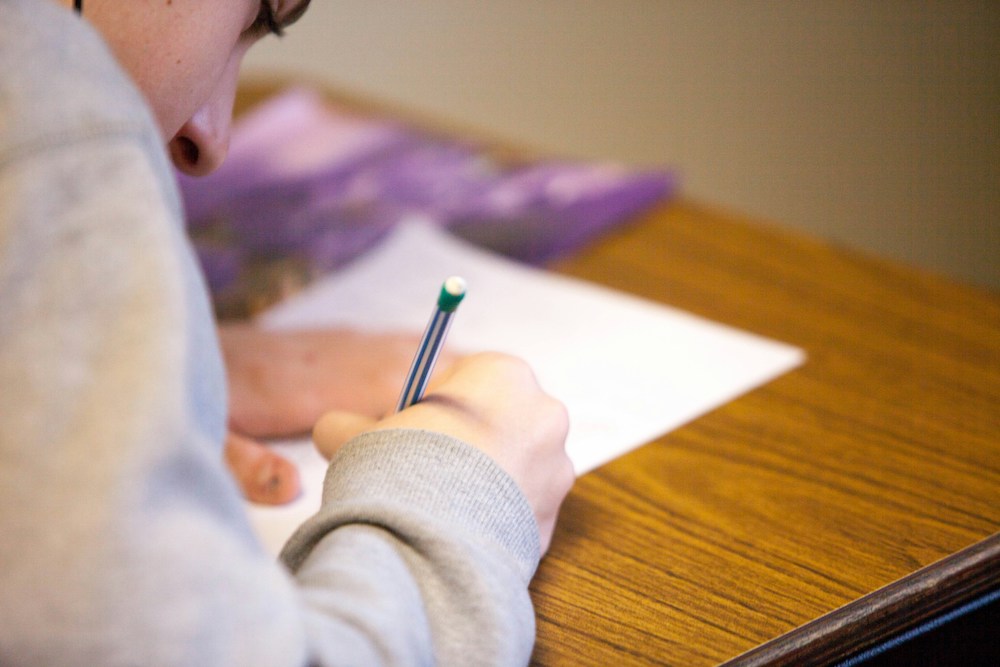
My mother died on a spring Friday in 1996, the day before I was supposed to take the SATs. The following morning, I rode the crosstown bus to the West Side of Manhattan to my testing center, a high school with beige brick and peeling windowsills whose name I no longer remember. Holding my number two pencil, I filled in bubbles for the antonym of precarious, the synonym for sanguine. Was this a bad idea? Definitely. Would it be possible now? No.
There would have been no way for me, at seventeen, to sit on that bus, texts and family chats pouring in, my slim iPhone ablaze with anguish, and sit for that test. And to be honest, that would have been a good thing, a reminder that what I was doing—an essential college evaluation 24 hours after my mother’s death—was a terrible idea. But what is so hard to explain now is how grateful I am that I had the chance to make this bad decision, alone. To this day, I feel an almost unbearable nostalgia for that 17-year-old girl, sitting quietly in a room where no one knew her mother had died.
When I tell people this story now, they give me a look, and that’s fair, it’s kind of a weird story. No one pressured me to take the test, in fact, quite the opposite—my dad urged me to reschedule, but he accepted my decision. A decision that I’ve realized, with the benefit of time, represented both a longing to live up to my mother’s unflappable ability to get on with things, and a ruthless desire for my life to stay the same as it was the day before, even though it was not, and never would be again.
Thirty years later, I have my first novel coming out, and it is about a family dealing with grief in the ’90s. While I didn’t set out to write a ’90s novel, I realized within five pages that I couldn’t write a story about young people grieving with an iPhone. In fact, I couldn’t write about young people and technology at all. That’s probably because, as someone who came of age during the Clinton presidency, I was part of the last nondigital adolescence.
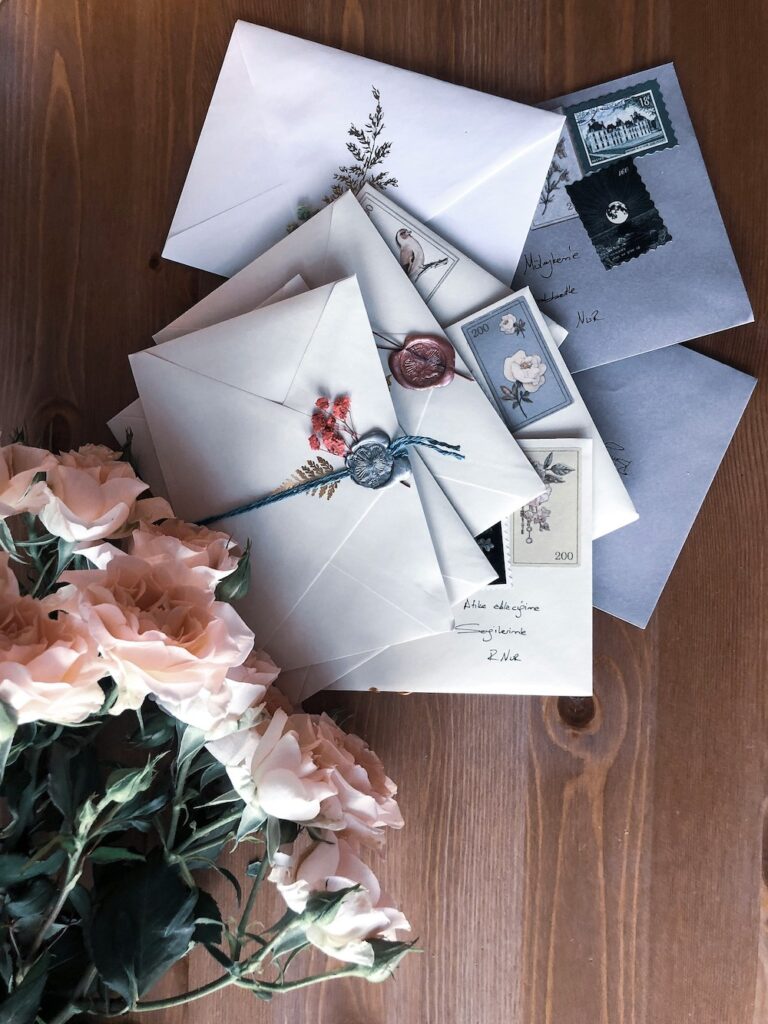
The ’90s are having a moment now, a plum spot in the 25-year nostalgia cycle, in large part because they were pretty much screen free. But sometimes, I wonder what would losing my mother have looked like in the age of screens. A flood of lovely words on social media, friends of friends putting a broken heart on a post. So many stories and photos shared about her. A vast, digital archive of grief. Instead, what I do have is every single letter people sent me after my mother’s death—classmates, teachers, family members, my mother’s friends from college. Several people wrote “no reply necessary” at the bottom, and that’s how I learned both that you were expected to thank people for condolence notes (my mother, a stickler for manners, hadn’t covered this before she died), and that the human thing to do was to release people from this obligation. Now I write those words at the bottom of every condolence note I send. And I think of my mother, every time.
When I walked out of the SAT testing center into that bright May day, I heard someone call my name. It was a close friend of mine, Teddy, and he walked over and gave me an endless hug I can still feel to this day. “I’ll walk you home,” he said.
We walked for hours across the narrow waist of Manhattan, through Central Park, looping around half of the reservoir and coming out behind the Met, the Temple of Dendur shining in its glass pyramid. The city was so beautiful that day. Teddy bought me a hot dog at one of the stands in front of the Met’s long river of steps. Then we continued east, until we were in front of my building and the doorman opened the door, his face a mask of sadness.

This was one of the few times in that short, busy aftermath between my mother’s death and her memorial service three weeks later, that I felt someone completely understood, without words, what I needed. Teddy and I walked and talked, but not about my mother, not really. I had no language then to wrap around what had happened, the sheer physicalness of seeing her body, my sobs and the long, jaggedy breaths in between them.
A motherless girl is a flummoxing thing, and I still think about the guts it took for my friend to just walk beside me, often in silence, containing the sharp edges of my grief. I also think how never in a million years would that walk have happened if we’d had phones, that digital itch. Friends would have reached out; we would have shifted course; I would have called my dad, texted my friends. There would have been beauty and comfort in that as well. But it wouldn’t have been the same.
I put this story in my novel, not exactly the way it happened, but the feeling of it, the way time and conversations played out differently. And what I found is that while the world that existed on that day, just like the New York City of that day, is gone, returning to it in my writing gave me a kind of peace.
Not that I think nothing has been gained since. I know it would’ve helped me to be able to access our current electronic trove of grief, the articles and threads and facebook groups that would have been waiting for me now if I lobbed “is this feeling normal?” into the search engine churn.
Instead, my dad sent me to a grief counselor, a chic woman with a foreign sounding name and a dark bob as sleek and tidy as a seal’s. I gave her nothing. I couldn’t. How could I put into words the roar of feelings inside me—not just the anguish, but the guilt, the disorientation, even the small stone of relief that my mother was gone, because she had been suffering for such a long time I could no longer bear it? How could I explain that some days I felt totally normal, because I was a teenager and adolescence is lived in the present, and that felt terrible too? I think, sometimes, the anonymity of a screen and high speed internet (in 1996, I had an AOL address and a desktop modem that chugged and whined as if someone were feeding coal into a furnace) would have been a salve.
But in the end, I would not want to have experienced my mother’s loss a different way. Because there is an ingredient to grieving that is almost impossible to find these days. It is a silence, a slowness. A quiet so lonely and raw it’s deafening. Tech makes grief loud in a different way—you know how many people are thinking of you, you feel friends who you’ve lost touched with pull close, and that’s lovely. But its frictionless is also exhausting. There’s no tech equivalent to writing “no reply necessary” on the bottom of a card.
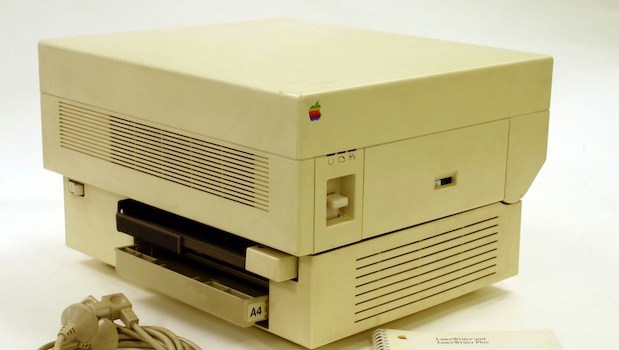
When my son was four years old, he asked me what my mother’s voice sounded like. I strained and strained to recall it, but I couldn’t, her voice was only a feeling in my mind. I had no videos to play him, no voicemails. “She sounded like she was interested in you,” I said, finally. “She took you seriously. You could hear in her voice that she was listening.” I didn’t add that she could also, despite her impeccable upbringing, braid together an incandescent tapestry of four-letter words, especially when her printer jammed and my brother wasn’t home to fix it. Or how she could be so hard on herself. I know her voice in those moments, because I am hard on myself too.
Memory can be a deeper, different experience of reality than a video or a photograph. I do sometimes wish—frankly long—to have more to remember my mother by than the boxes of files and letters and photos I’ve carried with me. I long for the infinite digital imprint of a life, to feel the kind of astonishment I feel when I watch videos of my children as toddlers, as if they were different humans. The feeling of a certain moment in time that comes rushing back. I don’t have any of that with her. All I have is the mother of my heart.
But what I can say is, the mother of my heart is enough. That is what I realized when I excavated that time of loss, reconstructing it for my novel, sobbing through the unremarkable, everyday business of a family living through a long illness. I spent a lot of time sitting alone with my thoughts, my memories. And for this 90s girl, that was enough.
About the Author

is an author and journalist whose essays have appeared in Slate magazine, The Washington Post, The New York Times, and the San Francisco Chronicle. Before going freelance, she worked for over ten years as a magazine editor at Time Inc and Conde Nast. Before that, she spent a lot of her childhood writing novels with a number 2 pencil on yellow legal pads.
Anna has a B.A. in English from Yale University, where she also wrote a lot of fiction, this time on a computer. In 2015, she started writing a memoir about becoming a mother without her mom, who died when Anna was a teenager. This led to a focus in her writing on mothers and daughters, how loss unfolds throughout a life, and the vulnerability of being a parent with young children. While the memoir never found a home, Anna brought those themes into her first novel, When She Was Ours, which will be published on August 1, 2026.
Anna grew up in New York City and now lives in San Francisco with her husband, son and daughter, and English cocker spaniel, Guinness (who also loves books).
Related Posts

A Lost Mother’s Love is Never Gone: An Interview with Anna Nordberg →

“Be Her Safe Space”: An Interview with Kate Rope, Author of Strong As a Girl →
How to Talk Teen →

One Response to Grief and the ’90s