A Lost Mother’s Love is Never Gone: An Interview with Anna Nordberg
To read an essay by Anna Nordberg about the real-life loss that inspired her novel, go here.
How often does a book come into your life and make you feel like you were the exact reader the author was writing for? While I’m a book lover and have consumed thousands of them, it doesn’t happen to me very often. Most of the time, I feel like I’m an outsider looking into a story through a window, observing something intimately, yet wholly separate from who I am.
When She Was Ours (Lake Union Publishing, 2026) found its way into my inbox and I immediately felt a kinship to debut novelist, Anna Nordberg. When She Was Ours tells the story of a family whose mother dies when her two daughters are young adults. Its multiple points of view bring us into the worlds of the mother, forced to confront everything she’ll never experience with her daughters, and her children, who are finding their ways in a world colored by grief.
And yet, the story doesn’t linger in its sad circumstances, reaching, instead, towards hope. I had the chance to talk with the author a month before her novel was officially released. (This interview has been edited for length and clarity.)
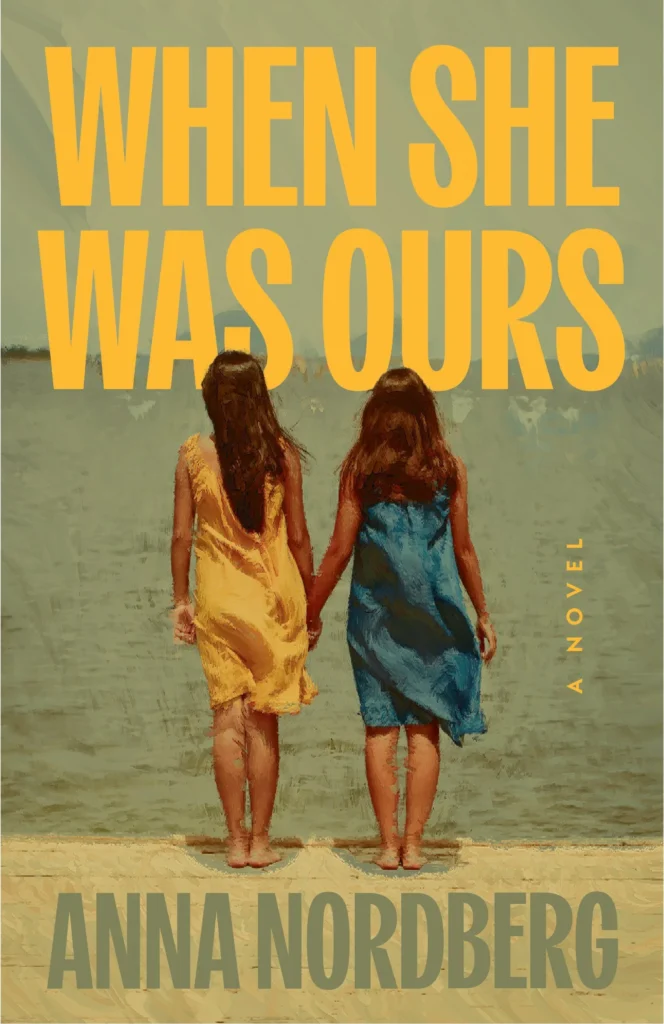
Tiffany Graham Charkosky: Let’s start with your cover art. How did it feel to see your book turned into an image?
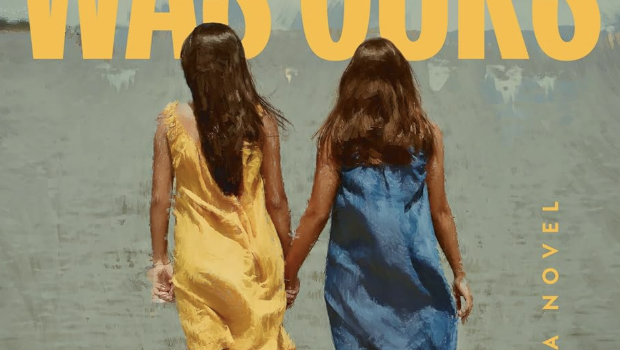
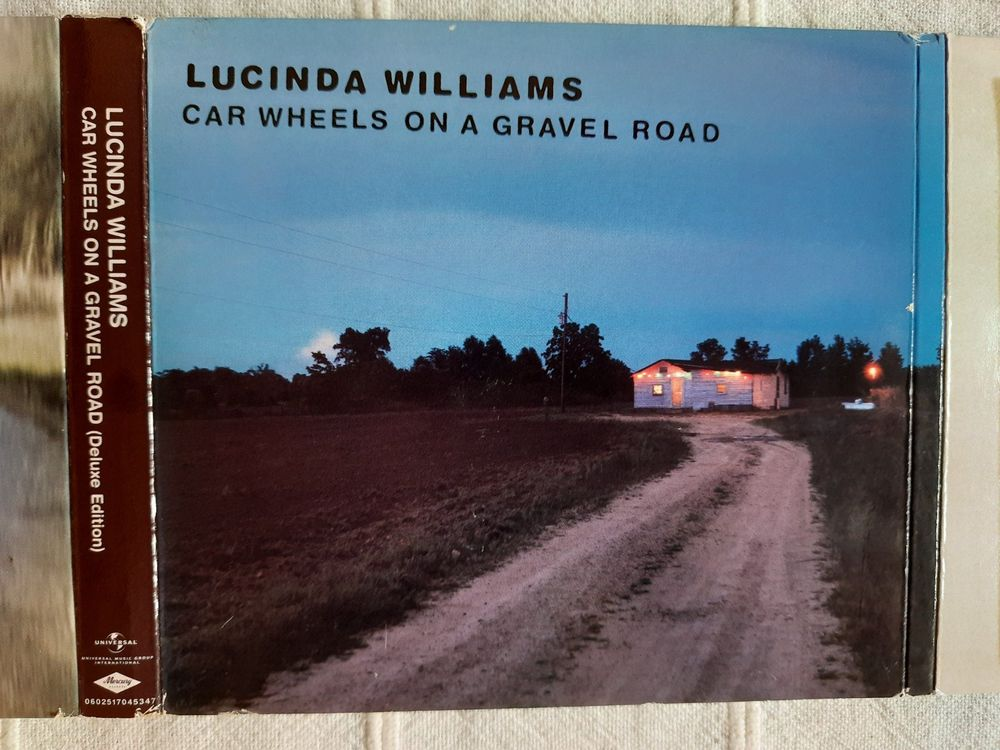
Anna Nordberg: I love this cover! It was designed by a human. I think that’s important to say and I feel like it perfectly captures some of the ambiguity around the book. Maybe it’s happy. Maybe it’s sad. What are these girls looking at? Are they sisters? Are they friends? What is the relationship? I really loved that. One of my favorite album covers and albums of all time is Car Wheels on a Gravel Road by Lucinda Williams. And it shows this house in the distance. It asks: Is this house welcoming? Is it not? Is it sorrowful? Is it hopeful? I really loved how that ambiguity came to life on the cover.
When She Was Ours started as a memoir and then you pivoted to fiction. What was the experience of starting with your full truth and then fictionalizing it?
It’s a classic writing story of failure. I was writing a memoir about becoming a mother without your mom. I had all of these boxes of my mother’s journals and writings, all meticulously filed away. My brother and I started going through it soon after her death and realized it was too soon to encounter her as an adult with an interior life, not as our parent, but as a woman facing a terminal illness. So, we packed those boxes up. I took them to San Francisco from New York City. It was like I carted this strange dowry of all these file boxes across the country with me. I never opened them again until I had my first child in 2012. The memoir was a story of going back and getting to know my mother in this different way and becoming a mother without her.
As someone who also lost my mom when I was young, I feel like that story of how you live through and survive that experience is the story that you have to get out of you to be able to write anything else.
One hundred percent. I think all parents have to struggle with that fear of dying on our kids. I think that’s a primordial fear we all have, but it came out more in the open during COVID. I think if you’re someone who’s lost a parent when you’re young, that’s the story of your parenthood when you start. I actually wrote an essay about this in Slate after the memoir didn’t find a home and how I didn’t regret writing it because it helped me put that fear of dying on my kids in some context.
Reading When She Was Ours as a mother in my 40s, I had such empathy for the mother character, Thea, that a teenager doesn’t yet have the life experience for. What did it mean to write from the mother’s perspective and how did that help you better understand where you came from and the mother who you lost?
I lost my mother at 17, and she battled cancer for four years. That loss was so atomic, and we are very self-focused as children and adolescents. At the time, I could only understand what I was going through, what my family was going through, about the people who were left behind. That’s really how I experienced her death and then over decades and being a mother now, I really shifted to realizing what my mom had lost.
I feel this fierceness about writing Thea’s voice, the person who is dying, that her voice is heard and it’s not just reflected through the loss and reactions of the people around them. Thea dies, around halfway through the novel—this isn’t a spoiler, it’s in the jacket cover—and then she’s gone and her voice in the novel is gone. I really wanted to show that experience of loss, that while we no longer have Thea, she reverberates in her daughter and in the rest of her family afterwards.
Your main character, Astra, is this big open book. As a teenager, I carried all these secrets inside of me and seeing this teenage character who was so willing to be open with her parents, especially after the humiliation that she experienced in college, was so refreshing. Where does Astra’s trust in humanity come from? Was this an essential part of her from the first conception of her character?
I wanted to write a story about good people under pressure. There is so much amazing literature about dysfunctional families, about unreliable narrators, about nasty protagonists who are fascinating. But I am most interested in happy families and strong families and how they handle huge challenges or loss or pressure.
I started with someone who will always, when given the choice, go with a more generous interpretation of someone’s actions, motivations, words. There’s a humiliating event which really plays on this trait of hers and endangers that part of her. I didn’t want her to lose that piece of herself.
I think losing a parent when you’re young can make you feel like part of you will always be broken. I saw that in both Astra and her older sister, Phoebe. Does this feeling resonate with you?
One of the things I have seen in other motherless daughters is the shame of how they felt if their mother was sick. Especially if you’re younger or going through adolescence. You know, adolescence is about separating from your parents. It was so confusing to me to be losing my mom at a time when I was supposed to be separating from her. As a teenager, you just want to be normal. You want to be like everyone else. There were times, you know, she’d come to a track meet. And it was such an effort for her. It meant so much to me. But she was so limited physically and what she looked like. I felt so protective of her, but also embarrassed. I had no idea what to do with those emotions. I certainly didn’t articulate them to friends and family.
So, I think along with a sense of shame, there is also responsibility. You think you’re older than you are. There was part of me at the end that wished for my mom’s suffering to stop. There’s no place for that feeling as a teenager, to have to face that part of you that wants her to die because she’s been suffering so much. That is something Astra faces and the shame of that and has haunted me. When you have your own kids and you see they’re so young, you can go back and forgive that earlier part of yourself. I think maybe this is an experience that is so much more common in people who have lost their parents than I thought it was. For so long, I thought it was just me and that there was something wrong with me for feeling that.

I think that’s a feeling you get when you watch someone you love get so sick. It seems impossible not to have those kinds of thoughts.
Well, thank you for saying that because it’s taken me like 30 years to forgive myself and we’re not quite there yet.
I think our moms would get it. Bringing this book into the world is such an accomplishment. If you could imagine your mother giving you a message, what would she say?
She was very much someone who was like, “You need to sit in the chair and you need to just do it.” I think she would have been so proud that I just kept muddling along even after a big setback when my first book didn’t get published and even knowing that that was the likely outcome of this manuscript too. She would have been proud of my doggedness because that was something she really showed me: just keep plugging away.
About the Author

For over twenty years, Tiffany has worked at the intersection of arts and urban planning. She has helped hundreds of artists across mediums implement projects in public spaces throughout Cleveland, Ohio, first at LAND studio and most recently as Director of Arts & Culture for Cleveland Public Library.
Her creative work explores the dynamics at work within human relationships and has been featured in Gordon Square Review, MUTHA Magazine, South Dakota Review, and Avalon Literary Review. Her essay Year of the Rat was the Ohio Prose Contest winner in 2022.
Tiffany studied English and creative writing at Kenyon College and holds a masters degree in urban planning, design, and development from Cleveland State University. She lives with her husband, two sons, and two dogs in Northeast Ohio. She spends early mornings writing and weekends cheering for her sons on various sports fields across Ohio.
LIVING PROOF: How Love Defied Genetic Legacy is Tiffany’s debut. She is currently working on a novel.
Photo credit: Kim Wasielewski Photography
Related Posts
Childcare and Breathing: An Excerpt from STUDENT PARENT →
Lost and Found: Join us at the Brooklyn Book Festival x MUTHA x Pen Parentis Lit party! →

“Everyone Sees Color”: An Excerpt from MOM, UNFILTERED →