
Parenting Books Didn’t Tell Me
This essay is the sixth in a series, Carefully Come Undone, in which Brittany Miles explores the many aspects of raising a child with schizophrenia.
I managed to calmly navigate Layla to the emergency room. Everything felt surreal. Driving was like being in the cottony embrace of something greater than myself. I’d first entered this altered state days ago, when I found her unconscious before school. I sprayed water to rouse her. I suspected a new anti-psychotic was the culprit. Her psychiatrist and I agreed: It was time for hospitalization. He’d call ahead to secure a bed on the psych unit.
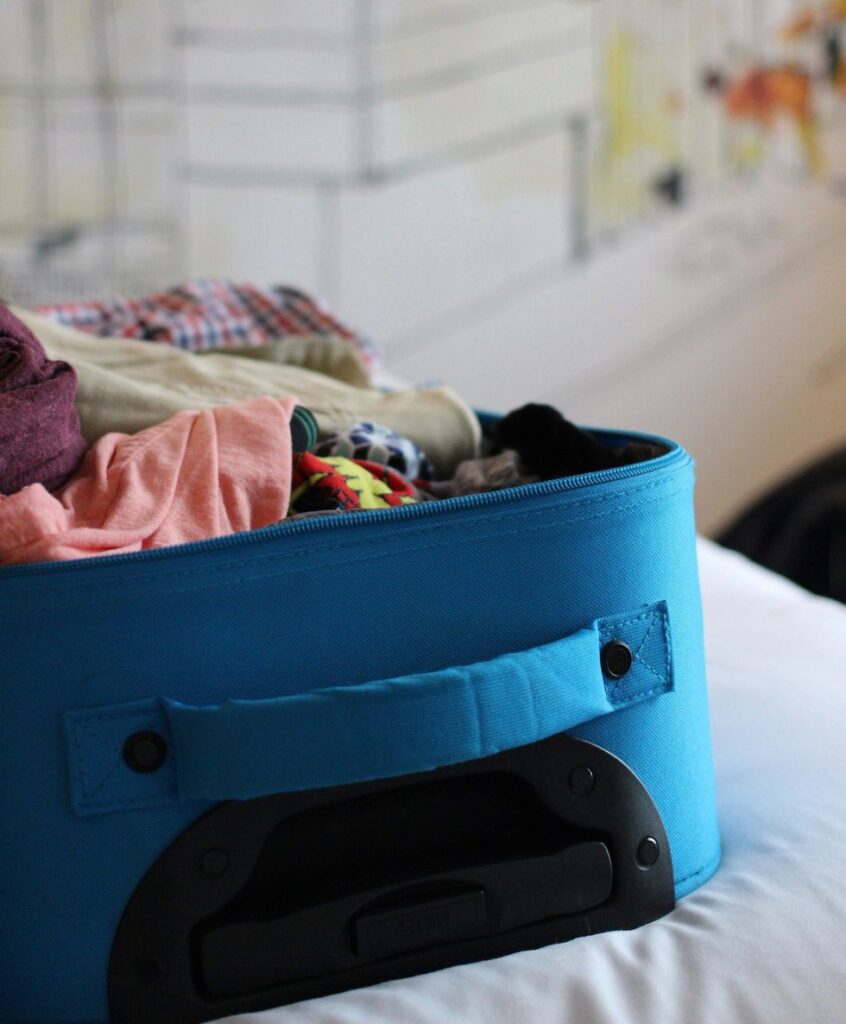
My cherry-red sedan found the entrance; I parked and took Layla’s hand in mine. With the other, I rolled her suitcase in front of me. Layla bounced around. She was curious about why we were rushing. I couldn’t tell her that we were in the fight of her life. Something was very wrong, and I could no longer manage it on my own. We melted with the crowd and slipped through the automatic doors.
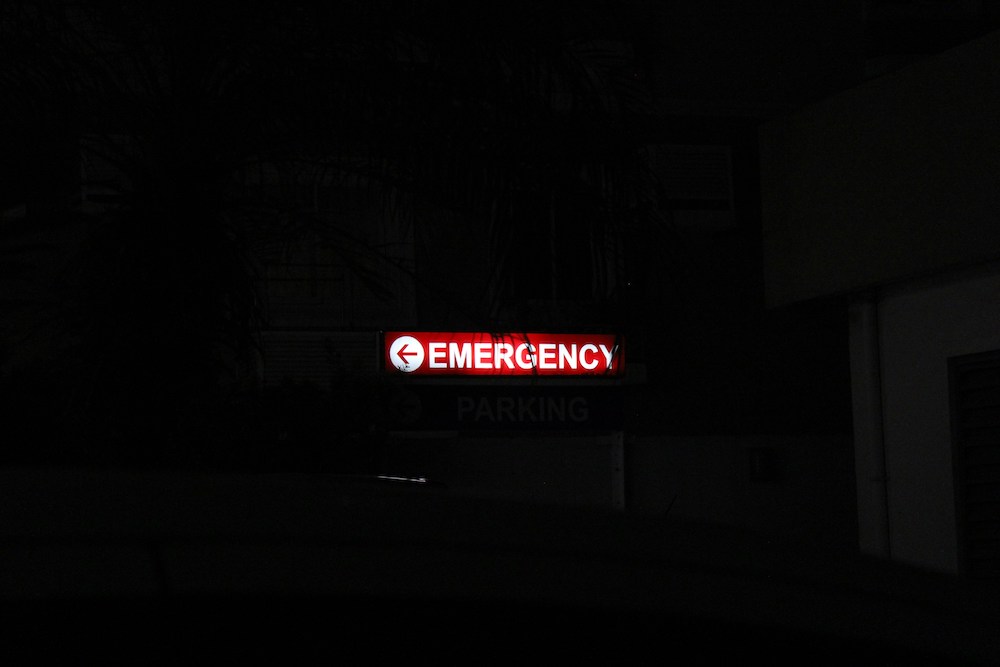
A young nurse with a sunny disposition took our names. I got a clipboard with a lot of forms. Am I dreaming? I kept asking myself. We couldn’t be in this madhouse, could we? The chair beneath my butt grounded me. One of us had to stay in our present reality, and it was clear it would not be Layla.
Layla was in her little world. I couldn’t shake her out of it. I was terrified but had to act something akin to normal. Out of the blue, she asked to take a selfie. We looked bizarre. I looked like crap in an old orange polyester blouse. Layla looked emo with her black beanie covering her fuzzy braids. She smiled like the Mona Lisa. I saw a nurse out of the corner of my eye.
A nurse with brown hair and blue scrubs called Layla’s name. We jumped up and hurried through swinging doors behind her.
Sitting on a hard chair in a small room, I spent hours explaining her psychiatric history to residents that came and went in the crowded space. I was suffocating; it was as if there was not enough oxygen in the room.
With each new face, I told them just enough to get them to understand her case. As a Black mother, if I told them about all her symptoms, they might ignore my concerns.
On the other hand, if my demeanor was too calm or my vocabulary was too sophisticated, they might think I was being uppity, that I thought I was smarter than them. Black folks code switched when sharing information with white doctors. Otherwise, we might not get the care we needed. It had happened to me. I didn’t want this for my child.
After what seemed like hours, the door opened, and in walked the attending doctor. He was around fifty, with dark silver and gray hair thinning at the temples.
“Hi, how are you?” He extended his hand to me and then to Layla.
My eyes took him in; he was a pretty cool customer. Layla continued playing Subway Surfers on the iPhone I wished I had never purchased.
“We’re great,” I said a little too brightly, with my arms around Layla’s narrow frame. “But this one is scaring me to death.”
“What seems to be the problem?” By rote, I repeated what I told his staff (just enough)—found unconscious, reaction to new antipsychotic, need a bed. We had nowhere else to go. And it was true, we didn’t.
The doctor nodded and told me that he and his colleagues thought she should be admitted. I exhaled like a chain smoker.

“Layla, look at me,” said the doctor.
“Do you understand what your mom and I are talking about? You need to stay in the hospital.”
“I guess so,” she said while playing her game.
I reached for the phone, and the doctor imperceptibly shook his head. I didn’t like being told how to interact with my child. I let it slide.
“Layla. Put down your phone.”
For some reason, his tone made her do it.
“You need to stay at the hospital. We think we can help you. Do you want to do that?”
Layla looked to me for confirmation. I nodded. That’s all she needed.
“Yes.”
The doctor, satisfied, assured us that someone would be by soon. With that, he left.
It was sinking in. I was leaving my little girl in a great big hospital. At eleven, the worst thing that happened to me was losing TV privileges. Nothing in Layla’s childhood resembled mine.
Soon after the doctor’s departure, a nurse told us the unit was ready for Layla. We followed her, and all I could hear was the wheels of Layla’s luggage echoing through the long corridors. I wanted to whisper to her, “Are you okay?” but I didn’t. Maybe the enormity of the situation weighed on her. I squeezed her shoulders as we rode up the elevator.
Tenth floor. Our stop.
We were here.
I turned to Layla. “How are you doing?”
Silence.
A unit nurse greeted us. Another station, another new staff person whose name I would soon forget. Wordlessly, we followed and walked up to a massive, foreboding metal door, which opened with a large key. This got me; this was for real.
I am leaving my child in a psychiatric unit.
I thought it’d look like a YMCA day camp with bright colors, pictures on the walls, and the gentle hum of children playing. Instead, it looked like a prison for kids. Sparse modular furniture in community pods. Encased televisions. A kid was yelling. Were they okay? Would Layla be around them? The new surroundings shook me. I focused on the back of Layla’s head. I had a buoyant smile plastered on my lips. It was about to crack.
It was like being at a hotel, but also nothing like being at a hotel. Layla’s name was printed on a card above the door. I parked her luggage. The unit nurse gave us a rundown of the evening and what to expect in the morning.
Every day, kids must shower; it was non-negotiable, along with taking meds. Layla nodded. I said, “She doesn’t like showers for some reason.” Layla glared.
“Bathtubs are available too,” the nurse said, and then left.
It was noisy; there were kids milling around as bedtime neared.
Everyone looked so normal. Some made eye contact, and others ignored us. There were Black kids on the unit. This warmed me a little; Layla wouldn’t stick out here. Would other parents think Layla seemed normal? I shook it off. That didn’t matter right now.
Her room was sterile. Institutional. There was a window that looked out onto a courtyard that seemed inviting in the night’s light. There was a glowing fluorescent light fixture on the ceiling that never went off. There were cameras so the kids could be observed. I eyed the CCTV video streams behind the enclosed nurse’s station. They took turns scanning the rooms.
The room door was always open; there was no privacy. A nook housed a small, hard bed with impossibly thin hospital linens. It was nothing like her futon which housed an army of stuffed animals and her favorite quilt made by her step-mom. The nurse came back with toiletries. I had packed some, but I supposed it was helpful to have more; I had no idea how long she would stay.
While I was taking in our surroundings, Layla remained silent. I unpacked and placed her things in the cubbies beneath the window. Chattering away, I told her where I stored underwear, socks, sweatpants, and tees. Layla eyed me with disinterest. I made up that cement-feeling cot they called a bed. I put the sheet, an impossibly thin blanket (I made a note to ask for another), and the pillow artfully on the bed. It wasn’t the Four Seasons, but it would do.
It was time for the speech. What could I say? This wasn’t like I was dropping her off at summer camp or college. “Layla, you need the hospital to get better. Do you understand?”
She didn’t respond.
I pulled her into the tightest hug we had in her eleven years.
“You’ll be safe. You’re in good hands.”
She nodded solemnly. I kissed her goodbye.
“Call me in the morning. OK?” Layla stared, glassy eyed.
***
Driving home by myself, the intensity of the past eight hours finally hit. During the whole exhausting intake, my head had pounded, but I didn’t register it as pain. I was robotic, programmed with all Layla’s information, which I could spew on command. Provider appointments. Medications and dosages by heart.
I did everything for everyone except me.
Pressed power on the ignition. Flicked on the lights. Eased carefully into the night. With each mile closer to home, my shoulders dropped, and my jaw unclenched. My breath became deeper. I thawed. My hands held the steering wheel lightly.
Driving through the inky blackness, I pondered the twists that got us to this place. Just a few years ago, I was holding my newly adopted daughter in pink swaddling blankets. And tonight, I admitted her to a mental hospital. My car found the convenience store closest to home. I purchased provisions: box wine and American Spirit cigarettes.
Wine under one arm, a natural cigarette in the other hand. I awkwardly lit up. Inhale. It was a weird yet familiar sensation; I had quit many years ago. But the urge for nicotine was strong that night. I had to smoke.
I was lost.
Had I failed as a parent?
Parenting books don’t tell you how to put your child in a psychiatric unit.
For that, I wept.
About the Author

Brittany Miles writes fiction and essays exploring family, motherhood, mental health, and identity through lyrical, emotionally resonant storytelling. Her work appears in Newsweek, Business Insider, and The Seattle Times, and is forthcoming in Open Secrets Magazine, Tir Literary Magazine, and Minding Our Business: A Blacklandia Anthology on Mental Health and Healing.
Related Posts

Graduation Season →

Some Say in Ice →

A Small Fissure →

One Response to Parenting Books Didn’t Tell Me