“Sleep is the Greatest Healer”: An Interview with Maureen Burdock
My obsessive-compulsive disorder is a mental health issue that has many “invisible” (or, intangible and unseen) aspects, which affect how I sleep, work, and even raise my daughters. I catalogue the sounds my daughters make when playing or at rest, and the “abnormal” ones immediately pitch my thoughts toward distress. They must be sick, choking, or hurting. Lying in bed at the end of stressful days, my mind races for hours through scenarios where my family is in danger, often impacting the amount and quality of sleep that I get.
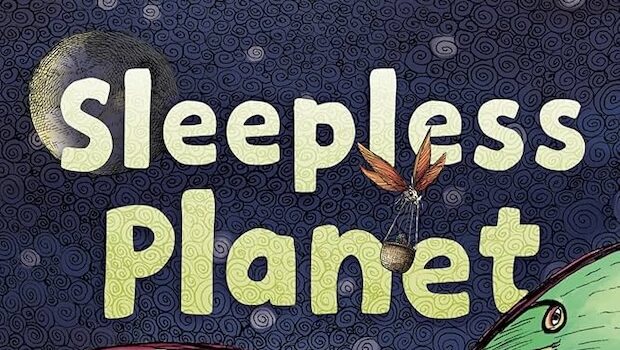
In trying to comprehend the disorder, I often explore its comorbidities and how other mental health issues have similar expressions. Graphic medicine has helped me. This genre is the merging of one of my loves (comics!) and medicine. Graphic medicine is the perfect avenue to depict the nuances of issues, such as OCD, bipolar disorder, and PTSD in a way that makes what is often invisible literally visible on the page. Recently, I had the pleasure of speaking with Maureen Burdock about her latest graphic medicine narrative, Sleepless Planet: A Graphic Guide to Healing from Insomnia (Graphic Mundi). Sleepless Planet explores Burdock’s insomnia alongside a comprehensive deep dive into how capitalism, contemporary diets, and prevailing social narratives all impact how we breathe and, ultimately, how we sleep. This book left me affirmed in my decisions to prioritize more of my time for creativity and rest instead of capitalist productivity. Burdock and I spoke about the benefits of mindful breathing, the power of sleep and singing, and playing the didgeridoo. — DW McKinney
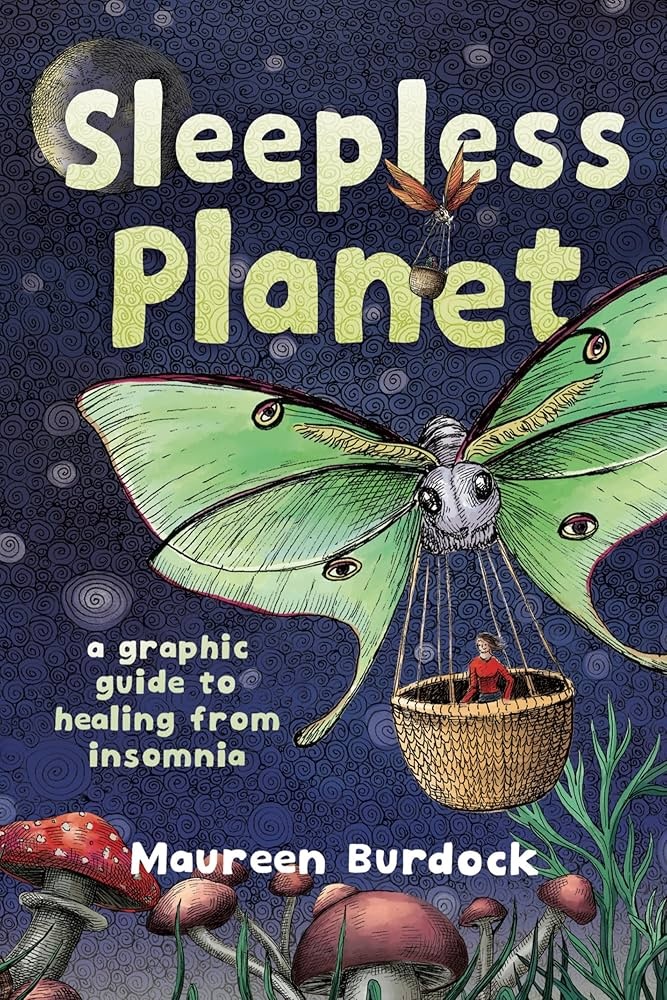
DW McKinney: What was the specific inciting moment in your life that drove you to create Sleepless Planet?
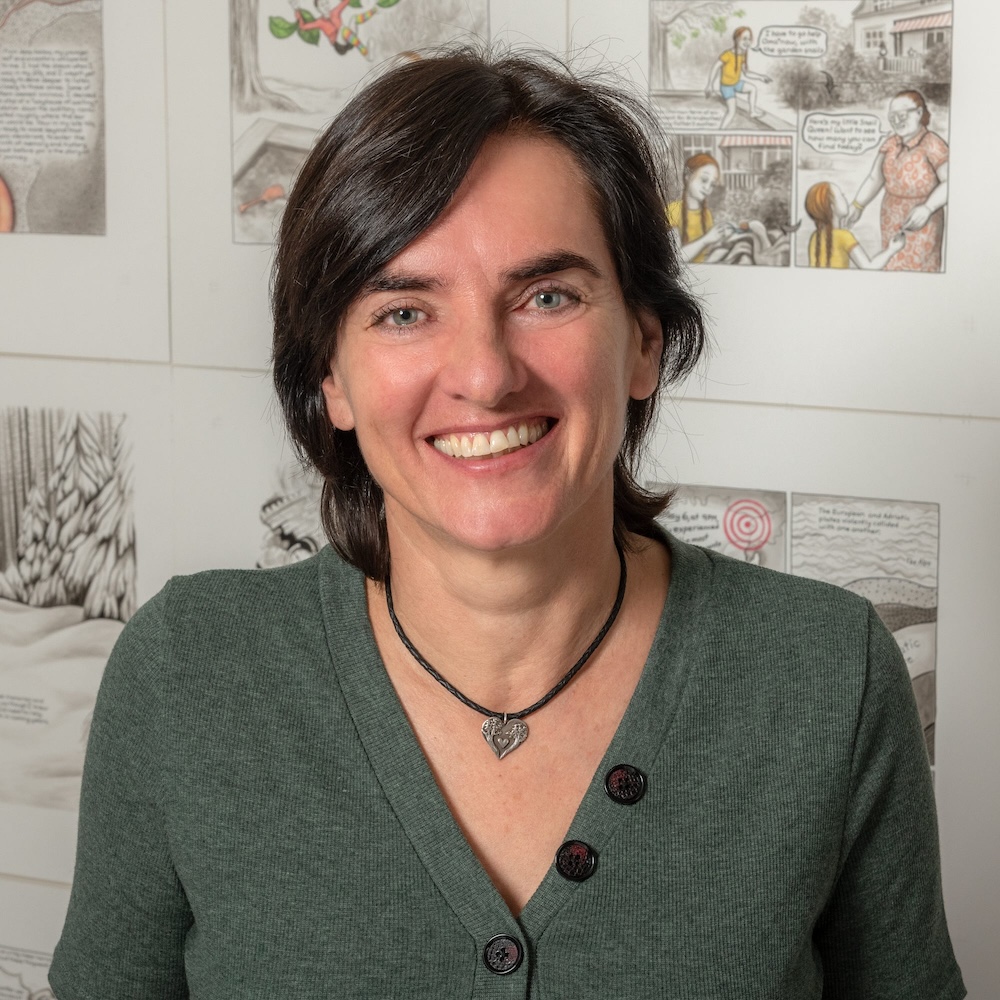
Maureen Burdock: I wasn’t sleeping for a few decades. It was a horrible affliction. It’s an affliction that a lot of moms and parents in general have and, in particular, those with little babies because it comes with that territory. But for me, the insomnia started when I was four years old. I was a terrible sleeper. It got worse with perimenopause and middle age. Then it was so bad that it was making me miserable and sick.
I went to different sleep doctors and clinics and got no results. Some of this was because of bias toward the fact that I was a fit looking woman, and most of the research on sleep apnea has been done on middle-aged and older men. I ended up taking matters into my own hands.
DWM: You had to find a very creative, unconventional treatment option—you learned to play the didgeridoo. Do you still play it?
MB: No, I moved to Ireland and had to leave all my stuff behind, but one of these days I’ll get another! I loved playing the didgeridoo. I played it long enough to master circular breathing and to produce some cool sounds. I would play it at night. It was meditative.
DWM: How do you manage your burnout and anxiety now, especially in our current social climate?
MB: I talk in the book about avoiding sugar and alcohol, stimulants that might feel good for a minute but definitely don’t do me any favors if I indulge too much. But going outside and connecting with the world through running or walking and observing what’s in the not-human world is a good option. We live right by a river, so it’s beautiful and calming to me. Remembering to breathe helps too!
DWM: Oh, I just realized I’ve been holding my breath.
MB: Are you? Let’s breathe together. [Leads me in a short breathing exercise where we do one round of deep breathing in and out of our mouths.]
DWM: So much of our awake and sleeping life is determined by our breath, and in our very device-focused society, our breathing is often stilted. In your book, you mention researcher Linda Stone’s term “screen apnea,” which explains how we breathe more shallowly when we’re looking at our screens. Based on your research, what advice would you give parents raising children in this device-heavy, techno-centric era?
MB: It’s started younger and younger where we’re constantly overstimulated and constantly staring at screens. My kids grew up before smartphones, but I totally stare at screens all day long, so I’m not going to pretend I don’t. I would suggest reintroducing analog books, especially in the evening, and board games or making art together. With my kids, we’d do the drawing game “exquisite corpses.” Anything so the kids are avoiding screens, especially at night, so they’re not getting that blue light shining into their eyeballs.
DWM: Your children are adults now, but you do talk about them in terms of their breath in the book. There’s a moment when you illustrated your plans for your daughter’s birth, and you said, “I hoped that her first breath would not be a cry.” You were hoping for a moment that didn’t mimic the one that you had with your son who had a “perfect birth” but then cried when the lights shined in his eyes, correct?
MB: It wasn’t the worst thing that’s ever happened! But as a parent, you just want everything to be as perfect as possible in the beginning.
I did that piece because I was thinking about breath, taking first breaths, and that really powerful moment of having a child take their first one. I didn’t know then that your first breath is an inhale and your last breath is an exhale. That was new to me writing this book.
DWM: You thoroughly explain how certain foods affect our sleep beginning with childhood, but the food we eat and our access to it is affected by economic and transgenerational elements as well. I appreciate the nuance that you bring to the conversation because parenting discourse is so fraught, especially when we talk about food and diet.
MB: There are so many bandwagons and so much extremism around diet. I think the main thing that most of us can agree on is that it’s best to eat whole foods. So it’s best to eat foods where you can recognize what they are. Dr. Robert Lustig (an endocrinologist) said, ‘If it has a label, it’s a warning label.’ So you have to assess how extreme a warning it is to you, and how extreme the consequences are if you consume it.
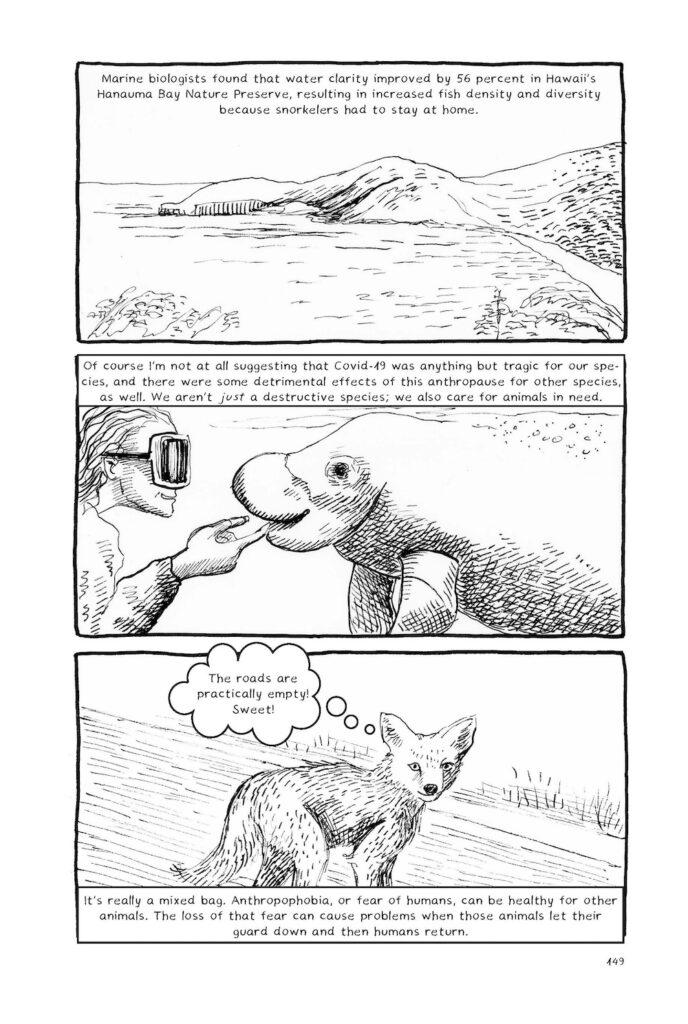
DWM: In the book, your illustrations show a clear delineation of how breastfeeding is connected to our jaw development. If we don’t have adequate jaw development, then our airways aren’t opened all the way up, and that impacts out sleeping habits in the long term. I couldn’t help but think about the slogan “breast is best” and how breastfeeding is incredibly politicized and pervasive with stigmatizing language around breastfeeding versus formula.
MB: Obviously, sometimes you need formula [or bottles]. There are definitely circumstances where that’s the sanest option. So we should not go around shaming people. We don’t have to worship the breast, even though they are really nice—I won’t lie! Aside from essentializing them, there is a biological connection. Breastfeeding is what we do as mammals, and there’s a reason for it that does contribute to the way our jaws and upper respiratory systems work.
DWM: Was there anything that surprised you the most while you were researching for this book?
MB: The biggest rabbit hole I went down was about fats. Growing up in the 70s and 80s was right when people became very fatphobic. There was so much misinformation around fat and it being bad for you, especially for women. People became afraid to eat fat. I learned a lot about how much we need fat to support healthy hormones and metabolisms, including the ones we need for sleep. That was a big eye opener for me, and it changed my health for the better. I was on this serious downward spiral, and that information helped turn it around.
DWM: As someone with OCD, I’m aware of the many popularized misconceptions about it. I was wondering if there were misconceptions about insomnia and sleeplessness that you wish people knew about?
MB: I don’t know that anybody who hasn’t had serious insomnia can truly understand how horrible it is, especially when it comes with anxiety. You’re lying awake night after night with your brain spinning. Then you’ve got that tired-wired feeling that affects you during the day. It cumulatively becomes worse and worse.
Then there’s the other issue. We’ve glorified sleeplessness and people who can be “okay” with little sleep. I wish people would stop doing that. Sleep is the most important thing to our health. The panacea is sleep. It’s the greatest healer, the greatest medicine we have access to, and it’s free medicine.
For parents, I think the super important thing to know is that everybody has a different circadian rhythm. It’s brutal to rip our kids out of sleep at six in the morning because their school starts too darn early. I want to advocate for school starting later for kids’ sakes, and for employers to become more flexible, so that parents can take their kids to school later. Kids are going to be able to learn much better and have fewer behavioral issues, and there’s going to be less depression and less suicide in teens, and fewer car accidents, if we can just let kids sleep in. Matt Walker (neuroscientist and psychologist) talks about this and how teens are biologically designed to sleep later, and then it shifts back again as we get older. So, it’s good to know that your kid isn’t lazy because they don’t want to get up early. They literally need to sleep longer.
DWM: Sleepless Planet has an abundance of information to process overall… What’s one lesson you would point out specifically to parents?
MB: Well, if you just had a baby, I’d say Part One: Just Breathe. Singing with your children is amazing. It taps into every culture in the world that has songs and chants and rituals that involve focusing on the breath and slowing the breath. If we could do that ourselves and then instill it in our kids, it would make a huge difference in terms of mental health, sleep, and being able to relax.
About the Author

Related Posts
“A Place to Feel It All”: Kelly Grace Thomas on Infertility, Adoption, and Urgent Joy →
Poems from Future Tense →
Dear Jane Doe →