
A Small Fissure
This essay is the fourth in a series, Carefully Come Undone, in which Brittany Miles explores the many aspects of raising a child with schizophrenia.
After the divorce, Layla and I grew into a rhythm. I methodically got us ready to meet each day. The condo felt too big for one and a half people. I missed my family of three. Her dad, Corey, wasn’t coming back. Two would have to do.
I captured Layla’s milestones and shared them with Corey. Little videos here and there and an almost daily picture accompanied a text. Layla was on target except for one thing: walking.
She crawled with one leg straight up and the other knee bent on the ground to keep her steady. She crawl-walked like this around the house. I had seen many babies in my time and had never witnessed anything like this. Google assured me there was no need for panic.
Layla started walking at 19 months old. It was late, but I was relieved. Her pediatrician wasn’t concerned about the delay. Friends jokingly told me to remain off the internet. The mama bear inside me was worried.
Why was she delayed?
Layla progressed through other stages, but this one stuck with me. Objectively there was nothing to worry about, but still I couldn’t shake it.
***
I focused my energy on finding the right preschool, as social interaction should speed up her development. According to my mother, I consistently met milestones, and I had high expectations for Layla as well. The early years were the building blocks of her later life. I was determined to provide her with the best start.
I researched, asked friends, got referrals, read blogs, and toured many Montessori preschools in the area. Finally, I found the best fit for Layla, and as a bonus, it was close to work
At almost four, Layla’s teacher started her reading Bob books. These are easy-to-read stories for early readers. I loved seeing Layla’s chubby hands wrapped around each booklet. She’s taking after her mama, an early reader, I thought. She’s a smart cookie.
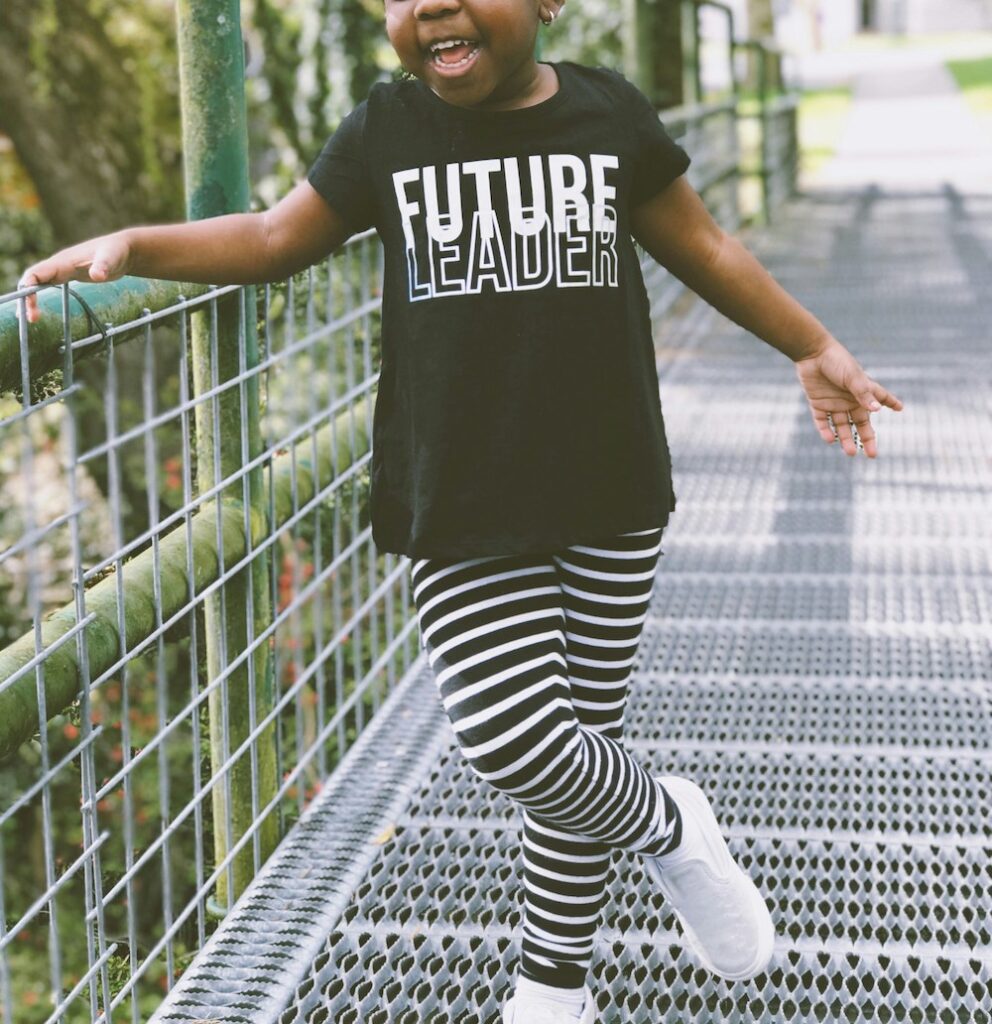
It was critical to me that Layla be recognized as talented. It would show the world she was my kid—adopted, yes, but also mine. On weekends I worked with Layla on reading. She struggled, but I pushed her. I took pleasure in both teaching her to read and reading to her myself. I pointed to words and let Layla try to sound them out. I recalled my experience of being four years old and reading with Mom. I remembered the joy of finding words and rolling them around my tongue. The words that made my lips hum.
Layla looked bored.
But one day we came to a page in one of her favorite books and she said the words out loud. I was thrilled. All my hard work paid off. Working with your kids one-on-one really is the key, I thought.
I told Corey about her achievement that weekend, and he relished it like he did the work to teach her. I didn’t let that get under my skin; it was petty. Our Layla Bug was a reader; that’s all that mattered.
The Monday after she read the sentence, I shared this news with her teacher, Ms. Jamie. Jamie adored Layla, and she was excellent at her job.
My excitement bubbled over. “Jamie. I have news. Big news! Layla read a whole Bob book this weekend.”
I was a proud mother beaming at my girl’s achievement.
“Morning, Britt.” Her eyes swept between us as the busy classroom. “Hey, Layla!”
Jamie picked up Layla and spun her upside down. After the giggles, she put Layla on the floor with her arms resting on Layla’s shoulders. Jamie had a tight, slightly forced smile. I had never seen her like this before, not even in conferences. Suddenly the spring day felt chilly.
“That’s great. But there’s more than reading the book, you know.”
She’s reading the damn book. What more can there be, Jamie? I was ticked off.
She tucked her shoulder-length hair behind both ears, and said, “I have to get back.”
She scooted Layla into the circle and greeted the class with a cheery “Hello, everyone!”
I left the conversation perplexed. Why wasn’t Jamie excited? Layla had been on track with her peers at the conferences. I was told everything was fine. In my eyes, she should have been reading. My mom started teaching me to read when I was three years old. Am I missing something?
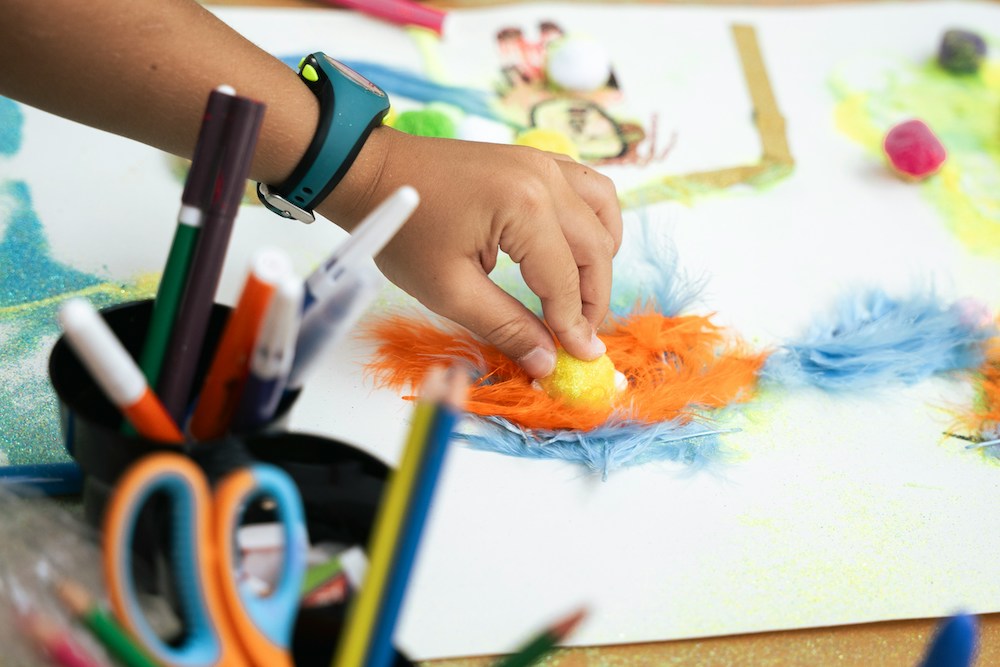
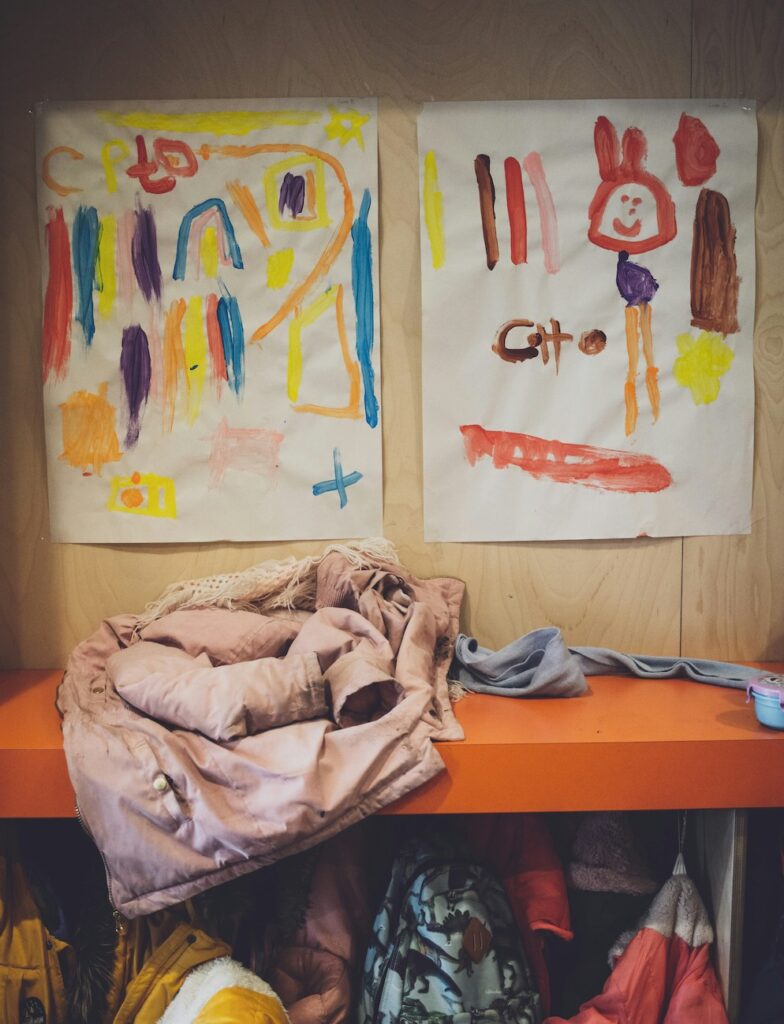
Time passed and I loosened up, although I continued to work with Layla one-on-one. I glowed when her teachers praised her creativity. Our kitchen was littered with paints, markers, colored pencils, and reams of paper. I was preparing her to be the next Jacob Lawrence or Faith Ringgold. Maybe she wouldn’t go to Harvard. Maybe it’s Rhode Island School of Design or Parsons?
One thing gave me pause. She would ask me, “Do you hear glass breaking?”
I chalked it up to make-believe. She was my creative kid.
***
In first grade, Layla struggled to read and write. Backward letters and numbers marched across the page. Ever on watch, I worked with her to shore up what she was lacking.
During the fall conferences, I met Rosemarie, the ideal picture of a first-grade teacher with her chubby red face and an effortless smile. We spoke about Layla’s difficulties with reading, writing, and math (so, everything). She gave me the generic “it’s too soon to tell” and “maybe she’ll grow out of it” spiel.
By spring, Layla was refusing homework. It was a challenge to quiz her on spelling words. Everything felt strange in comparison to my own childhood. I knew other kids didn’t struggle as much as she did. Everyone told me to wait, and the issue would work itself out. I got a neuropsychology recommendation from the parent of one of Layla’s friends.
I asked Layla’s teacher if I should get her tested.
“Definitely, Brittany.”
The late afternoon sun glinted in her swirl of curls.
We shared a look. Rosemarie’s face seemed redder than before. Her smile was nowhere to be found.
A shudder went through me.
Same as with Jamie all those years ago. Nothing’s changed except the schools.
There was a noticeable shift in the room’s atmosphere.
“You know what, maybe I’m wrong. You’re the parent.”
My head hurt.
My mother’s intuition was hammering in my brain. Get her tested now. During the home evaluation that was a prerequisite for adoption, the social worker had asked how we’d address any hypothetical challenges in our future child’s development. What were our resources? Prepared, I proudly showed my research on early intervention. The worker nodded with approval. I nailed it.
Now, as a mother to an actual child who was both more luminous and more difficult than what I had imagined, I went back to those resources. None seemed to fit. Layla didn’t fit into a specific box that could be solved with a single intervention, like speech therapy. Whatever it was, I couldn’t wrap my arms around it.
Combing her sparse medical records, I saw nothing to indicate early learning disabilities. Nothing seemed to be lurking between the lines. Asking friends for their ideas didn’t help. Her pediatrician could only conjecture.
I wanted answers. Was it nature or nurture? I was doing everything I could to make her successful. But there was a shortfall. We might not know for years whether the condition was a factor in her biological family’s genetic makeup.
Looking at Layla, I saw a healthy little girl who loved to laugh. She was forever my little artist, and her imagination was limitless. I could see her through multiple lenses. She was perfect to me. She was struggling. And the rest of the world was starting to notice that she was different.
However, her dad only seemed to see her through a distant, nonchalant, and fatherly lens. was less concerned than I was and believed that she would eventually overcome any difficulties. His refrain (for everything) was, “She is still young.” He didn’t see the problems I experienced.
Corey saw an edited version of Layla from my texts. Quick moments. Even with his weekly visits, all he saw was his precious baby girl. He needed to preserve the delicate dance they shared as father and daughter. His version of Layla could never be tainted, while mine was unraveling. Corey thought I was overreacting, but agreed to follow my lead in all things.
***
When Layla’s foster parents had put her in my arms as a newborn, I silently told her I’d give her the world. I kept my promise day by day, but I didn’t think the world wanted us. My perfect angel’s halo was askew.
My intuition was pounding in my chest. Sometimes, watching her color or draw, I thought she could grow out of this phase. Maybe we hit a rough patch with school. I’d need to shore up her skills, that’s all.
Other times, when she struggled in school or when she couldn’t remember our address, I worried. But was I worried simply because she was different from how I’d been as a high-achieving child? Or was I worried because she was dealing with something larger than I could even imagine?
I worked hard to put us back together piece by piece. No matter what I did, the fissure grew longer. Deeper.
But I couldn’t unsee what Layla was showing me as she made her way in the world.
About the Author

Brittany Miles writes fiction and essays exploring family, motherhood, mental health, and identity through lyrical, emotionally resonant storytelling. Her work appears in Newsweek, Business Insider, and The Seattle Times, and is forthcoming in Open Secrets Magazine, Tir Literary Magazine, and Minding Our Business: A Blacklandia Anthology on Mental Health and Healing.
Related Posts

The Wolf, the Knock, and the Visit →

Parenting Books Didn’t Tell Me →

Graduation Season →