
The Other Mother Tribe
In March, I stopped volunteering, the quitting so quiet I didn’t know I was doing it until I pulled out of the parking lot. The gig was good, in a boutique in the high school where I’d spent my final years teaching. I knew the turf and loved assisting the teens who sorted through gently used clothes and personal care items donated by the community. Each of their bubbling conversations, comedic jabs, and hoots of laughter as they browsed the racks with friends brought a smile to my face. A few years into retirement, I missed kid energy, and the joy and ease of connecting with these students reminded me of my old classroom days.
I quit because of the other women, all mothers. Volunteering beside them made me feel edgy, and four months in, I started to dread, and then resent, the inevitable question: Do you have children?
It’s not their fault. It’s a common, innocuous question (though one seldom asked of men, I might add). I knew the other mothers, empty nesters, too, intended to connect, to reach out to me as part of their tribe. And wasn’t that what I wanted in the first place—to feel a sense of purpose in the community, a sense of belonging? But the question was and is complicated for me. After all, my son, Mitch, is dead.
Of course, I never said it so bluntly—they were unaware of how emotionally loaded this question is for me. Socially and emotionally intelligent, I weighed my words and their effect on the other mothers. It was easiest to answer when one of the rotating volunteers asked, “Did your kids go to Mountain Pointe?” (The typical assumption that since I was a teacher, I must have children.) “No, my son went to Corona,” I would answer, then, to fend off follow-up questions, dash off to color coordinate t-shirts and slow my breathing.
For the more straightforward of the volunteer mothers who asked, “Do you have children?” I had rehearsed the following statement, delivering it in a firm tone: I had a son, but he died several years ago. Cue awkward silence, the air thick with a tangled truth left unspoken in our culture—that American children can and do die.
Until Mitch died, I couldn’t fully comprehend this fact either. Before then, it was other mothers’ children, mostly in foreign lands, who died from disease, malnutrition, or as innocent victims of remote wars. How fortunate I was to live here, in the United States, a developed nation where, given the opportunity, children may thrive. But sometimes they don’t. I am the bearer of that bad news on an otherwise pleasant day spent volunteering at your local school. Despite heroic efforts to save them, sometimes we can’t.
I do not carry that gutting knowledge alone. There is a small band of other mothers who grieve alongside me, who also feel the willow switch of a complicated motherhood. All writers, we meet monthly to share stories, our lost children trickling into the memoirs, poetry, and fiction we compose. They are forever our babies, our boys and girls who, having slipped away, brought us to our knees. Our children’s names click from our tongues like beads on a mala whenever we meet: Kristina, Andrew, Graham, Florence, Paul, Miss Elliott, and Mitch, our collective prayer.
We were all good mothers—vigilant in the emergency room, the NICU, with prenatal care, in arranging for various therapies in our homes, and seeking outside counseling as needed. We breastfed them, bathed them, fed them nutritious meals, fretted about our mistakes, and promised ourselves to do a better job next time. We read “Love You Forever,” past the lump in our throats, sang silly songs, and held them when they cried.

We brought them to museums, zoos, and gardens, and were delighted by their curious natures. “Mom, come see the dead baby bird.” With them, we gazed at the cracked egg on the pavement, the translucence of skin and bones within. Yes, we agreed, what a privilege to mother this child, what a gift to smell honeysuckle shampoo in their hair. Though exhausted, we checked on them in the night to ensure they were still breathing while imagining their futures.
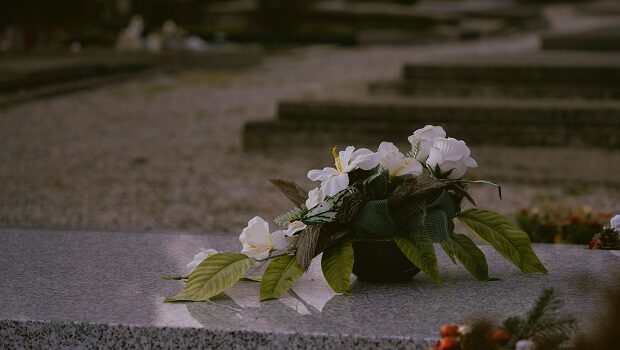
They still died— Penne, Esther, Amy, Michaela, Kate, Becky, and I live with this brutal truth. Each of us arranged for our child’s final resting place, but what to do about her ribbons, his tennis shoes, the room that held so much hope? How to occupy all the space and time now that they are gone?
We write and speak of this and their ongoing presence in our lives. How they shaped us, changed us, broke us, and gathered us together in collective love. There each of them are: Miss Elliott, in a pink dress and bow that Becky has selected with immaculate care; Amy’s face aglow in Graham’s light as he shakes his tiny maracas; Esther holding Andrew up to the hoop as he strains to make a basket alongside his big brother; Penne singing a pop song along with Kristina on a bright afternoon; Michaela placing Florence beside her in the garden while she plants marigolds; Kate dressed in purple, singing Jagged Little Pill while Paul sways along in utero; Mitch clutching my hand and pointing at the dead baby bird.
We write psalms of devotion for our lost children whose deaths left us sadder and softer, more vulnerable yet stronger. Reflecting now, I see I walked away from that volunteer gig to more fully embrace membership in this tribe of other mothers whose children, too, have baptized them in a river of eddies and dappling light.
Cover photo by Michael Pointner on Unsplash
About the Author

Lorie Adair has been published in several journals, including Hippocampus Magazine, Terrain, and The Fictional Cafe. Her novel, Spider Woman’s Loom, was nominated for the Southwest Writers Award and the Dana Award. A teacher on the reservation at one time, she taught the current Navajo Nation president how to read.


2 Responses to The Other Mother Tribe