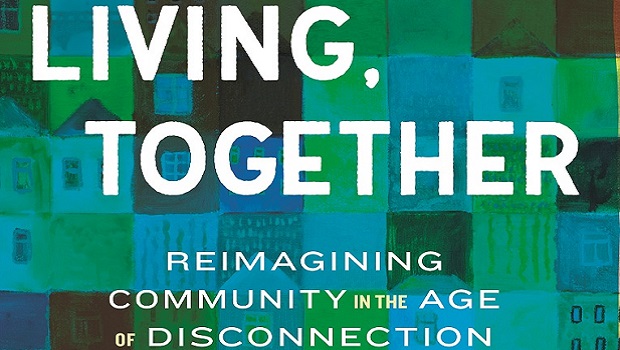
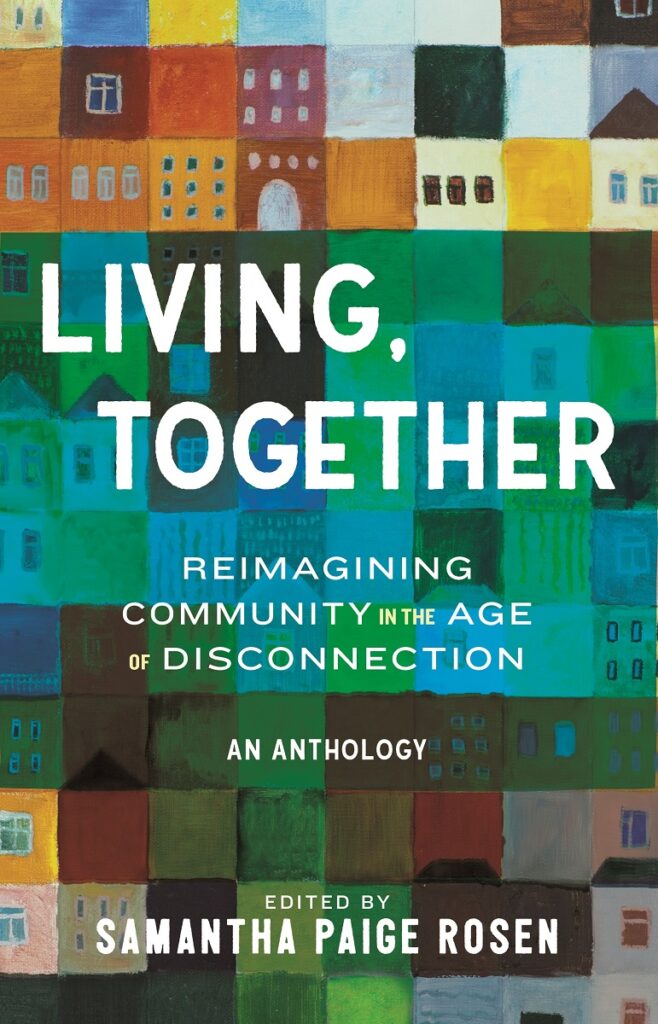
Come With Us: An Excerpt from LIVING, TOGETHER
Scrub the black mold out of the cabinets and closets, muttering first about how your father should have taken care of this before the movers arrived and second about how you should have known the way your parents were living, should have realized on one of your visits, should have come over years earlier and deposited your three young children in their living room, like you always did, but instead of sitting there and complaining or leaving quickly, handing off diapers and art projects, instead you should have ordered pizza and listened to everyone play Uno while you emptied each cupboard plate by plate, stack by stack, and scoured the black surfaces.
Begin planning large meals, like a catering company. Begin ordering groceries. Begin cooking for seven, balancing the monotone tastes of your rigid children. Plain meat that never touches the green beans for the eleven-year-old. Toasted garlic bread that isn’t too garlicky for the six-year-old. Weigh these with the creams and sauces that your parents have grown accustomed to eating at restaurants every night. There is a balance, hard to find. Watch the nine-year-old, the in-between daughter. She’ll eat anything. She learned, years ago, how to walk any tightrope.
Shovel snow. Take the garbage cans to the curb. Do the dishes. Fix the washing machine. Grow exhausted from the extra work of so many inhabitants who need you to do so many things. Grow irritated with your mother’s cheery, “Good morning!” from her side of the house. You already worked hard before this, and now there is more. There is much more.
Secretly take videos of your son playing chess with his grandfather at 10 a.m., home from school after spending the night in your arms, sobbing about wanting to die. “Checkmate!” he yells, then dances around the room, his stimming fingers fluttering. “Okay, okay. One more game,” your father replies. This man who rarely speaks. This man who was not patient with you when you yelled or cried as a child. He has grown the ability to wait, to breathe, to whisper encouragement, to touch his grandson’s arm and say, “No, there’s nothing in the shadows.” To say, “I’m right here. You’re okay.”
Take a nap. Wake up to knocking on your door, and then your mother’s voice, “Let your mom sleep. Come watch Judge Judy with me.” Your thick brain, your heavy eyelids: Get up and help him. Then, unexpectedly: his agreement. Their footsteps down the hall.
Sneak into your parents’ bedroom at midnight, after your son is finally asleep. Tell them, “I think we’ll need to go to the hospital tomorrow. He’s seeing things again.” Tell them, “I thought the meds were working.” When they offer to take the girls to school, say, “No, I’ve got it.” Then stop. Say, “Actually, yes. Thank you.” Say, “Thank you so much.”
Come to uneasy terms with your husband’s work travel. The money he makes from this job allowing you to stay home with your son. But the resentment. The way you’ve held on to it for so long. His confused look when you describe the smell of the emergency room, the cleaner they use that immediately triggers an adrenaline rush through your body. His nod when you tell him about the panic attack you had when you went to get a haircut yesterday, practically running from the crowded salon, realizing afterward that they used the same harsh cleaning solution and only your nose and heart recognized it. He tries to understand, but he can’t. He’s never smelled it. Forgive him, almost.
Lose your breath at your parents asking, “Can we take the kids out for ice cream?” How did they know your skin was crawling from too many fingers touching you? How could they tell that you were one meltdown away from your own? Your mask, has it cracked? Is it too worn? The pressure behind your eyes. Is it a migraine? Is it gratitude? “Yes, that’d be great.” The pressure eases a little, and your stomach growls. You haven’t eaten today. “Bring me back a root beer float?”
Have coffee with your husband in the kitchen, seven days in a row, after COVID shuts down everything. When your mother calls out, “Good morning!” from across the house, let your husband answer for the both of you. Let his contentment seep, just a little, into your body. The muscles in your neck and back relaxing as he refills your mug.

Watch your husband and your father build a family of snowmen with your children. Watch your son shove a carrot in the middle of each snow face. Watch him hold up his sister to place the raisin eyes. Watch his other sister complain about the eyes being crooked. Watch your father lecture everyone about cooperation. Watch your husband visibly practice patience with his father-in-law. Sip your coffee, still hot. Breathe in, breathe out.
Begin to work part-time for the first time in twelve years. Fall back in love with your husband. Thank your parents again, then again. Apply for graduate school. Get into graduate school. Are you crazy? You must be crazy. What selfish mother lets herself imagine such things? Who do you think you are?
Listen to your children’s loud complaints settle into whispers at the bedroom door. Are you working, Mom? Are you writing your novel? Is Nana picking me up from school today? Is it okay if we get ice cream?
You work. You write. You graduate. You change. You blink and you’ve spent five years in Virginia. You talk about the future with your husband, Google remote teaching jobs, Google small New England beach towns. Laugh until your stomach hurts, high on half a joint and an entire huge world of possibility. The Eight Year Plan, he calls it. By then your girls will be in college. By then, your son—who can know? “We have to try,” your husband says. “We have to try,” you answer.
Sit your parents down. Tell them about the Eight Year Plan. Your mother’s eyes grow wide and sad, but she nods. You watch every thought play out across her face. The retirement home she never wanted to move into. The grandchildren she never thought would grow up. The family dinners, the vacations, the chaos she embraced with a grace you’d never seen from her before these years together. Realize this woman has grown into the caregiver you didn’t have before. She’s watched you every day, every hour. She’s saved you and she knows it. She’s saved you and it’s changed her into the mother she always wanted to be.
Picture her shrinking body, sitting at your kitchen table and looking out at the sea. Picture her reaching up to adjust her hearing aid, listening for children’s voices that no longer echo through the house. Picture her blowing on her tea, remembering, and your son, a man now, racing into the room to show both of you his quarter grades from the community college. Picture her delighted clap, his proud smile, the celebratory hamburgers you’ll make, the evening drive to get soft serve.
“I’d like you to come with us.”
Excerpted with permission from Living, Together: Reimagining Community in the Age of Disconnection, edited by Samantha Paige Rosen (Beacon Press, 2026).
About the Author

Hannah Grieco’s debut short story collection First Kicking, Then Not is out now from Stanchion Books. Her work has been published in The Washington Post, The Independent, Al Jazeera, Huffington Post, Brevity, Craft, Poet Lore, Shenandoah, Fairy Tale Review, The Offing, and more. She writes a monthly literary column for the Washington City Paper and edits prose for a variety of independent presses and literary journals. Find her online at www.hgrieco.com and on most social media @writesloud.
Related Posts
Childcare and Breathing: An Excerpt from STUDENT PARENT →

Lost and Found: Join us at the Brooklyn Book Festival x MUTHA x Pen Parentis Lit party! →

“Everyone Sees Color”: An Excerpt from MOM, UNFILTERED →