

Motherhood and the Power of Community: A Conversation Between Dr. Monica Wang and Marielis Rosa
When my husband and I had our first child in the middle of winter, he was in his first year of medical residency, and I was a junior faculty member and the primary earner in our household at that time. Our days were long, our nights were fragmented, and our schedules rarely aligned. We were both working inside the health sector, yet what sustained us during that season of life wasn’t the system. It was the people around us. Friends who dropped off meals. Family who provided child care. Neighbors who made the load feel lighter.
That early chapter of motherhood sharpened something I had long studied as a public health researcher: health is shaped far beyond clinics and hospitals. It lives in kitchens, in carpools, in text threads, in the stress of work and in the quiet relief of someone showing up when things fell apart.
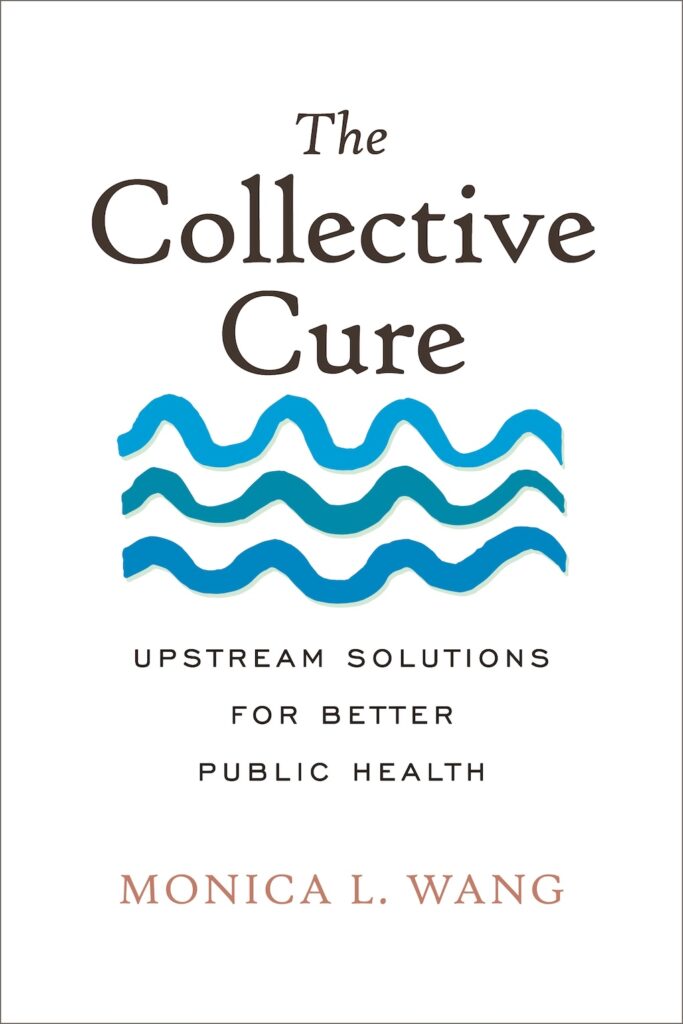
As a public health researcher, educator, and working mother, I bring lived experience to my work. My new book, The Collective Cure: Upstream Solutions for Better Public Health, centers four women whose lives illuminate how health is shaped in everyday spaces.
One of those women is Marielis Rosa, a first generation Latina college student who grew up in section 8 housing in the Bronx.
At the height of COVID in New York City, Marielis lost her uncle to the virus. Her family was already financially strained, and they needed an additional $1,100 to secure a burial plot. Without it, he would have been taken away in an unmarked box and buried in a mass grave—a devastating fate no family imagines for someone they love.
But through strong social ties—friends, neighbors, and community members who knew him and cared—small contributions accumulated, and they raised the funds in just a few hours. In the midst of profound grief, community became infrastructure that offered financial support as well as dignity.
In this conversation, Marielis and I reflect on motherhood, boundaries, purpose, and what it means to show up for the people we love. We talk about rejecting the myth that women must be superhuman to succeed. And we explore what it looks like to intentionally build the kinds of networks that carry us, not just in crisis, but in everyday life, because those networks are part of what makes us healthy in the first place.

Marielis: You’ve built a remarkable career while raising a family. What are three insights you’ve gained about yourself, and about the communities you’ve served, along the way?
Monica: One insight is that no one is supposed to do this alone. Early in my career, I internalized the idea that achievement was largely individual—discipline, productivity, grit. Motherhood cracked that illusion wide open. I could not write a grant, teach a class, or finish a manuscript without childcare, mentors, collaborators, friends dropping off meals, and a partner carrying real weight at home.
That realization is at the heart of The Collective Cure. Health is not individual. It’s built—or constrained—by the systems and relationships around us.
Second, I’ve learned that while we talk a lot in public health about “moving upstream” to change policies and environments, on the way upstream we inevitably encounter the midstream—our communities. Communities are where policy becomes lived experience, where upstream factors meet everyday life. Structural reform takes time, resources, and political will. But community is where change begins to take hold, where trust is built, norms are shaped, and where each of us has agency to help create conditions that foster resilience, dignity, and possibility. That thread runs through every story in the book.
Third, I’ve realized that my strength comes from integration, not separation. For years, I tried to compartmentalize myself into a pie—academic Monica, mother Monica, partner Monica, friend Monica—as if my professional self could only thrive if my caregiving self stayed small. Surprisingly, I’ve found the opposite to be true. The work became more meaningful when I stopped dividing myself. Allowing motherhood to inform my scholarship has made it more grounded, empathetic, and real. And in turn, my research has helped me set clearer priorities and boundaries in my personal life that make health and balance feel more achievable. I don’t just study or teach the determinants of health—I live them, as we all do. That weaving of lived experience and research in the book is intentional.
Marielis: What outlets do you use now to take care of yourself as an individual, a mother, and an academic?
Monica: I think about care in the same way I write about health in The Collective Cure: as something shaped by daily conditions that impact the person as a whole. I’m better in every role when I stop trying to divide myself into roles. The scholar, the mother, the individual—they’re not competing identities. They inform and strengthen one another.
For me, caring for myself as a whole looks like food as medicine, movement as medicine, sleep as medicine, nature as medicine, and connection as medicine. Food as medicine means eating mostly whole, minimally processed foods—though I do confess I have a sweet tooth. Movement as medicine means moving my body daily and recognizing when an old routine isn’t serving me anymore. A friend invited me to try a new workout last summer, and I got hooked. As we age, we need different kinds of movement to strengthen us physically and mentally. Sleep as medicine means choosing winding down over scrolling (this one is still a work in progress). Nature as medicine means stepping outside, even briefly, to recalibrate and take in the blue, the green, the life all around us. And connection as medicine means protecting time with my family, my friends, my circles of women, and spaces like La Danza that I write about in the book, which remind me that care is collective.
I’m also very aware that what allows me to practice these habits isn’t simply discipline. It rests on two upstream conditions: the kind of work I have and the community I’ve built around me.
I have an academic role with flexibility and autonomy, which makes it easier to protect time for family, health, and relationships. Not everyone has that, and that’s precisely my point about how systems shape health.
The second upstream factor is community. My partner and I were intentional about building our lives near family and friends because we knew we wanted children. Being close to our parents allowed us to lean on them for support. And in turn, we try to show up for others in the same way. Having a circle of fellow parents, neighbors, and friends has reinforced for me that health is not an individual achievement. It’s sustained by relationships. If you want to be part of a village, you also have to show up as a villager, and that is a central part of the book.
Marielis: When you think about your children reading your work someday, what do you hope they take away from it?
Monica: I hope they’re absorbing what it means to live with purpose and love with presence.
If they read my work when they’re older, I hope what they feel most clearly is that their lives felt steadier and fuller because of how I showed up for them. That I listened. That I looked at their artwork and essays with care and made them tea with lemon and honey when they were sick.
I no longer subscribe to the narrative that women have to work as if they don’t have families, or parent as if they don’t have jobs, or that we’re supposed to strive to be superwomen. That story exhausts women and quietly erases the structural realities we’re navigating—ones I examine in The Collective Cure.
For me, success in working motherhood is about clarity, alignment, and the freedom to design a life that reflects what matters most in each season and having the courage to create boundaries that protect it. Some seasons require more ambition. Some require more softness. As I grow and change alongside my family, so does my definition of balance.
More broadly, I try to live by three guiding purposes:
First, to help people see that each one of us has a play a role in improving the health of others—whether that’s shaping policy or simply checking in on a neighbor. Public health isn’t reserved for experts. It belongs to all of us.
Second, to show up for the people I love in a way that their lives are better because I am in them. That feels more important than any professional milestone.
And third, to find the world’s best hazelnut gelato. I never pass up on an option to try a scoop if I pass by a gelato stand. Sometimes life’s simplest pleasures are the sweetest. Not everything has to be monumental to be meaningful.
If my children absorb anything from watching me, I hope it’s this: build work that matters, nurture the people who matter more, and you don’t have to be everything to everyone to be more than enough.
Monica: When you look back at your story in The Collective Cure, what do you most hope readers take away from your understanding of care for yourself, your family, and your community? How have your experiences shaped the kind of future you hope to build?
Marielis: It’s been almost six years since my uncle passed. To this day, I’m still amazed at how quickly my community raised over $1,000 for his burial, mobilizing in ways I didn’t think were possible. I hope readers take away that sometimes the most supportive community is the one that shows up when you least expect it—and that we should let them. But when the tables turn, it becomes your responsibility to show up for them, just as they did for you.
More importantly, I hope readers understand that tragedy cannot be the only reason we come together. After losing my uncle, who was the glue of our community, I refuse to let loss be the force that binds us. Taking care of ourselves also means eating together, dancing together, playing together. Community should be practiced in joy, not only in grief.
Now, as I complete my law degree in Boston, I make it a priority to return to Sunset Park for birthdays, block parties, softball games, wedding anniversaries—any milestone or gathering that brings us together, I’m there. We should cherish community not only because it can be a source of support in times when we need it most, but also because it is a rejuvenating superpower when we pick our heads up and make an effort to be active members of it.
Looking ahead, I want to keep strengthening those bonds, and luckily, I have help. Growing up in a Section 8 building in Brooklyn, my friends and I were the first in our immigrant families to consider and plan for college. At fourteen or fifteen, without fully knowing how we’d get there, we made a pact: no matter how far we traveled, we would always answer our community’s call.
Our promise was rooted in justice. We wanted to make sure the community that raised us had access to the knowledge and resources needed to navigate the structural inequalities they are forced to face in this country.
Fast forward more than ten years, and my friends and I are making good on our pact. Some are pursuing nursing, clinical psychology, or CPA licenses. I’m in law school, most recently focusing on immigration and housing law. Already, our community leans on us for information and advocacy—and we’re just getting started.
About the Author

Dr. Monica Wang is an award-winning public health researcher and educator and a professor at Boston University School of Public Health and Harvard T.H. Chan School of Public Health. A Boston native and former METCO student, her work focuses on community-based solutions to public health challenges. She is an avid reader, runner, baker, artist, and mom.
Related Posts
Childcare and Breathing: An Excerpt from STUDENT PARENT →

Lost and Found: Join us at the Brooklyn Book Festival x MUTHA x Pen Parentis Lit party! →

“Everyone Sees Color”: An Excerpt from MOM, UNFILTERED →

One Response to Motherhood and the Power of Community: A Conversation Between Dr. Monica Wang and Marielis Rosa