
Mothers-in-Law
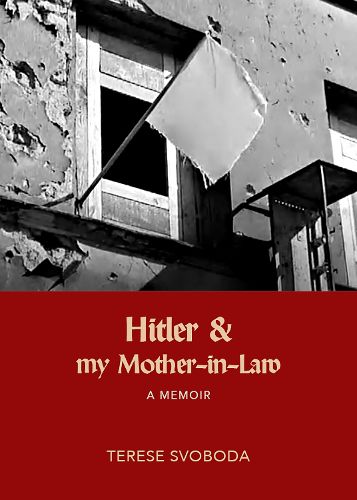
The essay below is an excerpt from Terese Svoboda’s memoir, Hitler and My Mother-in-Law, which follows Patricia Hartwell, the only female reporter to cover both the Pacific and Atlantic theaters of WWII. The book is about truth in families, journalism, and politics.
I’d always imagined my mother-in-law living down the street, rolling out pie dough, providing little extras from a pension kept in her change purse. The possibility of an in-law actually living with us sounded downright polygamous to me, after my Sudanese experiences in large compounds of extended families where jealousy and envy ruled. But what about the benefits of a sitter and cook, I thought, and maybe solace when the husband was difficult, although this last sounded pretty tricky. Mothers tend to side with their sons, although a mother who has endured a patriarch’s behavior might be sympathetic and have strategies for dealing with learned behavior. Since Pat lived in Hawai’i and we lived in New York City, I was spared such intimacy, though when we visited her, it was for weeks at a time. She took a lover after her second husband Dickson died, and since she had not shaken her propensity to choose difficult men, we usually stayed holed up in a garage bedroom to avoid him, as he too was jealous of all but his own children and grandchildren. Described as “jester to the queen dowager,” he would hover over the Thanksgiving turkey, before both his and her families, whetting the knife with cutting remarks about hers. She ignored those remarks as she had Dickson’s. We fled to the beach, and my husband fixed her lamps in the evenings, his astonishing ability to repair anything further honed as a way to attract some evidence of her acceptance, and forget her betrayals.
*
Did you hear the one about the cannibal who got married, and at the wedding reception, toasted his mother-in-law?
*

The plant Sansevieria trifasciata is known as “mother-in-law’s tongue,” a/k/a the snake plant, a/k/a the viper’s bowstring. Evergreen. Tough. Drought resistant. The leaves are very sharp. Nigerians use it in rituals to remove the evil eye. A common houseplant everywhere.
*
A pharmacist tells a customer: In order to buy arsenic you need a legal prescription. A picture of your mother-in-law just isn’t enough.
*
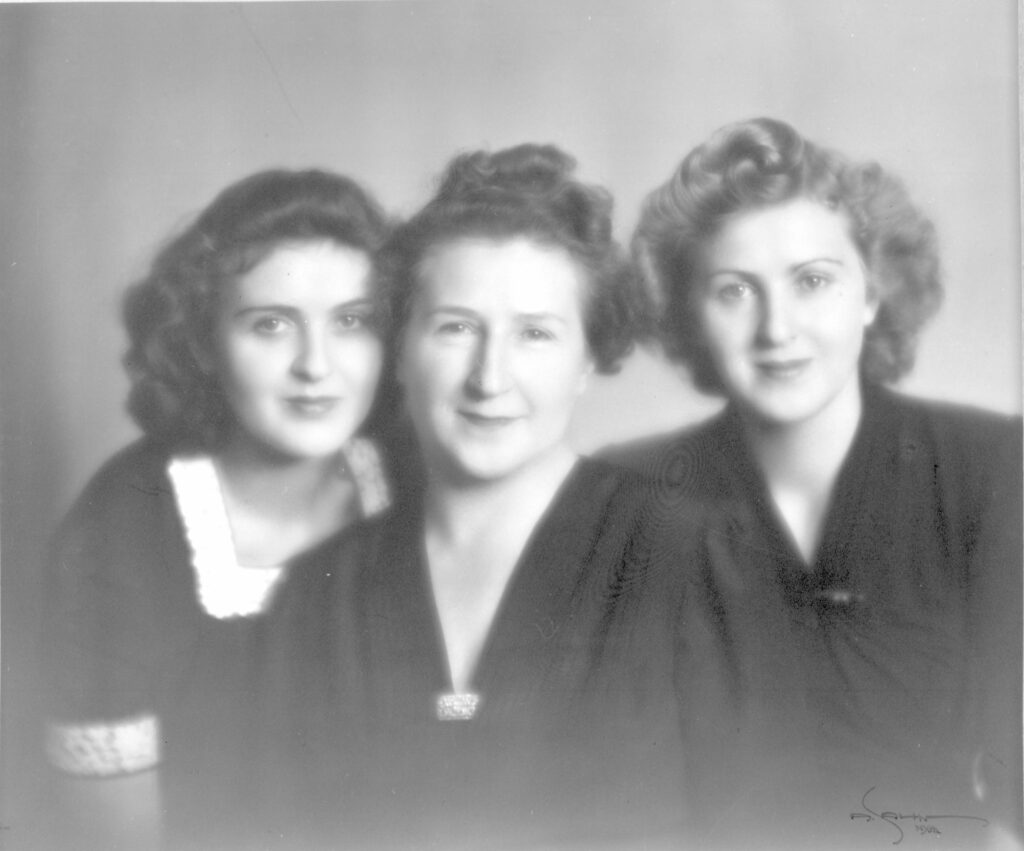
For less than 40 hours Franziska Braun was Hitler’s mother-in-law, although she often visited their enclave while Eva was posing as his secretary. Hitler was never told that the Brauns were 1/32 Jewish, according to Nazi race laws, a fact discovered by Adolph Eichmann. Once a ski champion, Fanny lived to age 96, many decades after her daughter’s death, and Fritz, her husband, to 84. Fritz had been quite displeased when his 17-year-old daughter began seeing 40 year-old Hitler. A Catholic, he wrote a letter telling him to leave her alone, but Eva tore it up. Fritz eventually saw the advantages of associating with Hitler, and gave up teaching to become an army officer. Reels of movie footage of their visits with Hitler taken by Eva, an amateur filmmaker, show an affectionate family, prone to wading through streams, sunbathing, frolicking with the dogs at the beach, sunbathing, nude babies, and occasional costumes. During a round of toasts, Fanny wears a hat with a heart attached at the front.
Hermann Fegelein, her other son-in-law, was married at Eagle’s Nest surrounded by the family, and acted as Himmler’s liaison officer. Did Fanny flinch when Hitler had him shot for desertion?
*
I bought my mother-in-law a chair for Christmas, but she wouldn’t plug it in.
*
Most of the in-law jokes are from the husband’s perspective, although often problems between in-laws stem from the relationship between the wife and the mother-in-law. A wife will pick up on subtly disparaging remarks that the husband may miss altogether, which explains why a wife becomes angry with her husband for not taking her side. What lengths does a wife have to go to prove her point? Does she have to kill the mother-in-law, at least metaphorically, to avoid being a victim, or even worse, a shadow mother? Does she have to divorce the husband to spite his mother? Only a husband would find the situation comic.
*
Executive: “Sir, can I have a day off next week to visit my mother-in-law?”
Boss: “Certainly not!”
Executive: “Thank you so much, sir! I knew you would understand.”
*
The Nuer son-in-law is never to be naked before his mother-in-law (which must have been somewhat difficult; when I visited, few people had clothing), he must not eat with her, and he must not talk to her directly. As soon as a child is born, however, the son-in-law is known only as the father of [insert name of the child], and the prohibition of conversation with the mother-in-law is lifted.
In other words, she can’t complain until after the fact.
*
Why do they bury mothers-in-law 18 feet down, when everyone else is buried 6 feet down?
Because, deep down, they really are very nice people.
*
Are you good enough for my child? This is the question that underlies many a dig from a mother-in-law, but I didn’t have to worry about that. Pat confided in me that my husband was lucky. He had a hard time focusing and I didn’t, and she recognized that I appreciated what he, as a smart wide-ranging but scattered thinker, had to offer.
*
What’s the difference between a mother-in-law and a vulture? The vulture waits until you are dead before it eats your heart out.
*
I’d learned a lot of “self-silencing” around my mother but I didn’t want to sacrifice knowing Pat just because I might be hurt. A daughter-in-law needs information about the family she’s joining, where the skeletons are buried amid the bombshells. Consider how much I could learn from studying her: she knew how to handle General Patton as well as bagging her second husband top censor Dickson Hartwell; she knew how to steer UNICEF, having managed to convince its head Maurice Pate that although young and not academically art-credentialed, she should be the one to select the artwork for their world-famous cards. She did not force her opinions on me, although once she did buy my husband, a small man, a loud plaid wool suit in Scotland. He did not wear it for long. Her visits to New York tended to be brief and formal: dinner at her hotel, an afternoon at a museum. She inspected the first beach house we bought, one without running water in a rundown part of Long Island where the quarter acre plot was so overgrown that, on closing, we found a 1950s finned Cadillac and two boats that we’d never seen—and she did not disparage it.
*
After one particularly amazing magic trick, someone in the audience screamed, Wow, how did you do that?
I would tell you, answered the magician, but then I’d have to kill you.
After a moment’s pause the same voice yelled: Could you tell my mother-in-law?
*
No in-law of mine ever provided childcare. For that matter, neither did my mother, so that conflict was never kindled. Until you feel a kinship with someone, the theory goes, it’s hard to hate him or her. And until your in-laws feel like parents, it’s harder to fight with them the way you fight with your own parents.
*
I find a sentence in a letter that Pat wrote to Henry before our wedding: “She will make an excellent wife.” Although she doesn’t say why, she does notice that I love him very much.
About the Author

A Guggenheim fellow, Terese Svoboda is the author of 24 books. She has won the Bobst Prize in fiction, the Iowa Prize for poetry, an NEH grant for translation, the Graywolf Nonfiction Prize, a Jerome Foundation prize for video, the O. Henry award for the short story, and a Pushcart Prize for the essay. She is a three time winner of the New York Foundation for the Arts fellowship, and has been awarded Headlands, James Merrill, Hawthornden, Hermitage, Yaddo, MacDowell, Rowland, VCCA, Bogliasco, and Bellagio residencies. Her opera WET premiered at L.A.’s Disney Hall.
Related Posts

Childcare and Breathing: An Excerpt from STUDENT PARENT →
Lost and Found: Join us at the Brooklyn Book Festival x MUTHA x Pen Parentis Lit party! →

“Everyone Sees Color”: An Excerpt from MOM, UNFILTERED →