Playing the Part: Writers and Mothers IN THE ROUND
“Maybe I’m just playing the part of me, and not actually me.”
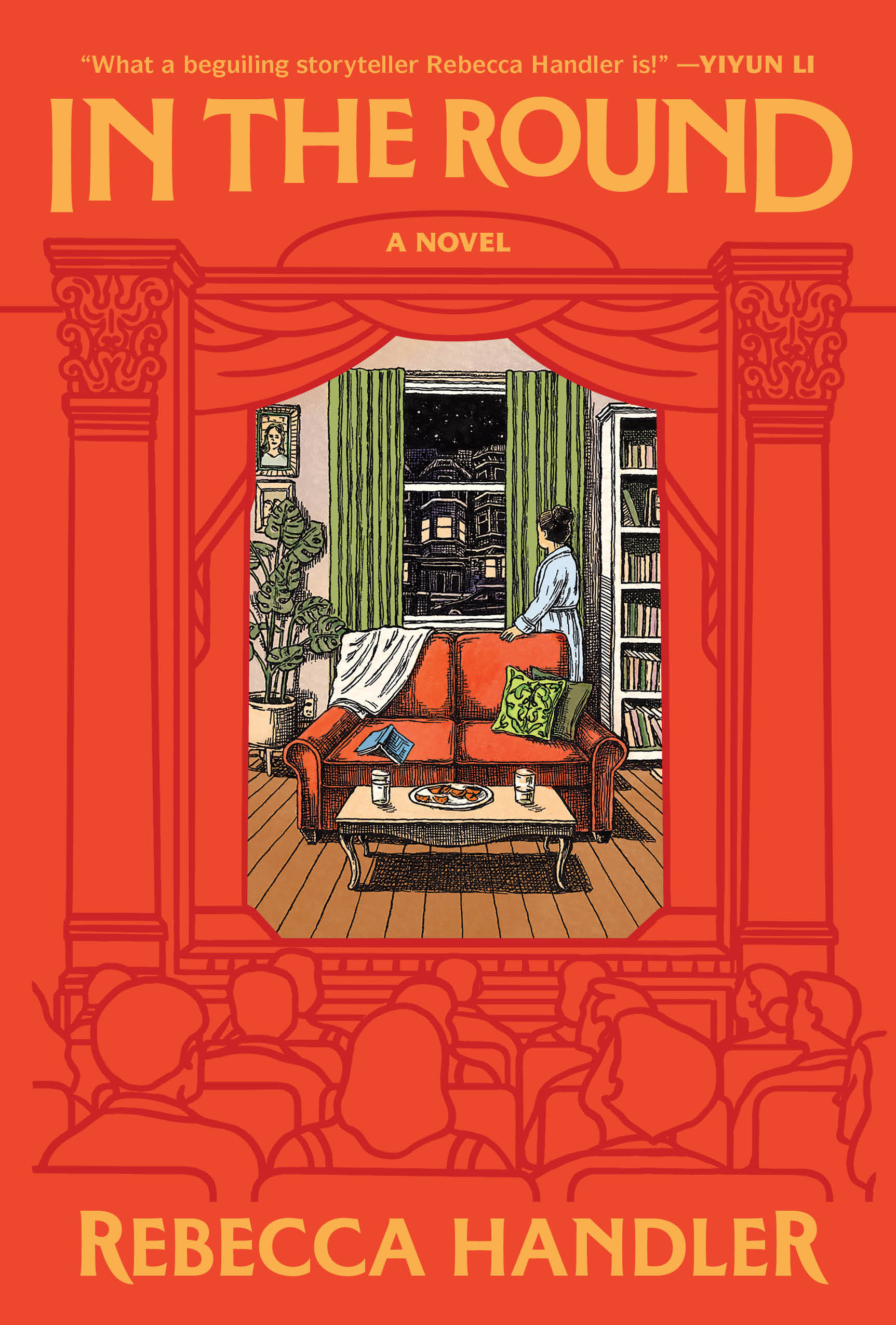
This line in Rebecca Hound’s second novel, In the Round (McSweeney’s) felt like an usher welcoming me to my seat. The concise narrative is structured like a play and if you take it in in one sitting, as I did, feels like you are experiencing theater in real time. Without giving too much away—it’s a mystery—the protagonist called “Woman” is overcome with a feeling that something isn’t right. Her home doesn’t seem like her own, her belongings aren’t where she left them. Woman wonders if she is being watched as if she’s onstage being observed by an audience. And as an onlooker to these scenes, playing the part of Woman’s audience, I also began to question the reliability of this character—which is fun place to find yourself as a reader. Woman’s hyperawareness is existential, relatable and invites curiosity. As mothers, we mind our children, but we too are observed by our children and by those who witness our care, our approach.
This work also spoke to me because of the character—Woman’s relationship to caregiving and cancer. In preparing for my interview with Rebecca Hound, I read about her experience with cancer. I wondered how it impacted her craft. Cancer has changed me, personally, as a writer. I’ve written about my experience becoming my six-year-old daughter’s health care advocate and caregiver when she was in treatment for Lymphoma/Leukemia. I took abundant notes during that period, and when I looked back through them, I saw they were filled with stage directions. Having had nine years to process (and a daughter who lived) has helped me to recognize that what I thought of as a creative inspiration may have been a type of contained dissociation—a way to process the surreal. The existential edge simmers below the surface In The Round, on an almost cellular level. The line between suspended disbelief and health care is felt in the double meaning of the title. In the Round speaks to the story Hound tells; It is both the type of stage where the actors are surrounded by the audience on all sides and part of the oncological vernacular for chemo doses and protocols. – Jess Phillips Lorenz
MUTHA: There is a dramatic turn in the novel that engages with the idea of performing motherhood or womanhood. How did you come to think about Woman, the character, as a mother?
Rebecca Handler: It was crucial that Woman was a mother. I wanted to explore the performative aspects of motherhood and some feelings I’ve had being a mom (my girls are now 19 and 21). When my first daughter was born, I remember this feeling of waiting for the real mother to show up. How could this be my child? How long will I play this role? I loved my daughter to bits and loved caring for her. It wasn’t that. It was more a sense of forever. It is truly the most permanent role we play. There’s no getting out of that one! And on one hand, thank goodness, what a privilege.
MUTHA: In the Round plays with the boundaries of form. As a playwright and essayist, I love to create in both forms independently but have found that they do inform one another. Were you a theatre kid? Why did you choose to shape this narrative like a play?
Rebecca Handler: The book was inspired by my love of live theater, which I so desperately missed during the pandemic. Not to brag, but I did play Scrooge in my fifth-grade production of A Christmas Carol and then in high school, performed as the Dirt Fairy in A Midsummer Night’s Dream. What, you don’t recall a Dirt Fairy in Shakespeare? You are correct. So, I wouldn’t say I was a theater kid necessarily, but I loved performing in the orchestra and I responded with gusto to any scrap part thrown my way. There is a power to being on stage and I’ve always been drawn to that.
I knew the novel would play with elements of live theater, and my intention was to go to as many plays as possible, but then theaters closed and the world changed. There I was, stuck in my house, “performing” on Zoom with my fellow co-workers (my day job is in nonprofit grantmaking). I became hyper aware of how my living room looked on screen, and how the set design told a story about me. I noticed which fake backgrounds people chose for themselves and found it hard to take a nonprofit executive seriously when it looked like she was perched on the Golden Gate Bridge.
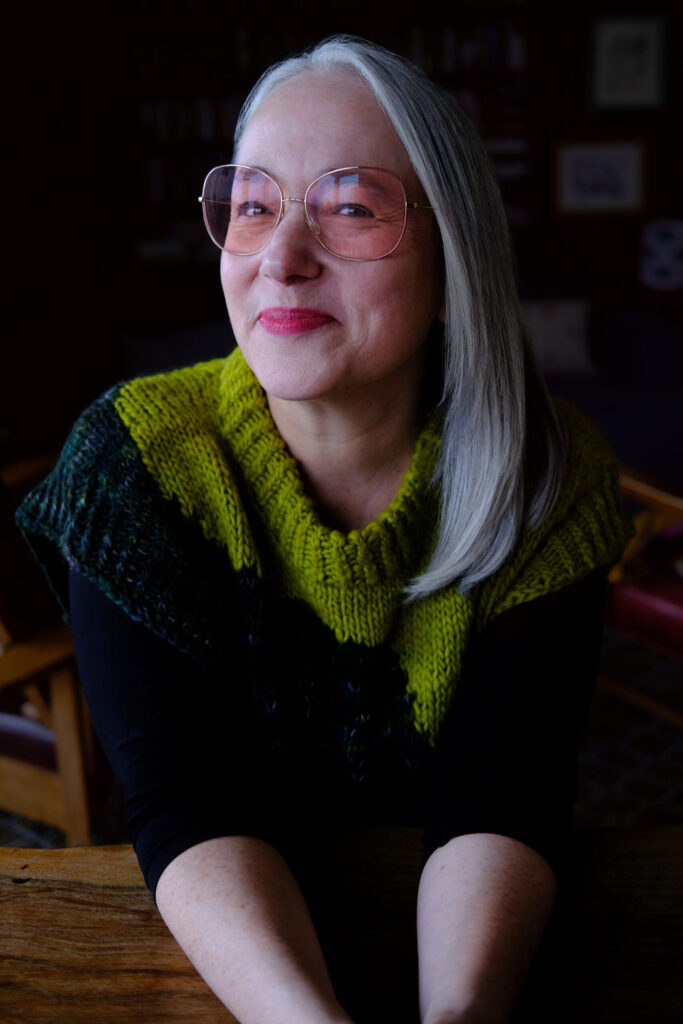
MUTHA: Another theme I wanted to talk with you about is stupid, stupid cancer. There are a couple of scenes in the book that invoke the body horror realism of post-mastectomy surgical care. I read in your notes that you went through cancer treatment. I hate that you had to traverse that brutal landscape.
How did your experience influenced this work? I also wonder about how you engaged with your craft during that time. When my then six year old daughter was in treatment my relationship with writing shifted. Were you able to write?
Rebecca Handler: First, I am terribly sorry to hear about your daughter’s cancer. Cancer is very stupid, you’re right.
I’m an open book with my experience with cancer. In 2021, I was diagnosed with breast cancer one month before the publication of my first novel, Edie Richter is Not Alone. A week after the launch, I had a double mastectomy followed by more surgeries and 16 rounds of chemo. It was a whopper and hopefully will never return. When I told my agent about my diagnosis, after he expressed his sympathies he said, “I hope you’re taking notes.”
Writing became the way I assigned some sort of purpose to what I was going through and gave me a sense of control. Sure, I might have needed to get a port implanted in my chest, but I’ll be damned if I’m not going to write about the handsome nurse who told me all about his husband’s penchant for designer belts while making a small incision near my clavicle.
I knew I would include some cancer in In the Round. Recently I joked that the novel is 90% mystery and 10% cancer memoir. Specifically, I wanted to address the wound drainage system which I know sounds oddly precise, but I have strong memories of that delicate time post-surgery when I was in the caring hands of my husband who was an outstanding caregiver. I hated those drains and what they represented.
There were many times during The Year of Shitty Cancer when I was unable to write due to pain, nausea, and an overwhelming sense of doom. But most days I scribbled something down. During chemo, which can be hideously boring, I paid attention to my fellow patients and the incredible nursing staff. One nurse in particular inspired me to make my protagonist a nurse.
About the Author

Jess Phillips Lorenz is a playwright, essayist, and childhood cancer advocate. She has performed several original solo plays throughout New York City including Drawn about her family connection to cartoon icon Betty Boop. Jess’s work has been featured in many publications including Chalkbeat, Insider, Romper, Real Simple, Parents.com, MUTHA Magazine (Pushcart nominee), and a theatre festival for babies in Northern Ireland. Most recently, her monologue, Permission, was selected for the upcoming PlayGround Experiment’s Faces of America Monologue Festival #5. In 2023, Jess was awarded a writers’ residency with The Ragdale Foundation in Lake Forest, Illinois and her latest play, BEST PARTY EVER! was granted a workshop production with Piper Theatre’s Playwright Spotlight Series. Jess is a member of Emerging Artists Theatre, Piper Theatre, The American Childhood Cancer Organization, and Momcology. Jess lives in Brooklyn with her children, husband, and pet snail. jessphillipslorenz.com IG @playpracticenyc
Related Posts

The Dream of Sasha and Cyrus: Part V →

Keep it Close →
Broads →