

I Froze My Eggs Because I Couldn’t Find a Partner. Maybe Egg Freezing Is a Story About Men Too.
Egg freezing is often positioned as a way for ambitious professional women to buy themselves time to focus on building their careers before starting a family, without having to worry about their biological clock. But for me, my career was the least of my worries when it came to planning for my future. When I was in my 20s and 30s, I wanted to have kids as a priority – I just couldn’t find the right partner.
I’m a Gen X woman of color, a lawyer, and a nonprofit leader. I’ve watched many of my heterosexual female peers – specifically other women of color – struggle to meet their matches. We were navigating a prejudiced dating pool, dwindling options, and a seeming dearth of men who could pull their weight to help support a family. Many of us ended up whittling down our list of deal breakers further and further to try to find someone who we could see ourselves making a life with.
In my 30s, I had countless non-starter first dates (and a number of non-starter relationships) with men who just didn’t fit the bill. My standards, I thought, were attainable: be nice, not racist, hard-working, able to help me support a family, and share my core values. And yet still, dating was a minefield.
I dated someone who said he wanted a family, but ended up realizing he actually didn’t when I pushed the question two years into the relationship. Another couldn’t hold down a job. A third was arrested and incarcerated mid-relationship. First dates were also often brutal. The percent of men who failed the “be nice” and “can support self” requirements was astounding. In 2016, many men I went on dates with – even across racial backgrounds – ended up being Trump supporters, which failed my “share core values” requirement. It didn’t help that as a dark skinned woman, I was being rejected by many men based solely on the skin tone apparent in my profile photo – or perhaps even worse, was sometimes being chosen by men who fetishized women of color.

When I turned 35, my best friend – a Black woman with similar dating experiences – froze her eggs to buy more time to find a partner. At first I thought it seemed like an extreme length to go through, but as I learned more about how age affects fertility, l followed suit the next year.
Through all this, it was infuriating to have other married (usually white) women around me tell me that I simply wasn’t trying hard enough, or that I was intentionally picking bad men and self-sabotaging. How could you even understand what the modern dating pool looks like for women like me? I wanted to scream. While my frozen eggs waited patiently in a lab on the Upper East Side, I was putting in hours downtown approaching dating as a full-time job on top of my actual career, but it just felt like there was a severe shortage of good men out there.
Meeting my husband at 39 (with whom I now have two daughters, one from my frozen eggs) felt like catching the last life raft off of the Titanic, and for that I’m grateful. But looking back at the herculean effort I put into planning my future family, I can’t help but wonder whether men who aspire to fatherhood are putting in the same amount of effort. I assume the answer is no, because somewhere along the line, our society has decided that this physical and financial burden, like much of the invisible labor that goes into supporting a family, present or future, should fall squarely onto women.
Many single male friends have talked to me at length about their desire to have kids, yet when I ask them what steps they’re taking to plan for that, they often come up empty handed, or have some noncommittal answer about looking for the right woman and hoping things work out. I wish my own approach could have been so laissez faire.
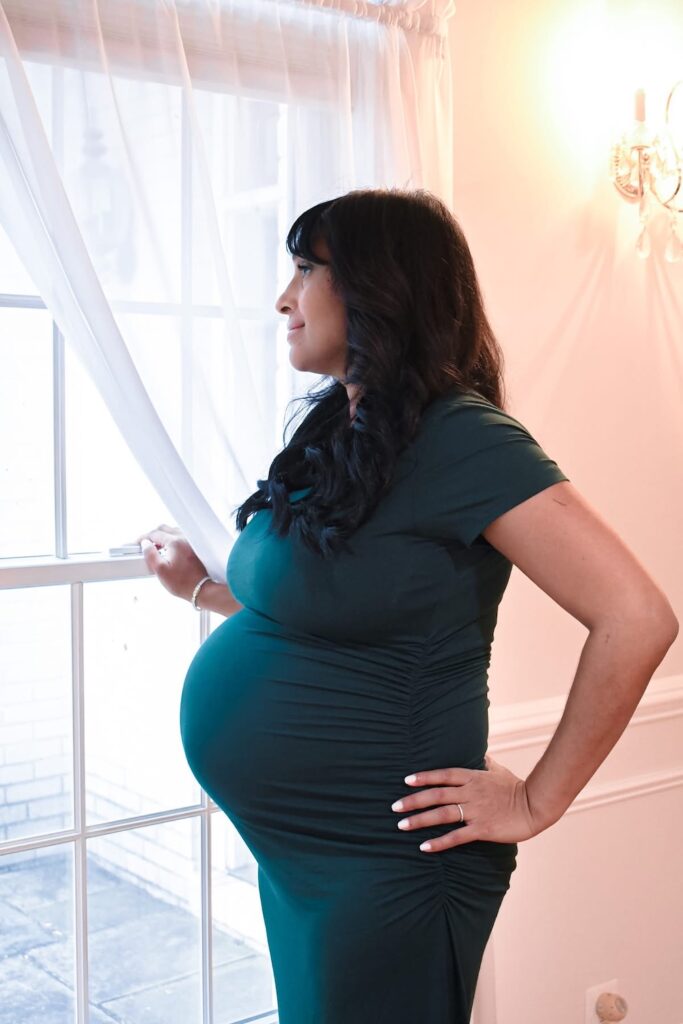
On top of my rigorous approach to dating, I also turned my body into a science experiment in order to race my own biological clock. Between egg freezing and IVF, I’ve had 11 cycles of fertility procedures, 59 eggs extracted from my body, thousands of shots of hormones, dozens of experimental treatments, and even sold my apartment to pay for it all. Women are expected to maintain, preen, monitor, and medicate our bodies into well-oiled baby-making machines to become mothers. The future fathers of our children? They simply have to show up. And when they don’t show up, it’s our responsibility to chase them down, quickly, before time runs out.
Freezing my eggs was imperative for me, both in planning for the future and taking control of my love life. But it’s not a real fix. I was fortunate to have the resources to undergo this process, and even so, I found it difficult and expensive in ways I never anticipated. It also ignores the underlying issue: the onus shouldn’t be on women to either shoulder the burden of eye-wateringly expensive and physically-demanding fertility treatments as a backup plan, or to lower our standards and settle. Case in point: I have friends who are about to turn 50 having never used their frozen eggs, all because – despite their best efforts – they simply never found the right partner.
Much has been written lately about good men, and how they are, seemingly, a dying breed. The issue seems to be getting worse among younger generations; Gen Z men, further isolated by the pandemic and today’s technology, are increasingly susceptible to sexist rhetoric promoted by “manosphere” influencers. I suspect that the dwindling birth rates many politicians have been fear mongering around are evidence that more and more young women are facing the same dilemma I did in searching for the right person to start a family with – and that the men in their dating pools are coming up short. A lot of young women feel deterred from even dating, let alone having kids, by the fact that their potential husbands might not see them as equal human beings. Finding my husband took unyielding commitment, many false starts, and a lot of frank, candid discussions. But for the next generation of women coming of age who dream of starting a family as I did, even that might not be enough.

On the right, there is a growing contingent of young men (and women) embracing a more traditional vision of family-building: men as providers, women as wives and mothers, with clearly defined gender roles that promise to restore a “sense of order” and facilitate having big, happy families. They have doubled down on this ethos, and seem firm in their opinion that delegating all childrearing matters to women is the most effective way to bring more children into this world. But for those of us who believe in (and have fought, hard) for gender equality, going back in time to the 1950s isn’t an option. Women like me, who are co-breadwinners in their families, need an equal partnership, and that includes when it comes to starting families.
So much of having a child falls upon women for a good reason – when it comes to our bodies, we should ultimately be the ones calling the shots, especially when it comes to things like fertility care. But medical technology can only go so far; frozen eggs are a moot point for heterosexual women if we can’t find decent partners to use them with. What would it look like to treat family-building as a shared responsibility from the very beginning?
Instead of blaming would-be moms for not trying proactively enough to invest in their future family, I think we need to be asking men who want children to work to prepare to be good husbands and fathers. That means asking men to prepare financially, practically, emotionally, and morally to raise children and be good husbands; asking them to see working, childcare, housework, and the labor of managing a family as their shared responsibility, too; and asking men to support a partner’s ambitions and autonomy, rather than expecting her to sacrifice them. It also means recognizing that the freedom to build a family should not depend on a woman’s ability to pay for fertility treatments, and that reproductive autonomy includes the freedom to decide whether, when, and with whom to have children. We cannot expect women to do it all — in a country where most families need two incomes to survive, it’s simply not possible for women to be both co-breadwinners and primary caretakers.
Our future children deserve a world where people can raise children together as equals, rather than one where women’s bodies, labor, and time are seen as an endlessly renewable resource. There are no easy answers, but we cannot solve a collective problem by asking women to work harder at solving it alone. It’s 2026 – we need men to step up.
About the Author

Inimai Chettiar is president of A Better Balance, a nonprofit advocating for women and caregivers in the workplace, and is the mother of two girls.
Related Posts

Songs for Billy →

Dethroned & December, 1995 →

Conversations on Having an Only Child →
