

A Bad Girl’s Guide to Parenting
“Aaahhhhh” is being screamed in my face repeatedly by my beet-red toddler. She wanted the pink dress, not the white one. Before that, she wanted blueberries, not the repulsive apple slices she had asked for only an hour prior. We’ve spent the majority of our day reciting a cacophony of “no’s” back and forth to one another. It’s hour twelve of this power struggle, and she’s fucking had enough. As have I.
I have two options, one where I totally lose my shit, then go on an all-night downward spiral about what a horrible mother I am, or I could reach even deeper into the recesses of my nonexistent-yet-bottomless bucket of patience, put on a Ms. Rachel smile, and calmly tell her, “You really wanted that pink dress. But it’s dirty, and we have to wait until tomorrow.”
Regardless of my choice, by the time I lie in bed, I’m both drained and rattled. Her screaming meltdown after a day of constant pushback is what I like to call “cry for help” behavior. I know she’s struggling and needs to lash out. Although very age-appropriate, this behavior is my greatest, deepest, knot-twisting trigger. Most of my young life consisted of “cry for help” behavior, really peaking from age thirteen through seventeen. Loud class disruption, drug use, drinking, sneaking out. Lying. Stealing. Hookups I didn’t want, but felt pressured into. Smoking. Clubbing. Partying with adults, sometimes famous ones. Throwing parties. Getting arrested. And worse.
Born with some aptitude for darkness, I always had an untamable wild streak. Up through the end of elementary school, I tried hard to be the nice girl, the good girl, the quiet girl. But I got walked all over, swallowed up by the meanness of others. It made me want to disappear. At age 13, having switched schools due to bullying, something inside me snapped. Broke. Ignited or erupted, and I was DONE. Middle fingers went up, hair was dyed pink, and holes were ripped in jeans. With a rebel yell, I adopted the exterior persona of “who cares” and “nothing really matters.” I didn’t respect adults. I didn’t respect authority. But what I didn’t realize then, was that I didn’t respect myself.
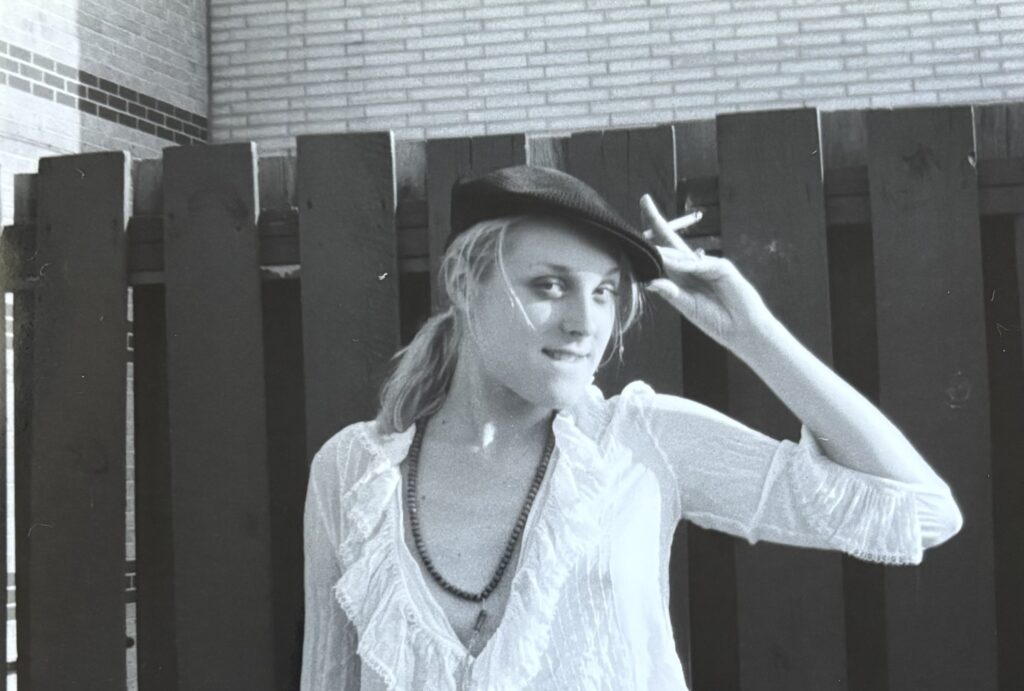
The bravado of shock value is a farce. More often, I thought of myself as inferior. I was seemingly always in trouble. Always in some type of crisis. Always anxious. I felt defective. And why wouldn’t I? I was a problem. Everyone around me believed it, so I believed it too. I was raging, unleashing, “acting out” from a place of pain. No one thought to stop me. No one said, “I think you’re better than this.” They all believed my lies. They believed my bad grades. To my parents, my teachers, I was simply too much for everyone. I was unmanageable. I was too volatile, too loud. They all just flung the rope and said, “Hang yourself.” So I did.
My parents were bewildered by me, and judged my terrible life choices. But great news! They could escape to our beach house! There was always the option for avoidance. On weekends, my adult-less apartment became the party house. I spent many mornings stepping over warm bodies and cleaning up weed debris and occasionally some vomit. Thank god for Febreze. Being left to my own devices in New York City in the late ‘90s produced many traumatizing events (Big T! Little t!), but I managed to skate through. I survived. I got into art school in San Francisco and fled as fast as I could.
Even though I’ve spent the last twenty years overcompensating for being a calamitous teenager (4.0 in college! Psychotic work ethic in my 20s! My house is spotless! Drama-free friendships! I do pilates and shop at the farmer’s market for fuck’s sake! See! I’m good now!) I have never shaken the shame attached to that period of my life. I have never been able to absolve my teenage self. On some level, I still hold the narrative that I was “bad.” Now I have a daughter whose beautiful, free spirit holds up a shiny-ass mirror to little me. A little me I find very hard to re-parent.
Instead, I find myself tightening into some type of internal stress ball at the first sign of her opposition. I rush to thoughts of, “I must stop this! I can’t let her turn out like ME.” I have to provide her the discipline, the structure, the authority I never had! All around me is talk of gentle parenting. Nothing makes me more uncomfortable than the thought of letting my child run amok while calmly repeating her feelings back to her.
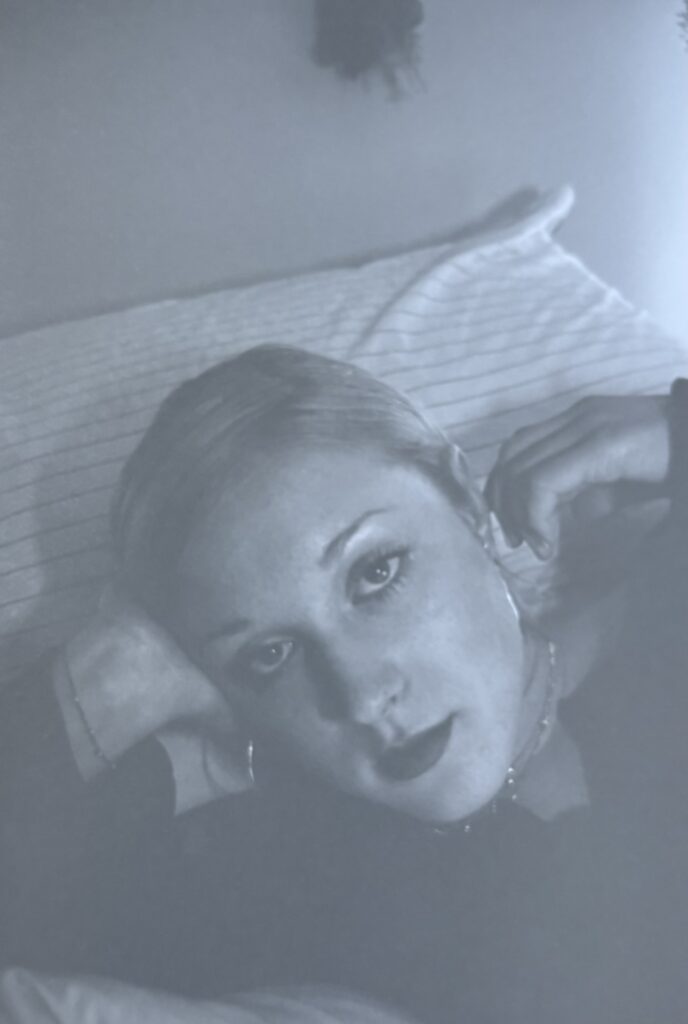
Recently, I was told by my daughter’s teacher that she and another girl are a little bit of a trouble-making duo when they play together. I laughed, saying, “Oh boy! Just like Mom.”
I played it casually, but inside I felt that familiar bile rising in my throat. I remembered being the kid that other parents warned their friends about. “Don’t let your child hang out with her, she’s trouble.” Or a teacher at school dissuading a new girl from befriending me. I remember the feelings of self-contempt with each adult whisper of, “She’s a bad kid.”
I don’t want how I feel about my younger self to be projected onto my kid. I certainly don’t want to parent from that place. But what to do now with a daughter who is undoubtedly strong, stubborn, smart, and brilliantly mischievous? How do I nurture her ferocity instead of trying to tamp it out or allowing it to become self-destructive? As she gets older, can I help her channel her inevitable fury and hormones into some type of physical activity? If she’s angry at the world, can I get her to volunteer her time, to gain a perspective of something higher, something bigger than her? Can I convince her that doing well in school, learning to be self-reliant, developing her sense of intelligence is actually the greatest act of rebellion a woman can undertake?
I know I can’t and shouldn’t try to control who she becomes, but what I can control is my presence in her life. She won’t be left alone on weekends or for long stretches in the summer. She’ll have healthy boundaries. She won’t grow up in a family where substances and alcohol are normalized. She’ll be encouraged to find the capable version of herself because I believe in her with every fiber of my body. I don’t need to be her best friend during her teenage years, but I’ll try to be a safe space where she feels seen and understood. A space I didn’t have.
My rebellious stage did leave me with some positives. It was my way of existing fearlessly, questioning the systems in place for girls, giving me a loud voice when I was always told to speak softly. It gave me a charming sprinkle of “I don’t give a fuck” that I still cherish to this day. I don’t pathologically apologize or people-please, as women are conditioned to do. But my years of defiance were also a betrayal of my true, softer self. I am sensitive. Intuitive. An over-thinker. Empathetic. Those are my best qualities, they just needed to be nurtured as strengths, not taken advantage of as weaknesses.
As I help my daughter navigate the coming formative years, I hope to find true and lasting forgiveness for my younger self. Giving those messy, untamed experiences some purpose, and some grace.
About the Author

Ashley Hudson is a New York City native, who grew up inspired by the culture and chaos of being a city kid in the late 90s. Coming from a multi-generational film family, she quickly took to the business and has worked in production for nearly 20 years. There, she gained invaluable insight into the importance of the written word. Now, Ashley has returned to her true love and purpose – storytelling – writing and developing her own screenplays, essays, and novels. Her educational background is in writing, fine art, and sociology, with a Bachelor of Science from The New School.
Related Posts

First Birthday Parties are Ridiculous: I Had One Anyway →
Adolescence is Misery →
How to Talk Teen →

2 Responses to A Bad Girl’s Guide to Parenting